Five-Judge Bench To Deal With Pleas On Depositing Scrapped Notes
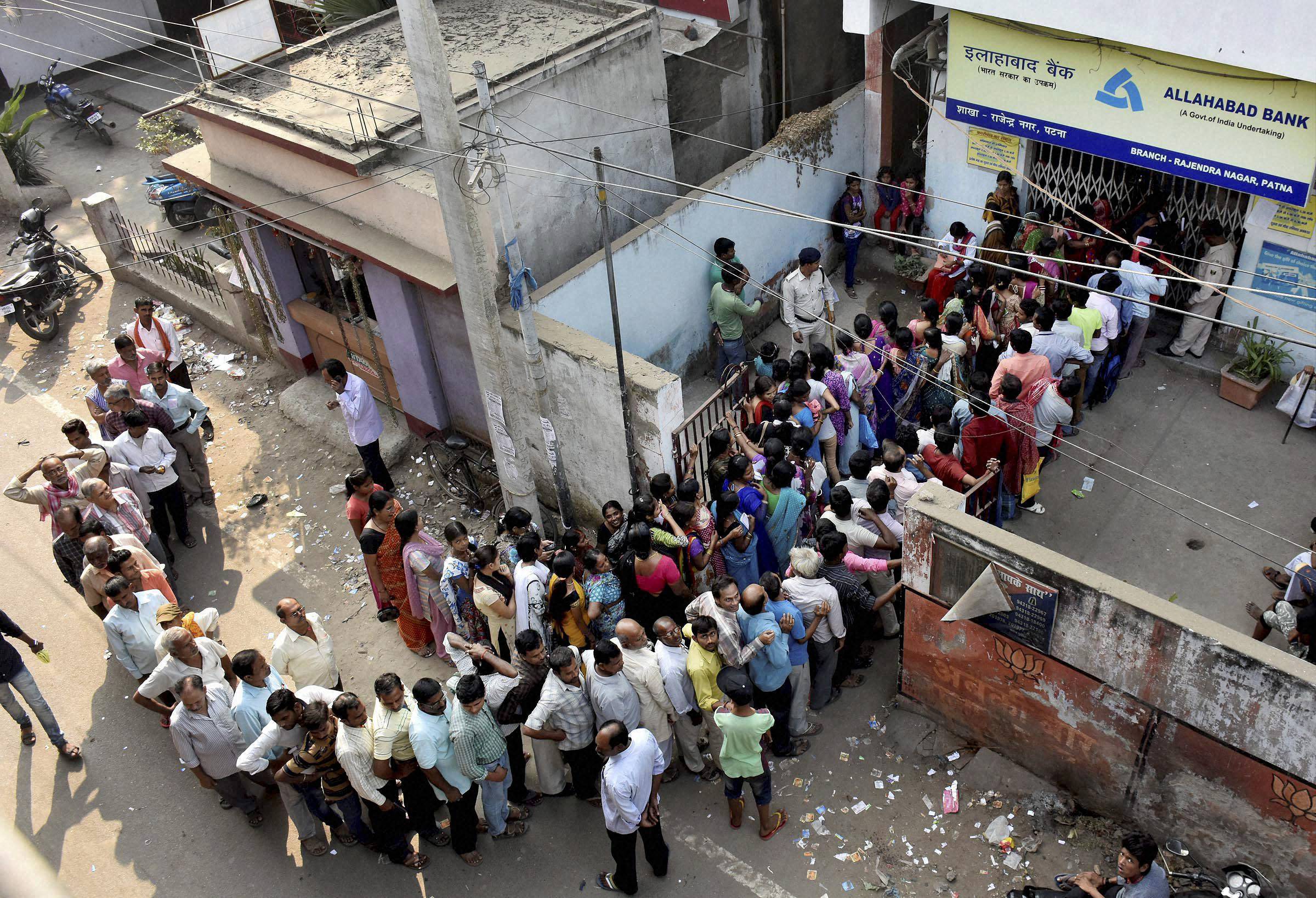
A five-judge constitution bench, which would decide the validity of the Centre's November 8 decision to scrap old Rs 500 and Rs 1000 notes, will also deal with the pleas seeking to deposit the demonetised currency, the Supreme Court said.
A bench headed by Chief Justice Dipak Misra disposed of as many as 14 petitions for depositing scrapped currency notes on the ground that they could not be deposited during the window provided by Reserve Bank of India due to compelling reasons. The bench asked the petitioners to file interlocutory pleas in the pending petition to be dealt with by the constitution bench.
We think it appropriate that the writ petitioners shall file interlocutory pleas in the pending writ petition before the Constitution benchConstitution Bench
The top court said it has not opined on the merits of the validity of the ordinance or on the demonetisation decision, which would be dealt with by the larger bench along with the individual grievances.
Also Read: A Year Since Demonetisation, RBI Says Still Verifying Returned Notes
Attorney General K K Venugopal, appearing for the Centre, said the persons, who have approached the court for depositing scrapped notes, would not be prosecuted with regard to the amount specifically mentioned in their petitions.
Some petitioners claimed they have not challenged the constitutional validity of either the provisions of the RBI Act or the Centre' notification, but they want to deposit their demonetised currency notes.
Our hard-earned money has been confiscated without due process of law and without granting fair opportunityPranav Sachdeva, Petition Lawyer
Sachdeva added that the constitution bench should be constituted as expeditiously as possible. The Centre has already filed an affidavit saying that the government was not going to open any window now to deposit the old notes.
One of the pleas said the government had assured the people that demonetised currency notes could be exchanged at banks, post offices and RBI branches till December 30, 2016. If people were unable to deposit them by that day, they could do so till March 31, 2017 at RBI branches after complying with certain formalities.
The Prime Minister's address to the nation on the evening of November 8 last year, on demonetisation, and subsequent notifications of the federal bank were valid assurances which stood breached by the Specified Bank Notes Cessation of Liabilities Ordinance, the plea said.
The ordinance specified that only those who were abroad or armed forces personnel posted in remote areas, or others who could give valid reasons for not being able to deposit the cancelled notes at banks, could deposit the demonetised currency notes of Rs 500 and Rs 1,000 currency notes till March 31 this year.
The apex court had on December 16 last year referred to a Constitution Bench, the issue of validity of government's decision to demonetise currency notes of Rs 1,000 and Rs 500. While holding that the challenge to the November 8 notification was in the arena of "public importance" as complaints of inconvenience have been brought, it had said there was a need for a direction for referring it to a larger bench for "authoritative pronouncement by five judges".

-
One Battle After Another: India's Corporate Dynasties Battle For Control

2026 could go down as Corporate India's year of succession wars, governance battles and family fault lines.
-
Rs 50-Lakh Gold In Bank Locker, Rs 3 Lakh Of Protection: The Gap Most Families Don't Know About
The RBI ties a bank's liability to the annual locker rent and families who want to insure their jewellery face a separate question about how to prove what was inside.
-
The More Food Turns Into Fuel, The Harder It Is To Read Agricultural Markets | The Reason Why
A policy designed to reduce dependence on imported fuel can create new pressures elsewhere in the food economy.
-
Your iPhone Costs 12 Grams Of Gold, A Car About 100. What Does Your Life Weigh?
Measured in rupees, almost everything looks more expensive than it did a generation ago. Measured in grams of gold, a lot of it has become cheaper.
-
Gold Is Rs 22,000 Cheaper Than A Month Ago. Should You Buy Amid The Wedding Season?
Gold's potential slide to $3,500 could save around Rs 4,700 per 10 grams, but a soft inflation print could just as easily push prices back up. One way to split the risk is to buy in parts, some now and the rest after the Fed's Dec. 9 decision.
-
AI Agents Are Gaining Power. Who Governs Them?
Artificial intelligence agents promise to transform productivity by moving machines from assisting decisions to executing them. But as organisations delegate greater authority to these AI-agents, they must first establish who controls that authority and who remains accountable when things go wrong.
-
Why Swapping Your Old Gold Can Trigger A Rs 5 Lakh Tax Bill, And How You Can Avoid It Legally
Swapping old gold for new is taxed as a sale and a fresh purchase. Getting your own gold remade can cut most of that bill, though it has its own costs.
-
The AI Trade is Done. The Real Opportunity for Investors Starts in 2027 | Unhedged Position
As pureplay AI stocks plunge and circular, capex-led financing unwinds, 2027 is set to be a year of reckoning for AI companies. Yet the bust clears the way for a better opportunity for investors in 2027 -- shifting the spotlight from AI builders to the companies using AI.
-
Leadership As Mission: Why The Age Of AI Demands More Human Leadership
Debjani Ghosh examines how AI is changing leadership, arguing that its success must be measured by its impact on people and the accountability of those guiding its use.
-
We May Need Another Tukaram Mundhe To Fight Air Pollution | The Reason Why
Developers may install basic measures such as sprinklers and green nets, resume work, and continue violating rules when this equipment stops working.









