SBI, Bank Of Baroda Viability Ratings Downgraded By Ratings Agency Fitch
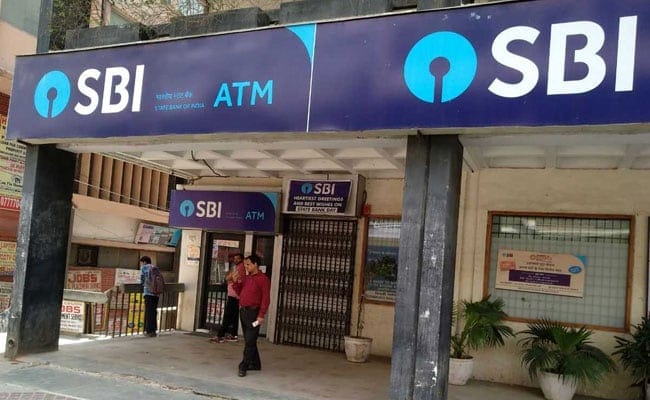
Global rating agency Fitch on Wednesday downgraded the viability ratings (VRs) of State Bank of India (SBI) and Bank of Baroda (BoB), but affirmed their 'BBB' long-term issuer default ratings, along with that of Canara Bank and Bank of India (BoI). The agency has also retained the stable outlook on these lenders. Fitch has downgraded the VRs of SBI and BoB by one-notch to 'BB+' and 'BB', respectively, citing "their weakened intrinsic risk profile due to the negative effect of persistently poor asset quality and earnings on their capital position".
Fitch, which has a negative sector outlook on the domestic banks, however, said the new NPA framework has accelerated bad-loan recognition, and should improve the health over the long term.
"However, heavy losses and capital erosion reinforce sour belief that sector core capitalisation will remain weak unless authorities provide more capital than the budgeted $11 billion," it added.
Also Read: PNB's Viability Rating Down, Says Credit Rating Agency
Nineteen of the 21 state-run banks have reported losses in FY18, cumulatively wiping out almost all of the $13-billion capital injections during the year. Eleven of them reported common equity Tier 1 (CET1) ratios that fell short of the 8 per cent requirement for Basel III capital migration.
"We expect internal capital generation to remain weak, although many state banks should be able to recover from losses in FY19. Credit cost, which rose to 4.3 per cent on average at state-owned banks from 2.5 per cent in FY17 are likely to moderate, but ageing provisions, slippage from watchlist portfolios and the poor growth outlook limits the upside," the agency said.
The long-term ratings of SBI, BoB, Canara Bank and BoIare driven by their support ratings of '2' and support rating floors of 'BBB-', Fitch said, adding the support ratings and support rating floors reflect its expectation that the banks are likely to receive extraordinary government support due to their high systemic importance and the government ownership. On the VR downgrade of SBI, the agency said, "The one-notch downgrade to 'BB+' from 'BBB-' reflects the bank's vulnerable core capitalisation from its prolonged asset quality problems and weak earnings."
SBI's NPA ratio increased further to 11 per cent, while its net NPL/core capital exceeded 50 per cent. Both ratios are better than most of public sector banks, but have increased risk for core capitalisation.
On the VR downgrade of BoB, it said the one-notch downgrade to 'BB' from 'BB+' reflects increasing pressure on its capital position from extended financial weakness in terms of NPAs and earnings.
BoB's CET1 ratio at 9.2 per cent is slightly better despite losses and is higher than that of most state-owned peers, but its NPA ratio jumped to 12.3 per cent. Canara Bank's VR of BB reflects the 60 bps improvement in its CET1 ratio to 9.5 per cent in FY18, supported by fresh equity, over and above that infused by the government. On BoI, which has a VR of 'B+', the report said this is at the lower end of large public-sector banks and reflects its weak financial position, as evident from three years of consecutive losses and a significant jump in its gross NPAs16.6 per cent in FY18.
(This story has not been edited by NDTV staff and is auto-generated from a syndicated feed.)

-
We May Need Another Tukaram Mundhe To Fight Air Pollution | The Reason Why

Developers may install basic measures such as sprinklers and green nets, resume work, and continue violating rules when this equipment stops working.
-
Extracting Value From Battery Scrap Could Be Challenging For India | The Reason Why
A discarded lithium-ion battery still contains valuable materials such as lithium, nickel and cobalt. These can be recovered and reused. When such batteries are crushed and shredded, they produce a dark powder called black mass.
-
One El Nino, India Can Handle. Two Could Break The Granary
India's grain stocks can absorb one bad year, but a second El Nino could drain the buffer in two to three years, economists say.
-
India's Troika Of Good Luck | Joining The Dots
As Jensen Huang's exit drags Nvidia down, a cooling AI trade and resilient earnings have revived investor interest in India. A likely RBI rate hike looms.
-
Talking Points This Week: Leadership Shock At Nvidia, Earnings Strength, And The Fog Over Hormuz
The Anthropic IPO pricing and first trading day, Nvidia's upcoming earnings, and any fresh signals from Iran will set the tone for the following week.
-
Signature Play: The Classic Cocktail Is Dead. Or Is It?
Classic cocktails are disappearing from India's cocktail menus. But they're still being ordered, taught to bartenders and borrowed from. So, who's really having the last drink?
-
A New Samvat Wishlist: Inclusive Prosperity And Human Development
India has strengthened its economic foundations through infrastructure, digital access and enterprise. Its next growth chapter must deepen productivity, create better livelihoods and widen participation in prosperity.
-
Love, Sex Aur Dhokha: The Audacious Plot To Spy On Jensen Huang
A Taipei dinner, a Singapore chip buyer and a suspected Chinese asset: inside the alleged spy operation that got close to NVIDIA's Jensen Huang.
-
Ten Things I Learnt This Samvat
Patience can be a trap. Cheap stocks can stay cheap. Leverage can wipe you out. What did Samvat 2082 teach us? Niraj Shah writes on 10 lessons from the year gone by.
-
Talking Points This Week: Tech Nerves, FII Buying, And A Faraway Banking Shock
The global markets are not shining this Diwali. The exception in the large markets is, India.









