Ferns N Petals In Full Bloom As Small Towns Explore Beyond Local Florists
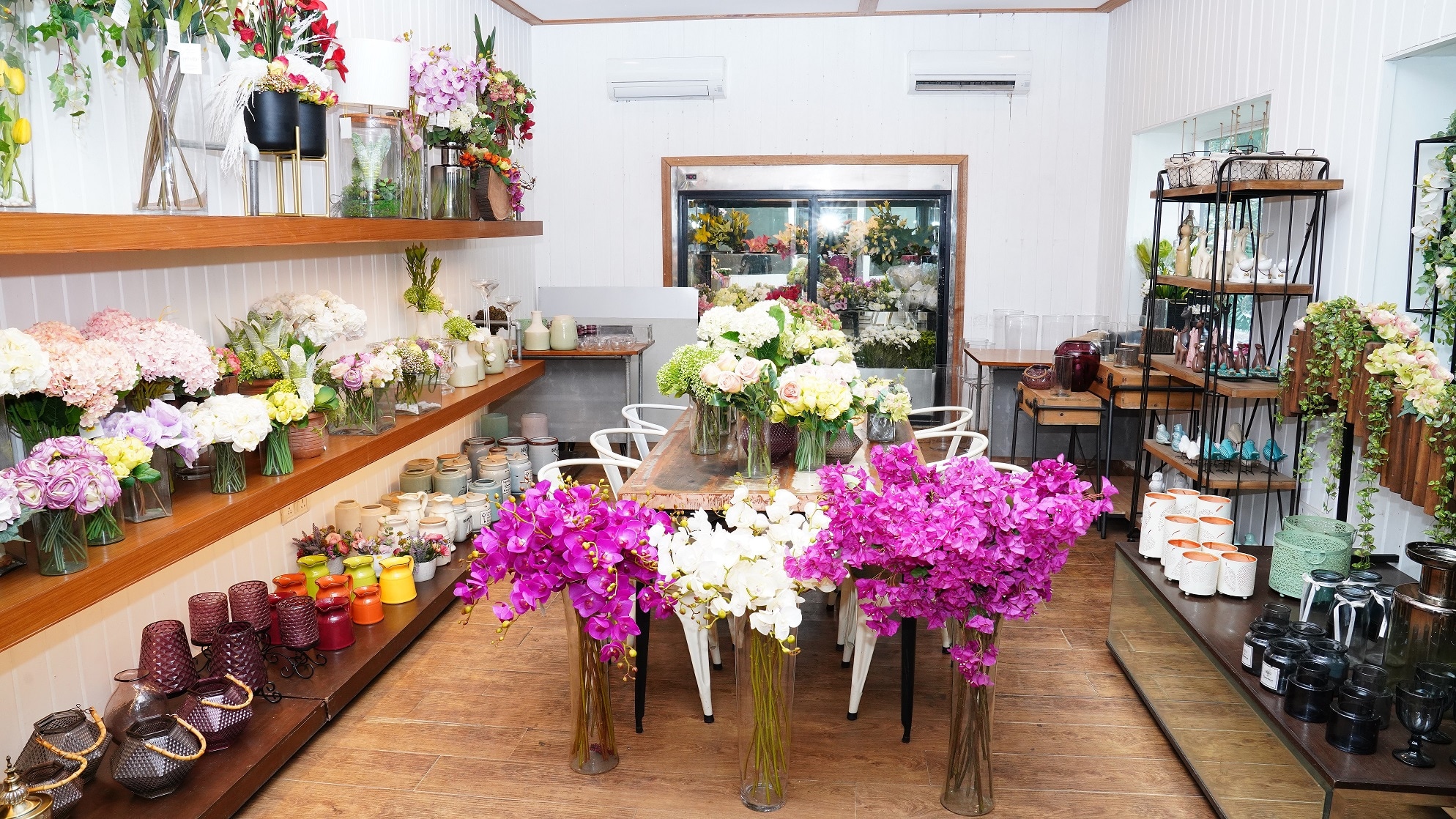
Ferns N Petals, the country's largest floral retail chain, is seeing significant sales coming from small towns as consumers look beyond local florists to buy bouquets, catching up with the trend witnessed across fashion and food.
“We are seeing good demand from tier 2 cities and beyond,” Vikaas Gutgutia, managing director and founder, Ferns N Petals, told BQ Prime. “These set of consumers, albeit in a slow pace, are beginning to trust online channels for gifting perishable flowers on occasions like birthday and Valentine's Day.”
India's gifting market, according to Technopak Advisors, is estimated to be worth Rs 2.5 lakh crore. The industry is divided into two categories—personal gifting and corporate gifting, with the latter accounting for a market size of Rs 12,000 crore, the retail consultancy said.
Indoor plants and flowers now constitute a significant part of online consumption, which was restricted to gifting personalised photo frames, mugs, cakes and cushions.
The affluent lifestyle and influence of social media, according to Gutgutia, have a huge impact on unconventional gifting. And online gifting is taking a centre stage with the idea of long-distance gifting made easy and accessible. Increasing influence of western culture such as celebrating Thanksgiving, Valentine's Day, etc. is also fuelling demand. “We are trying to popularise such events when people can give floral gifts.”
Flowers, however, are not a category “ripe” for sales online for small towns like metros. A vast majority of sales still happen offline and remain largely unorganised. “While there is a marked increase in online consumption, most prefer going to the nearby florists.” This prompted the company to aggressively expand its network of physical stores in the tier 2 towns.
Non-metros contribute about 20% of the company's overall sales.
Ferns N Petals has a pipeline of 50 new stores, according to Gutgutia, taking the total count to 450 by the end of this financial year. Bodhgaya, Dibrugarh and Purnia are some of the small towns in the pipeline. “Our plan is to open at least one store every week in smaller towns. There are about 500-plus districts in India, and we plan to tap all of them over a period of time.”
Currently, three-fourths of its sales come from the online channel.
Beyond Flowers
From a florist, Ferns N Petals has morphed into a gifting company.
Other than flowers, its retail portfolio comprises plants, chocolates, cakes and personalised merchandise generating 10,000 orders in a day.
The company is also into wedding business. It runs FNP Wedding and Events, under which it has 11 properties in the Delhi-NCR region.
It plans to launch 50 properties across the country in the next three-four years to tap into the $50-billion-dollar wedding industry.
“Flowers, cakes and gifts comprise 60% business, while 25% comes from wedding and venue and 15% comes from other verticals,” said Gutgutia.

The Ritz, a wedding venue by Ferns N Petals, in Gurugram. (Source: BQ Prime)
After a pandemic-imposed drought, the wedding industry is booming again and Gutgutia forecasts more than 100% growth this year.
“Typically, November-February is the peak wedding season,” he said. “But this year there are not many wedding dates in November, so December onwards looks promising as big fat weddings return to normalcy.” About 80% of its venues, according to Gutgutia, are already booked hosting two-three events a day.
The company also has ambitious overseas expansion plans with new markets such as Kuwait, Bahrain, Oman and Indonesia in the pipeline. It's currently present in seven countries, including Dubai, Singapore, Qatar, Saudi Arabia and Malaysia. “Indian origin residents staying in these countries contribute close to one-fourth of its revenue,” said Gutgutia.
The company, he said, gets some 1,200 orders a day from the U.A.E. and Singapore. This year, he expects to see revenue growth of 50% from these countries.
Inflation, however, remains a concern, said Gutgutia.
The first quarter of the current fiscal was “very disappointing” as higher input costs hurt margin. Surging inflation crippled demand as basics like groceries and fuel took large chunks of the consumers' wallet share.
But demand is picking up. “Towards the end of Q2, we are seeing some pick up in consumption,” he said, hopeful of a “buoyant” festive season.
Ferns N Petals want to focus heavily on the branding, alongside scaling up the business, said Gutgutia. “We have set aside 60% of the total Rs 75-crore budget for advertising and promotion for this year's festive season.”
Double Turnover In Two Years
Gutgutia is eyeing revenue worth Rs 1,200 crore by the end of FY24 from Rs 650 crore in FY22 as the company revisits its plan for an initial public offering.
“Covid definitely has put a brake on the [IPO] plans that were planned for 2020,” said Gutgutia. “Our adviser (Motilal Oswal) advised us to first unlock value by diluting a small percentage of the company which will help our expansion plans and branding, etc. Then bring the IPO. This would be a smarter idea.” Delaying the plan, he said, was a “strategic move”.
“Towards the end of 2024 is what we now have in mind to launch IPO.”
Founded in 1994, Ferns N Petals raised Rs 200 crore in its maiden funding from private equity firm Lighthouse in March this year.
The proceeds will be used for promotions, speed up offline expansion and for extensive digital overhaul.
The company is also looking to acquire niche gifting brands that will help fulfil gaps in its portfolio. “We are scouting for small gifting brands in India and overseas to scale our business further,” said Gutgutia.

-
One Battle After Another: India's Corporate Dynasties Battle For Control

2026 could go down as Corporate India's year of succession wars, governance battles and family fault lines.
-
Rs 50-Lakh Gold In Bank Locker, Rs 3 Lakh Of Protection: The Gap Most Families Don't Know About
The RBI ties a bank's liability to the annual locker rent and families who want to insure their jewellery face a separate question about how to prove what was inside.
-
The More Food Turns Into Fuel, The Harder It Is To Read Agricultural Markets | The Reason Why
A policy designed to reduce dependence on imported fuel can create new pressures elsewhere in the food economy.
-
Your iPhone Costs 12 Grams Of Gold, A Car About 100. What Does Your Life Weigh?
Measured in rupees, almost everything looks more expensive than it did a generation ago. Measured in grams of gold, a lot of it has become cheaper.
-
Gold Is Rs 22,000 Cheaper Than A Month Ago. Should You Buy Amid The Wedding Season?
Gold's potential slide to $3,500 could save around Rs 4,700 per 10 grams, but a soft inflation print could just as easily push prices back up. One way to split the risk is to buy in parts, some now and the rest after the Fed's Dec. 9 decision.
-
AI Agents Are Gaining Power. Who Governs Them?
Artificial intelligence agents promise to transform productivity by moving machines from assisting decisions to executing them. But as organisations delegate greater authority to these AI-agents, they must first establish who controls that authority and who remains accountable when things go wrong.
-
Why Swapping Your Old Gold Can Trigger A Rs 5 Lakh Tax Bill, And How You Can Avoid It Legally
Swapping old gold for new is taxed as a sale and a fresh purchase. Getting your own gold remade can cut most of that bill, though it has its own costs.
-
The AI Trade is Done. The Real Opportunity for Investors Starts in 2027 | Unhedged Position
As pureplay AI stocks plunge and circular, capex-led financing unwinds, 2027 is set to be a year of reckoning for AI companies. Yet the bust clears the way for a better opportunity for investors in 2027 -- shifting the spotlight from AI builders to the companies using AI.
-
Leadership As Mission: Why The Age Of AI Demands More Human Leadership
Debjani Ghosh examines how AI is changing leadership, arguing that its success must be measured by its impact on people and the accountability of those guiding its use.
-
We May Need Another Tukaram Mundhe To Fight Air Pollution | The Reason Why
Developers may install basic measures such as sprinklers and green nets, resume work, and continue violating rules when this equipment stops working.









