FedEx Targets $4 Billion Cost Cuts By Merging Delivery Networks
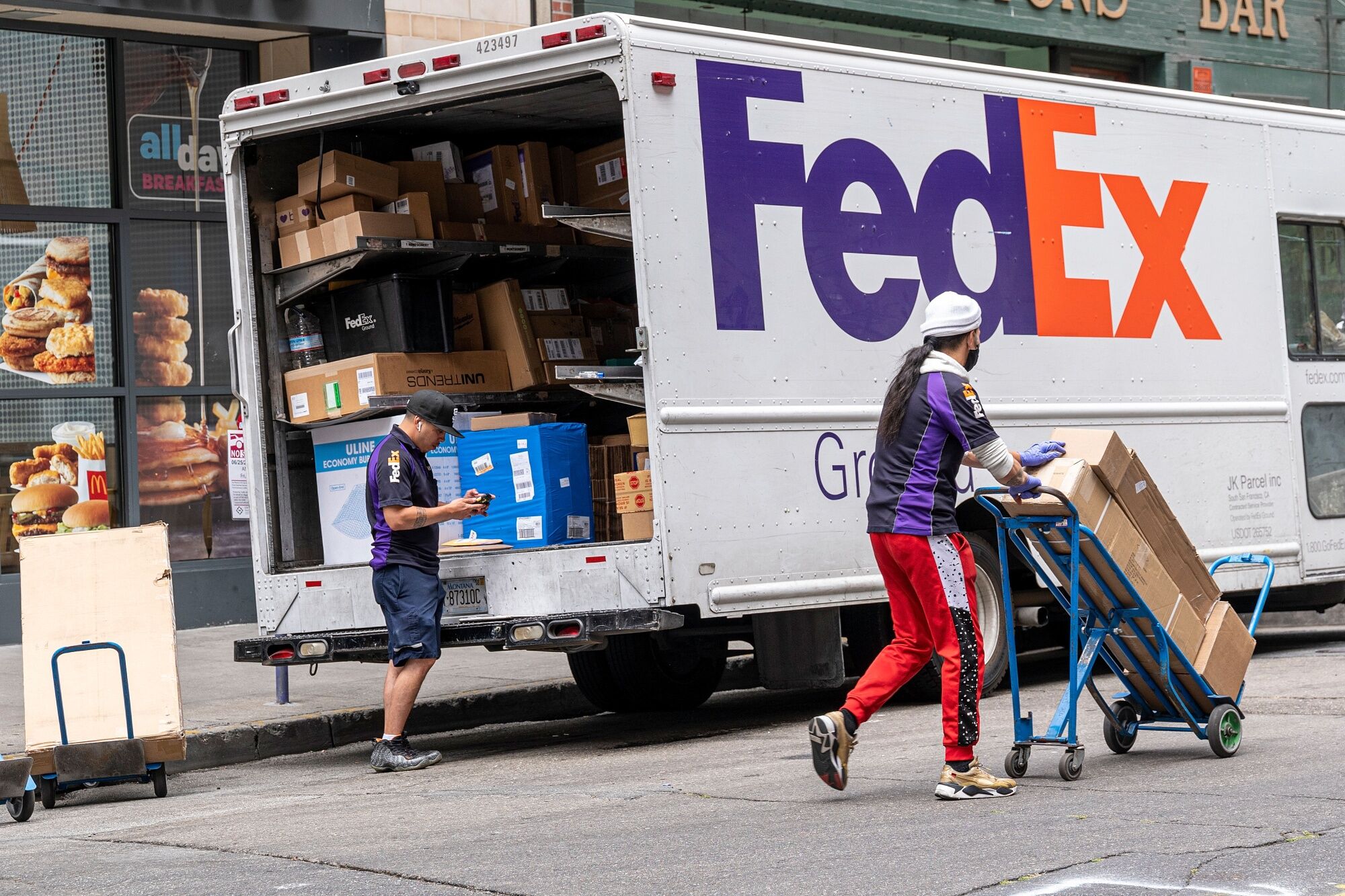
(Bloomberg) -- FedEx Corp. is seeking to cut $4 billion in costs by combining its two main delivery networks, in an ambitious plan by new Chief Executive Officer Raj Subramaniam to increase profit margins.
The company has for decades operated an express package business separately from its ground unit, which FedEx acquired in 1998 and depends on third-party contractors to make the last-mile delivery of parcels. As of June of 2024, it will be “a single company operating a unified, fully integrated air-ground network under the respected FedEx brand,” FedEx said Wednesday in a statement.
The courier's shares rose 2.4% as of 8:39 a.m. before regular trading in New York. The stock has been trading almost 30% below its May 2021 peak.

FedEx has trailed United Parcel Service Inc. on profit margins even though its larger rival has a unionized workforce and pays its drivers more than twice what drivers at FedEx's ground network make. Many analysts point to the efficiencies of UPS's single delivery network as the reason. In the latest quarter, UPS reported adjusted operating margins of 13% compared with just 5.2% for FedEx.
The company didn't give details in the statement on any job cuts and a spokesperson offered no specifics on the scope or timeline.
“We will continue to focus on responsible headcount management in our operations as well as corporate functions,” spokesperson Rachael Simmons said in an email.
FedEx is trying to regain its footing after Subramaniam was forced to scrap profit growth goals outlined last September due to declining package volumes. He had unveiled those targets just after he officially took over as CEO in June.
The company expects to achieve $4 billion of permanent cost reductions in fiscal 2025. FedEx said it seeks to save an additional $2 billion from revamping its delivery network by fiscal year 2027. Its board also approved a 10% increase in the annual dividend for fiscal 2024 to $5.04 a share.
The plan to boost profit addresses a commitment to investors, led by activist shareholder D.E. Shaw, that FedEx made only two weeks after Subramaniam took the helm. It promised then to boost dividends, rework its executive pay rules and reduce capital expenditures. Under the agreement, D.E Shaw named two board members.
FedEx also said Richard Smith, the son of founder Fred Smith, will be in charge of Airline and International and John Smith will be in charge of all ground operations, including FedEx's freight business.
More stories like this are available on bloomberg.com
©2023 Bloomberg L.P.

-
The Economic Imperative: Analysing The Material Driving Force Behind India-Canada Strategic Reset

This economic complementarity is further reinforced by deep institutional investment ties and talent mobility, which form the bedrock of the bilateral framework.
-
Medicine Pricing: Where Must Profit Stop?
India must confront excessive margins, hidden incentives and regulatory gaps that threaten the integrity of medicine.
-
Why Amazon And Flipkart Are Struggling To Beat Meesho In India's Smaller Cities
With 274 million users and lowest-cost logistics, Meesho is defending its value commerce crown against giants like Amazon and Flipkart.
-
High US Salaries, No Green Card Certainty: The Financial Calculation Facing Indian H-1B Families
The suspension of PERM processing at eight technology employers does not cancel existing H-1B visas. What it does is force a question many Indian families have been avoiding: is the US salary worth tying your career and family plans to one employer?
-
Swiggy vs Eternal: Food Delivery's Two Rivals Are No Longer In The Same Race
Eternal is building a private AI assistant, dark.ai. Swiggy is still working out how to make Instamart pay, with an operating loss of Rs 895 crore in the July-September quarter while Blinkit stayed profitable.
-
Where You Live Shapes How You Get To Work | The Reason Why
Two-wheelers are the most popular way to get to work in India, accounting for nearly 43% of workplace commutes.
-
Unhedged Position: Can India See An Indonesia-Style Time Correction?
The Nifty is trading below levels it first clocked in 2024. Is there, then, as I have suggested in the headline, potential that the current time correction drags on painfully for the next three-five, even ten years?
-
Navigating Friction And Energy Realities: An Analysis Of Marco Rubio's October Visit To India
Occurring at a critical juncture marked by stalled trade negotiations and escalating geopolitical pressures over global energy supplies, the visit offers a profound window into modern US-India relations.
-
India Exports Capital. Why Not Export Trusteeship?
The big question, then, is whether India can build an institution that global borrowers, investors, banks, and lawyers can trust, even without an Indian connection.
-
France's Economy & Politics Are In Crisis | The Reason Why
Let's look at how the French economy and politics evolved under Nicolas Sarkozy, Franois Hollande and Emmanuel Macron.










