Fed’s Brainard Says Case For September Rate Pause Is ‘Very Hard’
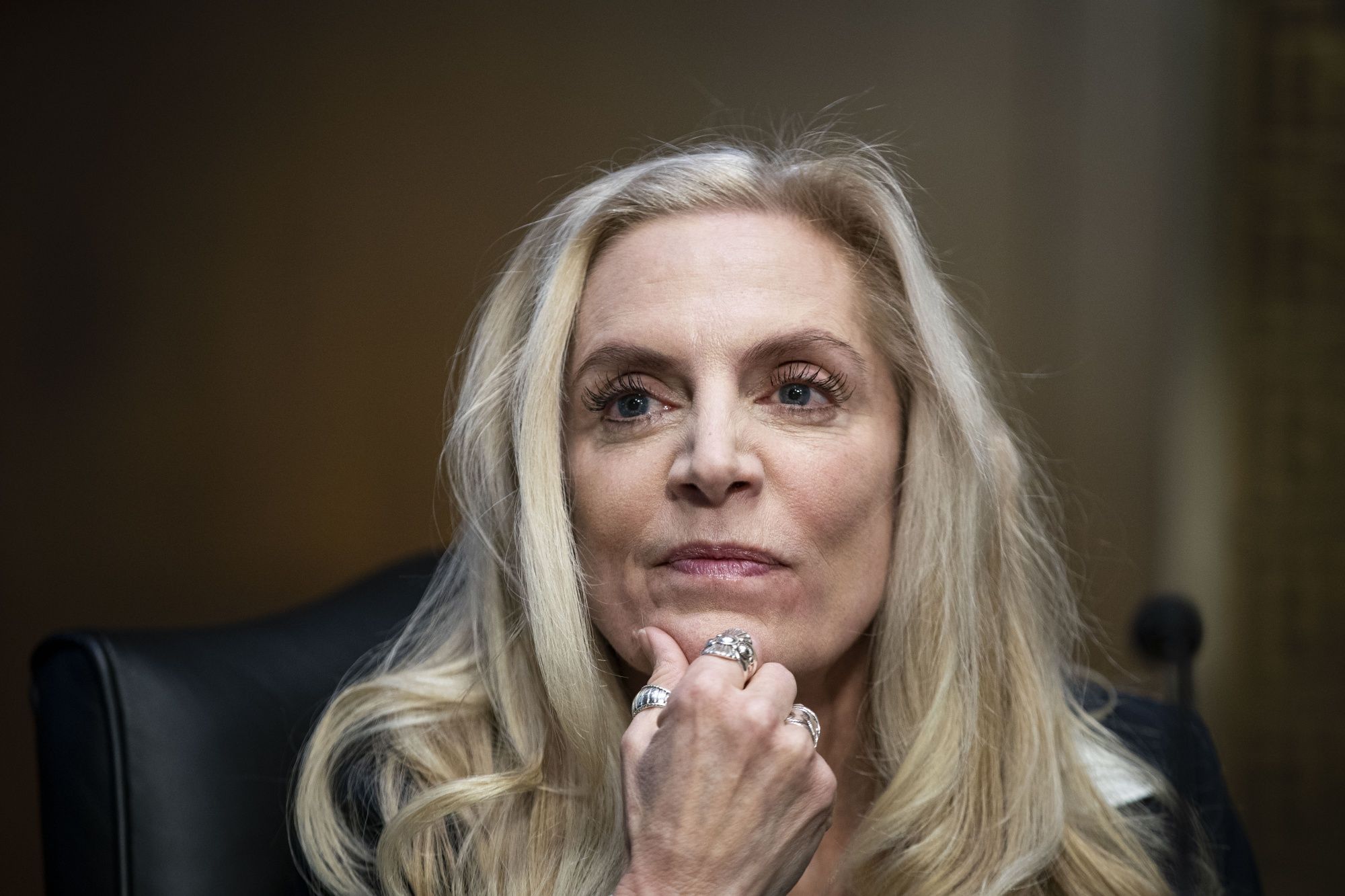
(Bloomberg) -- Federal Reserve Vice Chair Lael Brainard said expectations for half-percentage-point increases in interest rates this month and next were reasonable, and saw no case for pausing the central bank's tightening campaign afterward.
“From where I sit today, market pricing for 50 basis points, potentially in June and July, from the data we have in hand today, seems like a reasonable path,” Brainard said Thursday in an interview with CNBC. “Right now it's very hard to see the case for a pause. We've still got a lot of work to do to get inflation down to our 2% target.”
US central bankers raised rates by half a percentage point last month and signaled they'll do so again at the next two meetings as they try to suppress demand and tamp down the hottest inflation in decades.
Since then, Atlanta Fed chief Raphael Bostic has suggested a pause in September might make “sense.” But Brainard's comment made clear that his was a minority opinion.
“My sense is that there's virtually no support for that, outside of Bostic,” said Stephen Stanley, chief economist at Amherst Pierpont Securities. “It seems like there's an unusual degree of consensus on the committee right now -- which is not surprising because the course of action, at least in the short run, is pretty obvious.”
Minutes from the Fed's May meeting suggested that the rapid pace of policy tightening would position officials to potentially slow the hiking cycle later this year if needed. Brainard, who was sworn in as vice chair last week, echoed this desire for flexibility, calling it “harder to say” what the Fed should do once it got to September.
“If we don't see the kind of deceleration in monthly inflation prints, if we don't see some of that really hot demand starting to cool a little bit, then it might well be appropriate to have another meeting where we proceed at the same pace,” she said. “If we are seeing a deceleration in the monthly prints, it might make sense to be proceeding at a slightly slower pace.”
The Ukraine war and rolling Covid-19 lockdowns in China have further tangled global supply chains, complicating the Fed's task of wrestling inflation back to its 2% target.
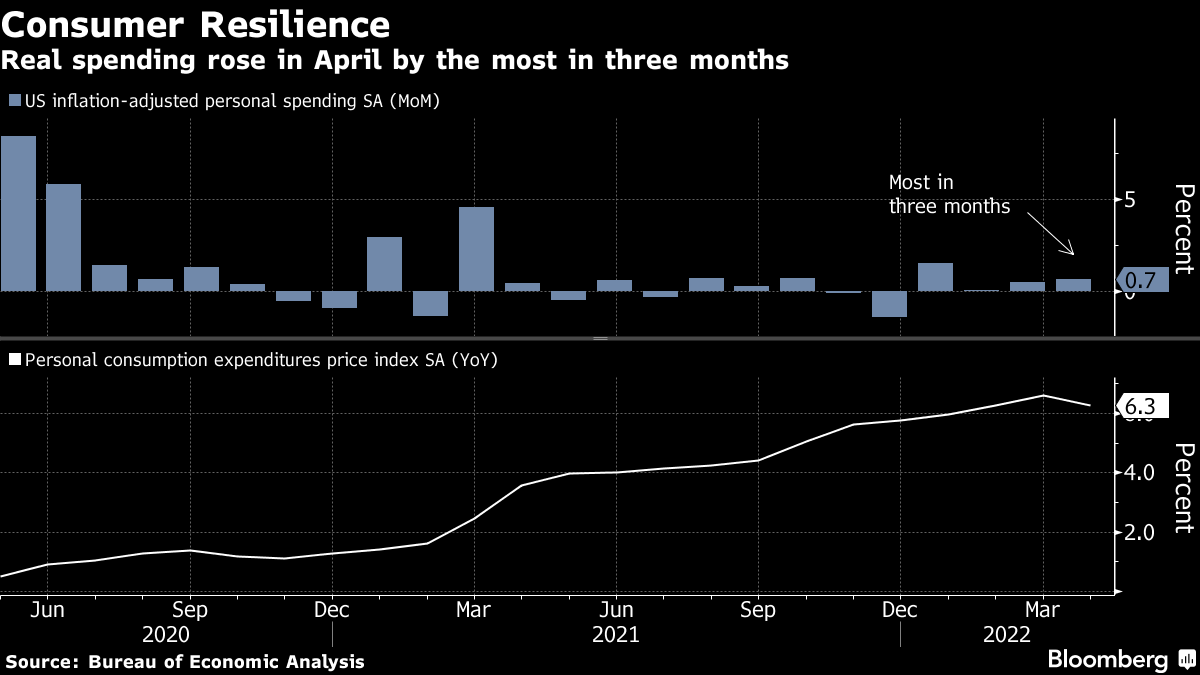
The central bank's preferred gauge of price pressures rose 6.3% during the 12 months ending April, which was slightly slower than the previous month. Brainard said it was too soon to say that it had peaked.
“I am going to be looking to see a consistent string of decelerating monthly prints on core inflation before I'm going to feel more confident,” she said. “We're certainly going to do what is necessary to bring inflation back down. That is our number one challenge.”
The Fed is also tightening financial conditions by shrinking its enlarged balance sheet at a monthly pace that ramps up to $95 billion in September. The balance sheet more than doubled in size to $8.9 trillion as the central bank aggressively bought assets to support the US economy during the first two years of the pandemic.
Brainard said that it was hard to say how much impact the shrinking balance sheet would have on financial conditions, but noted some estimates suggest it might be worth another two-to-three rate hikes.
Financial markets have swung sharply as investors fret the Fed's efforts to curb inflation could trigger a recession, and there are some early signs that its campaign to cool the economy is having an impact. The Fed's Beige Book survey released Wednesday suggested the pace of growth was downshifting, with four of the central bank's 12 districts noting that growth had slowed.
Existing home sales have slowed as mortgage rates have increased but other parts of the economy have maintained momentum. Recent data for retail sales and factory production show the economy remained strong as it began the second quarter. Employment is also still robust, with payrolls rising by 428,000 in April, and another roughly 323,000 forecast for May when the Labor Department releases the report Friday.
Brainard said that recent readings on the economy have been mixed and that evidence of softness was to be expected as the central bank tightens policy to restrain demand.
“We do expect to see some cooling of a very, very strong economy over time. And we'll be looking closely to the data to see that cooling in demand, and moderation -- a better balance in the labor market,” she said. “There is a path there where we could see demand cooling, inflation coming down, the labor market being in better balance while still being strong.”
(Updates with analyst reaction in fifth paragraph.)
More stories like this are available on bloomberg.com
©2022 Bloomberg L.P.

-
Talking Points This Week: Leadership Shock At Nvidia, Earnings Strength, And The Fog Over Hormuz

The Anthropic IPO pricing and first trading day, Nvidia's upcoming earnings, and any fresh signals from Iran will set the tone for the following week.
-
Signature Play: The Classic Cocktail Is Dead. Or Is It?
Classic cocktails are disappearing from India's cocktail menus. But they're still being ordered, taught to bartenders and borrowed from. So, who's really having the last drink?
-
A New Samvat Wishlist: Inclusive Prosperity And Human Development
India has strengthened its economic foundations through infrastructure, digital access and enterprise. Its next growth chapter must deepen productivity, create better livelihoods and widen participation in prosperity.
-
Love, Sex Aur Dhokha: The Audacious Plot To Spy On Jensen Huang
A Taipei dinner, a Singapore chip buyer and a suspected Chinese asset: inside the alleged spy operation that got close to NVIDIA's Jensen Huang.
-
Ten Things I Learnt This Samvat
Patience can be a trap. Cheap stocks can stay cheap. Leverage can wipe you out. What did Samvat 2082 teach us? Niraj Shah writes on 10 lessons from the year gone by.
-
Talking Points This Week: Tech Nerves, FII Buying, And A Faraway Banking Shock
The global markets are not shining this Diwali. The exception in the large markets is, India.
-
Midterm Rally Lasted A Day. The Hard Reality Of A Divided US May Last Two Years | Opinion
Between a contested AI boom, a debt ceiling that arrives in 2027 and a president with every incentive to act alone, the next two years may prove more volatile than the first day's rally suggests.
-
Blue Wave Will Derail the AI Trade but Won't Dismantle the AI Era | Unhedged Position
The Democrats' sweep of the US Congress will see politics collide with economic forces both over the long and short term.
-
It's Time To Take The GST Council's Bet On Trust Global
Payment records can prove India's services exports, and clear, proportionate rules can bring foreign digital sellers into the tax net.
-
Opinion | India at 38: From Innovation Overperformer to Innovation Powerhouse
India now has 453 VC-backed deep science startups, 18 of them late-stage, after 117 percent growth since 2020. Laurus Labs, at USD 9.3 billion, is the most valuable deep science company in any middle-income economy outside China.









