Feb Car Sales Up 7%; Single Digit Growth in FY15: SIAM
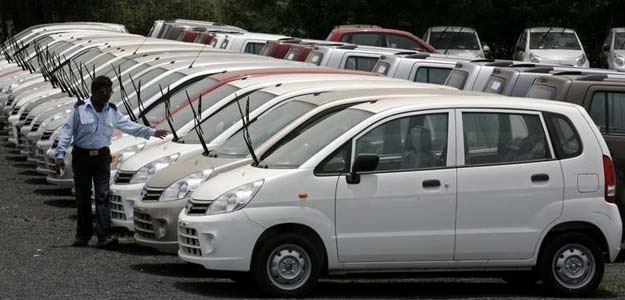
New Delhi: Car sales in India grew by 6.85 per cent in February this year, reflecting improving consumer sentiments, prompting industry body SIAM to expect it to remain in positive territory with single digit growth this fiscal.
According to the data released by the Society of Indian Automobile Manufacturers (SIAM), domestic passenger car sales stood at 1,71,727 units in February this year as compared to 1,60,717 units in the same month of 2014.
"This is a reflection of the improving consumer sentiments. With the Budget addressing issues that will lead to overall economic growth, we expect car sales this fiscal to be in positive territory with single digit growth," SIAM deputy director general, Sugato Sen told reporters here.
He said negative sentiments that were affecting car sales have now worn off and February sales were to a large extent continuation of the positive sentiments that were brought when the new government came to power.
"March sales should be better than February as it is usually a month of good sales for the industry," Mr Sen said, adding different measures announced in the Budget to boost the economy should increase demand of vehicles across all segments.
He said steps like more allocation for employment under MNREGA, which will lead to more income in rural areas could help boost demand of two-wheelers, especially motorcycles which saw a decline in February, and light commercial vehicles.
In February, country's largest car maker Maruti Suzuki India saw its domestic sales grow by 7.25 per cent to 90,728 units as against 84,595 units in the same month last year.
Rival Hyundai Motor India's sales grew by 9.7 per cent to 37,163 units as compared to 33,875 units in February last year. Honda Cars India saw its sales grew by 4.05 per cent to 15,065 units as against 14,478 units last year.
Home-grown Tata Motors sales grew by 30.79 per cent to 11,805 units from 9,026 units in the year-ago month.
Utility vehicle major Mahindra & Mahindra saw its sales decline by 5.13 per cent to 17,805 units as against 18,768 units in February last year.
During the month, total two-wheeler sales were down by 0.99 per cent to 12,08,084 units from 12,20,141 units in the same period a year ago.
According to SIAM, motorcycle sales in last month were down by 8.22 per cent to 7,74,122 units from 8,43,436 units in the same month previous year.
Mr Sen said poor harvest and drying up of funds under MNREGA had impacted demand of motorcycles in rural areas.
Motorcycle market leader Hero MotoCorp saw its bike sales decline by 7.68 per cent to 4,07,809 units as against 4,41,716 units in the same month last year. .
Honda Motorcycle and Scooter India (HMSI) also witnessed a decline of 2.32 per cent in its motorcycle sales at 1,39,233 units as against 1,42,545 units in the year-ago month.
Bajaj Auto's sales dropped by 25.83 per cent to 1,15,840 units as against 1,56,184 units in the same month last year.
Overall scooter sales were, however, up 18.78 per cent in February this year at 3,70,527 units as against 3,11,957 units in the same month last year.
Scooter market leader HMSI saw its sales grow by 21.99 per cent to 2,08,573 units last month as against 1,70,974 units in February 2014.
Hero MotoCorp's scooter sales were also up 26.88 per cent to 67,442 units as against 53,153 units in February last year, Chennai-based TVS Motor Co also posted a growth of 34.16 per cent growth at 54,655 units as compared to 40,737 units in the same month last year.
Total sales of commercial vehicles were up 10.13 per cent to 52,843 units from 47,982 units in the year-ago period, SIAM said.
Total sale of vehicles across categories registered a growth of 0.15 per cent to 15,26,125 units in February 2015 as against 15,23,823 units in the same month last year, it added.

-
Getting To Work Costs Women More | The Reason Why

It is not just about women paying more than men. It is about women paying much more in cities than in villages.
-
AI Bias In Investing Cannot Be Eliminated, But It Can Be Governed
Framing is a particularly important example as identical financial information presented in terms of gains rather than losses can lead an LLM to reach a different assessment.
-
Joining The Dots | Dark Skies, Steady Diya: Why Hope Holds This Diwali
With war, a weak rupee and foreign outflows weighing on sentiment, policymakers at the NDTV World Summit and market veterans at NDTV Profit Ignite: Diwali Edition offered the same advice: stay invested and filter out the noise.
-
The Curious Case of Equitas Small Finance Bank And A CEO Who Quit For Stock
PN Vasudevan believes persistent investor concerns over a perceived conflict of interest had become a governance overhang on Equitas Small Finance Bank's stock, even as the lender improved profitability and asset quality.
-
Talking Points This Week: AI Cash Burn, A Tiger Comeback And An India That Still Finds Its Own Path
India is not immune to higher oil or tighter global liquidity, yet its earnings base is broader, its domestic policy levers are still available.
-
Foreign Investors Own Half Of HDFC Bank and ICICI Bank. An LTCG Cut Could Matter Most Here
Foreign portfolio investors have US$115 billion parked in HDFC Bank, ICICI Bank. If the government cuts long-term capital gains tax, Jefferies says returning foreign money could land here first.
-
'Never Seen This Level Of Negativity': Sandeep Tandon Says The Next Rally May Be Closer Than You Think
Veteran investor Sandeep Tandon says foreign selling is easing, large-caps are due a comeback and mid-caps are crowded, while he turns positive on gold, power and pharma this Diwali.
-
Indians Stay With Family, Not In Hotels | The Reason Why
India still lacks enough clean, reliable and affordable hotels for budget-conscious travellers.
-
The Economic Imperative: Analysing The Material Driving Force Behind India-Canada Strategic Reset
This economic complementarity is further reinforced by deep institutional investment ties and talent mobility, which form the bedrock of the bilateral framework.
-
Medicine Pricing: Where Must Profit Stop?
India must confront excessive margins, hidden incentives and regulatory gaps that threaten the integrity of medicine.










