The Big Names That Got Backstop For Billions In Uninsured SVB Deposits
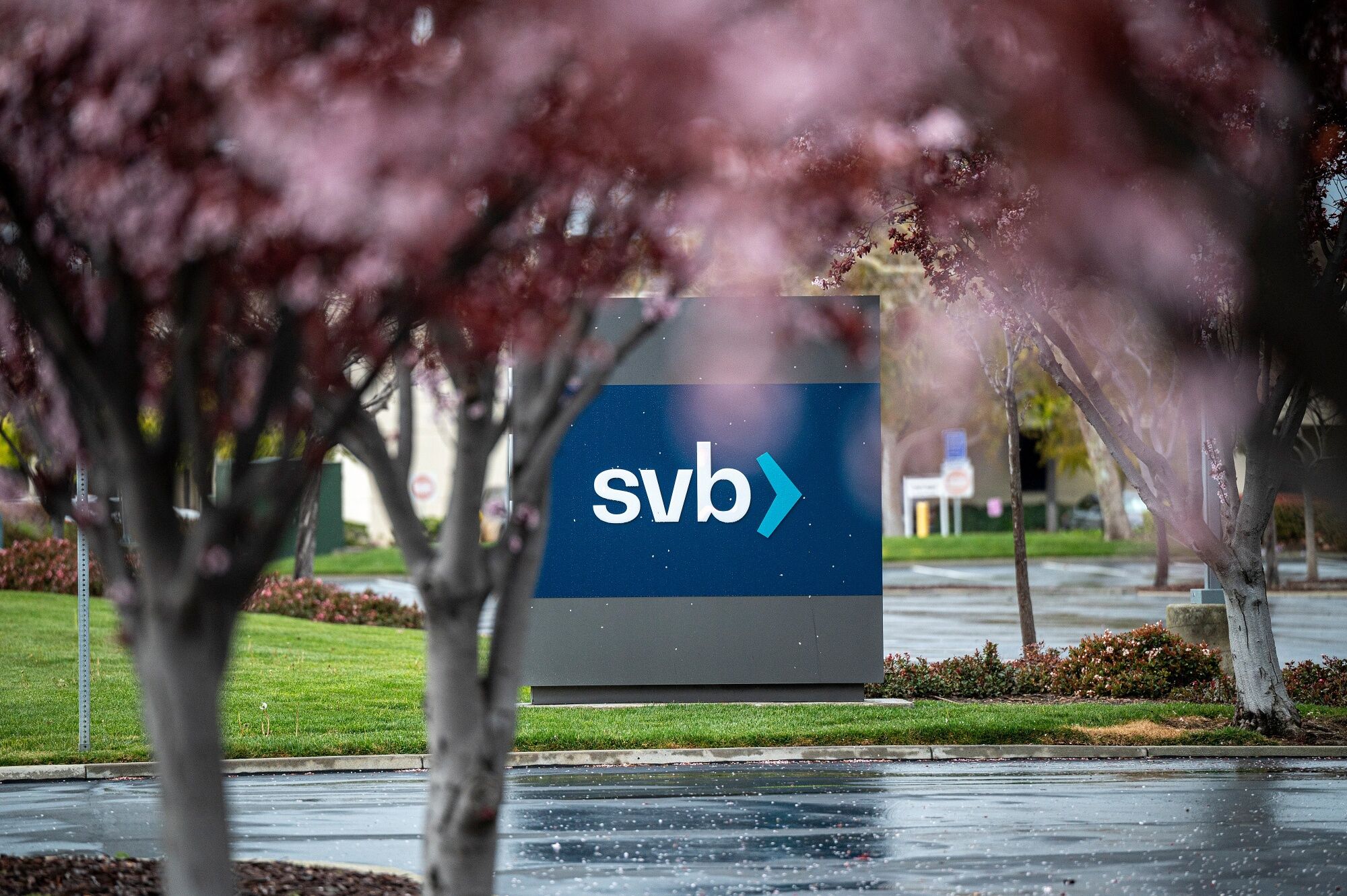
(Bloomberg) -- When federal regulators stepped in to backstop all of Silicon Valley Bank's deposits, they saved thousands of small tech startups and prevented what could have been a catastrophic blow to a sector that relied heavily on the lender.
But the decision to guarantee all accounts above the $250,000 federal deposit insurance limit also helped bigger companies that were in no real danger. Sequoia Capital, the world's most prominent venture-capital firm, got covered the $1 billion it had with the lender. Kanzhun Ltd., a Beijing-based tech company that runs mobile recruiting app Boss Zhipin, received a backstop for more than $900 million.
A document from the Federal Deposit Insurance Corp., which the agency said it mistakenly released unredacted in response to a Bloomberg News Freedom of Information Act request, provides one of the most detailed glimpses yet into the bank's big customers.
The FDIC, which has been selling off pieces of the bank since its failure, asked that Bloomberg destroy and not share the depositor list, saying the agency intended to “partially” withhold some details from the document “because it included confidential commercial or financial information,” according to a letter from an attorney for the regulator. The agency subsequently declined to comment on the substance of the information in the document.
US regulators' decision to declare a “systemic risk exception” and make all depositors at Silicon Valley Bank whole came after a white-knuckled weekend as tech founders digested SVB's collapse on Friday, March 10. President Joe Biden described the solution as one that “protects American workers and small businesses, and keeps our financial system safe.”
Treasury Secretary Janet Yellen cast the government's response — including backstopping all depositors — as necessary. “American households depend on banks to finance their homes, invest in an education, and otherwise improve their standards of living. Businesses borrow from these institutions to start new companies and expand existing ones,” she said at an industry conference the following week before discussing the intervention.
But the decisions that government agencies, including the FDIC, made in a frantic few days after SVB failed were immediately controversial. Some critics said that making all depositors whole at the lender and Signature Bank, which failed March 12, created a moral hazard. A fierce debate is also raging over whether the insurance limit needs to be raised for businesses.
Former Vice President Mike Pence argued that backstopping all depositors amounted to a bailout, a depiction the Biden administration has pushed back against strenuously. Pence blasted the government's decision to insure all deposits, in part, because the move would cover Chinese companies that did business with the bank.
In May, the FDIC proposed tagging the largest banks with billions of dollars in extra fees to replenish the US government's bedrock deposit insurance fund after it was tapped to backstop deposits above the $250,000 threshold. At the time, the regulator estimated the decision to cover all depositors at SVB and Signature cost the fund about $15.8 billion.
FDIC Chairman Martin Gruenberg has previously said that at SVB the guarantee to uninsured depositors covered small and midsize business, as well as those with very large balances, and that the bank's top 10 depositor accounts held $13.3 billion total.
The new document underscores that in addition to serving a legion of startups and fledgling businesses, SVB was a go-to bank for tech industry giants, including some that have kept their relationships with the bank confidential.
- The $1 billion that Sequoia, the firm famous for backing iconic companies including Apple, Google and WhatsApp, had at SVB made up a fraction of its $85 billion assets under management. In addition to maintaining its own accounts at the lender, the firm also recommended every startup it backed do the same, Michael Moritz, a partner at the firm, wrote in the Financial Times. A representative for Sequoia declined to comment on the depositor list.
- Kanzhun, which had $902.9 million in deposits with SVB according to the document, didn't respond to multiple emailed requests for comment. The company, which was heavily backed by Chinese giant Tencent before it went public on the Nasdaq in 2021, was among the largest Chinese companies to IPO in the US that year.
- Altos Labs Inc., a life sciences startup that works on cell regeneration, had $680.3 million in deposits with the bank. The privately held company has raised $3.27 billion from billionaires including Jeff Bezos and Yuri Milner, as well as Mubadala Investment Company and other investors. An Altos representative declined to comment.
- Payments startup Marqeta Inc. had $634.5 million at the bank, according to the document. In a statement, the firm acknowledged that it had “significant deposits” at SVB, but was already in the process of moving money to other banks. “While Marqeta supported the decision to guarantee all deposits at the bank, our ability to execute as a business and meet our financial obligations would not have been impacted, even if it was a longer resolution process” the firm said.
- IntraFi Network, which provides deposit services to financial institutions, had $410.9 million worth of deposits at the bank, according to the document. However, in a statement, the firm said that it didn't actually have any of its own money with the lender, nor was it a client. The amount, rather, represents the funds of almost 2,000 different depositors whose balances were fully insured when SVB collapsed, according to IntraFi.
- Crypto stablecoin company Circle Internet Financial Ltd. previously disclosed its SVB deposits, which at the time represented 8.2% of the reserves backing its USD Coin. A spokesman said the company had no additional comment. The USD Coin, which is intended to maintain a 1-to-1 peg to the dollar, briefly drifted from that $1 level on the news of Circle's exposure. The document listed it as SVB's biggest depositor with a balance of $3.3 billion.
- Streaming set-top box maker Roku Inc. also previously disclosed having roughly 26% of its cash and cash equivalents parked at the bank. The document listed its balance at $420 million. A Roku spokesman declined further comment.
- Fintech company Bill.com previously disclosed it had roughly $670 million at the bank. The firm said the amount included about $300 million of its money and $370 million that belonged to customers. A company spokesman declined further comment. The FDIC document listed Bill.com's total balance at $761.1 million.
Silicon Valley Bank and parent SVB Financial Group Inc. were also listed as having a combined $4.6 billion in deposits. SVB Financial has argued in its bankruptcy case that at least $2 billion in deposits the parent had with the bank should be returned. Federal regulators have said SVB Financial, which declined to comment on the document, must apply to the bank's receiver for that money.
--With assistance from Steven Church and stacy-marie ishmael.
More stories like this are available on bloomberg.com
©2023 Bloomberg L.P.

-
Gold Is Rs 22,000 Cheaper Than A Month Ago. Should You Buy Amid The Wedding Season?

Gold's potential slide to $3,500 could save around Rs 4,700 per 10 grams, but a soft inflation print could just as easily push prices back up. One way to split the risk is to buy in parts, some now and the rest after the Fed's Dec. 9 decision.
-
AI Agents Are Gaining Power. Who Governs Them?
Artificial intelligence agents promise to transform productivity by moving machines from assisting decisions to executing them. But as organisations delegate greater authority to these AI-agents, they must first establish who controls that authority and who remains accountable when things go wrong.
-
Why Swapping Your Old Gold Can Trigger A Rs 5 Lakh Tax Bill, And How You Can Avoid It Legally
Swapping old gold for new is taxed as a sale and a fresh purchase. Getting your own gold remade can cut most of that bill, though it has its own costs.
-
The AI Trade is Done. The Real Opportunity for Investors Starts in 2027 | Unhedged Position
As pureplay AI stocks plunge and circular, capex-led financing unwinds, 2027 is set to be a year of reckoning for AI companies. Yet the bust clears the way for a better opportunity for investors in 2027 -- shifting the spotlight from AI builders to the companies using AI.
-
Leadership As Mission: Why The Age Of AI Demands More Human Leadership
Debjani Ghosh examines how AI is changing leadership, arguing that its success must be measured by its impact on people and the accountability of those guiding its use.
-
We May Need Another Tukaram Mundhe To Fight Air Pollution | The Reason Why
Developers may install basic measures such as sprinklers and green nets, resume work, and continue violating rules when this equipment stops working.
-
Extracting Value From Battery Scrap Could Be Challenging For India | The Reason Why
A discarded lithium-ion battery still contains valuable materials such as lithium, nickel and cobalt. These can be recovered and reused. When such batteries are crushed and shredded, they produce a dark powder called black mass.
-
One El Nino, India Can Handle. Two Could Break The Granary
India's grain stocks can absorb one bad year, but a second El Nino could drain the buffer in two to three years, economists say.
-
India's Troika Of Good Luck | Joining The Dots
As Jensen Huang's exit drags Nvidia down, a cooling AI trade and resilient earnings have revived investor interest in India. A likely RBI rate hike looms.
-
Talking Points This Week: Leadership Shock At Nvidia, Earnings Strength, And The Fog Over Hormuz
The Anthropic IPO pricing and first trading day, Nvidia's upcoming earnings, and any fresh signals from Iran will set the tone for the following week.









