Faith of Millions of Small Investors Put to Test With LIC Debut
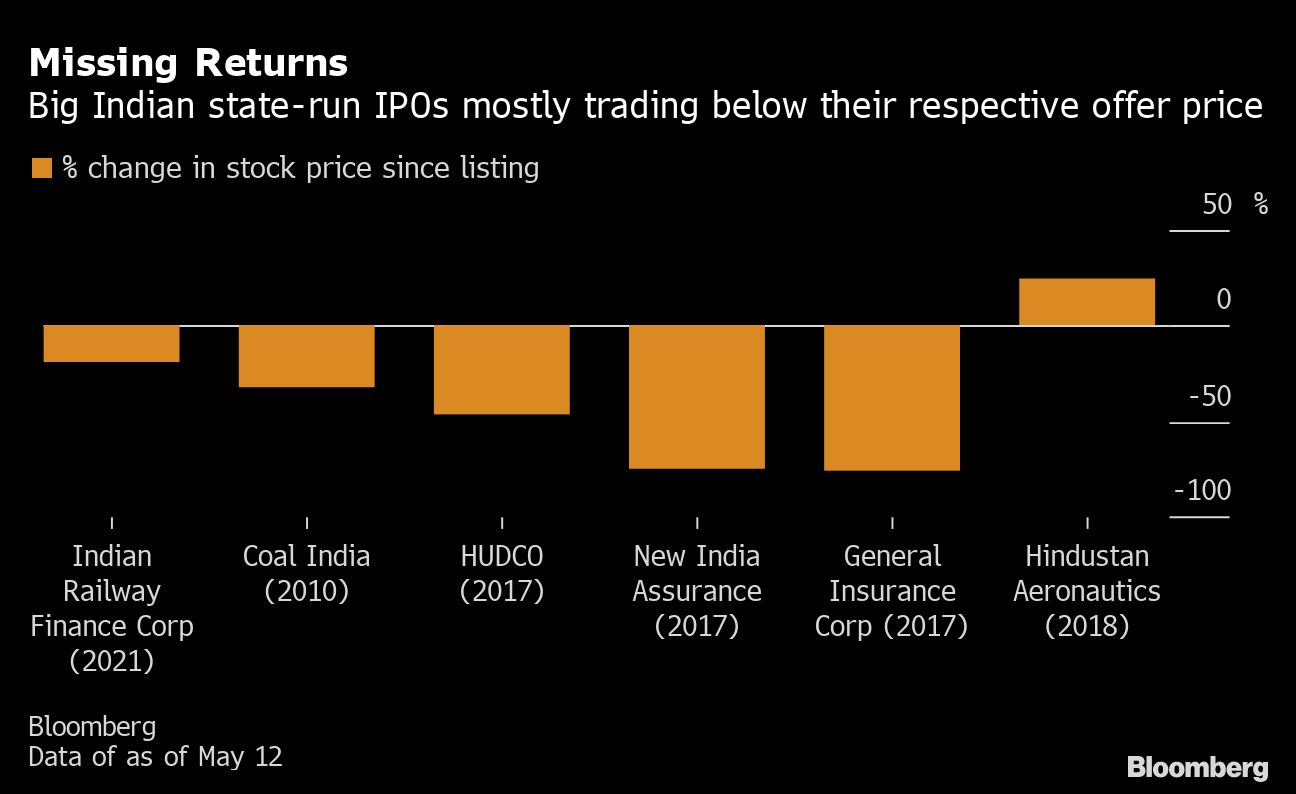
(Bloomberg) -- Millions of Indians investing in the country's biggest listing could turn sour on the equity market if the stock follows the poor performance of its state-run predecessors.
Prime Minister Narendra Modi's government raised $2.7 billion by selling shares in Life Insurance Corporation of India, including to millions of families nationwide that hold LIC policies. The stock starts trading Tuesday at a time when markets worldwide are being roiled by the fallout of Russia's invasion of Ukraine and rising interest rates.
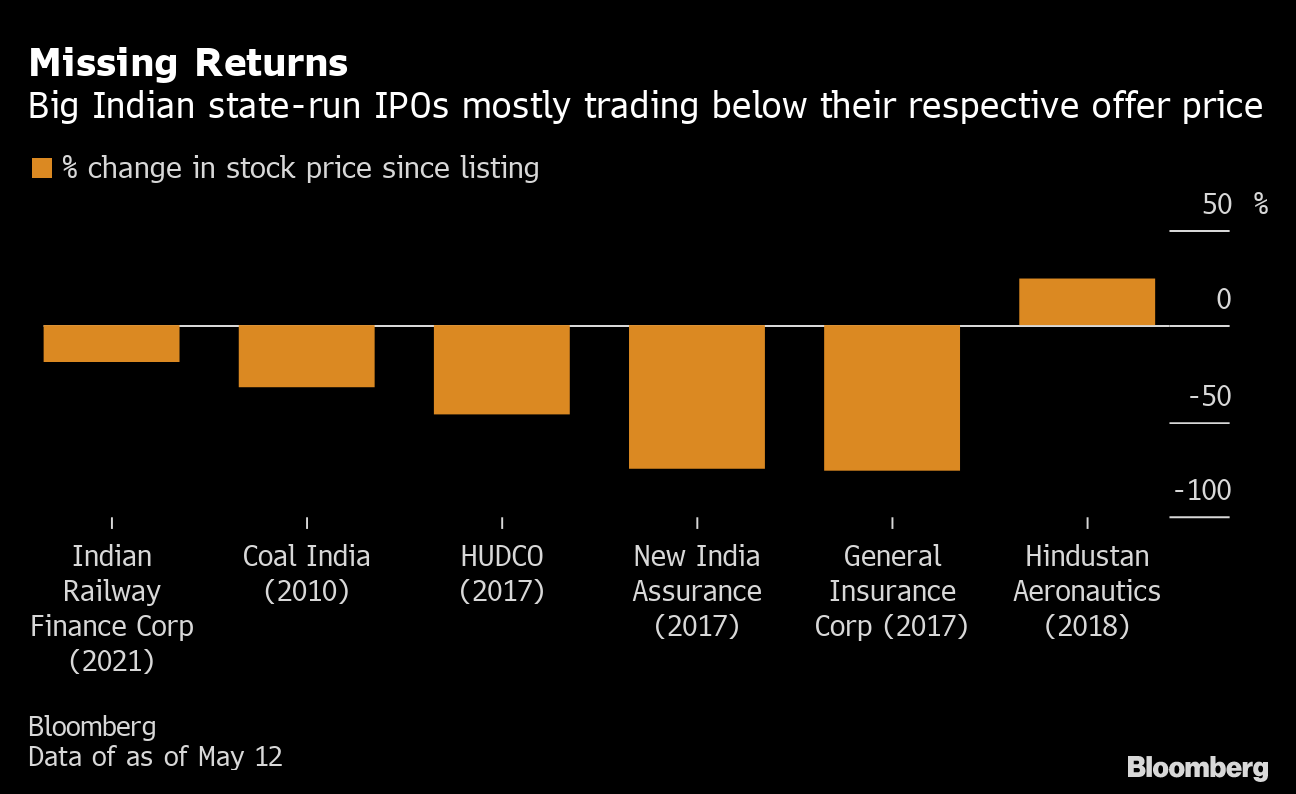
While deep-pocketed global funds can withstand volatility, small investors -- especially first-time shareholders such as the ones created by by LIC's listing -- risk being burned if the stock underperforms. Of the 21 Indian state-run companies that debuted in the stock market since 2010, half are still trading below their issue price.
“The mood could turn sour if the market price falls,” said Amitabh Dubey, a political analyst at research company TS Lombard. “The government could face criticism.”
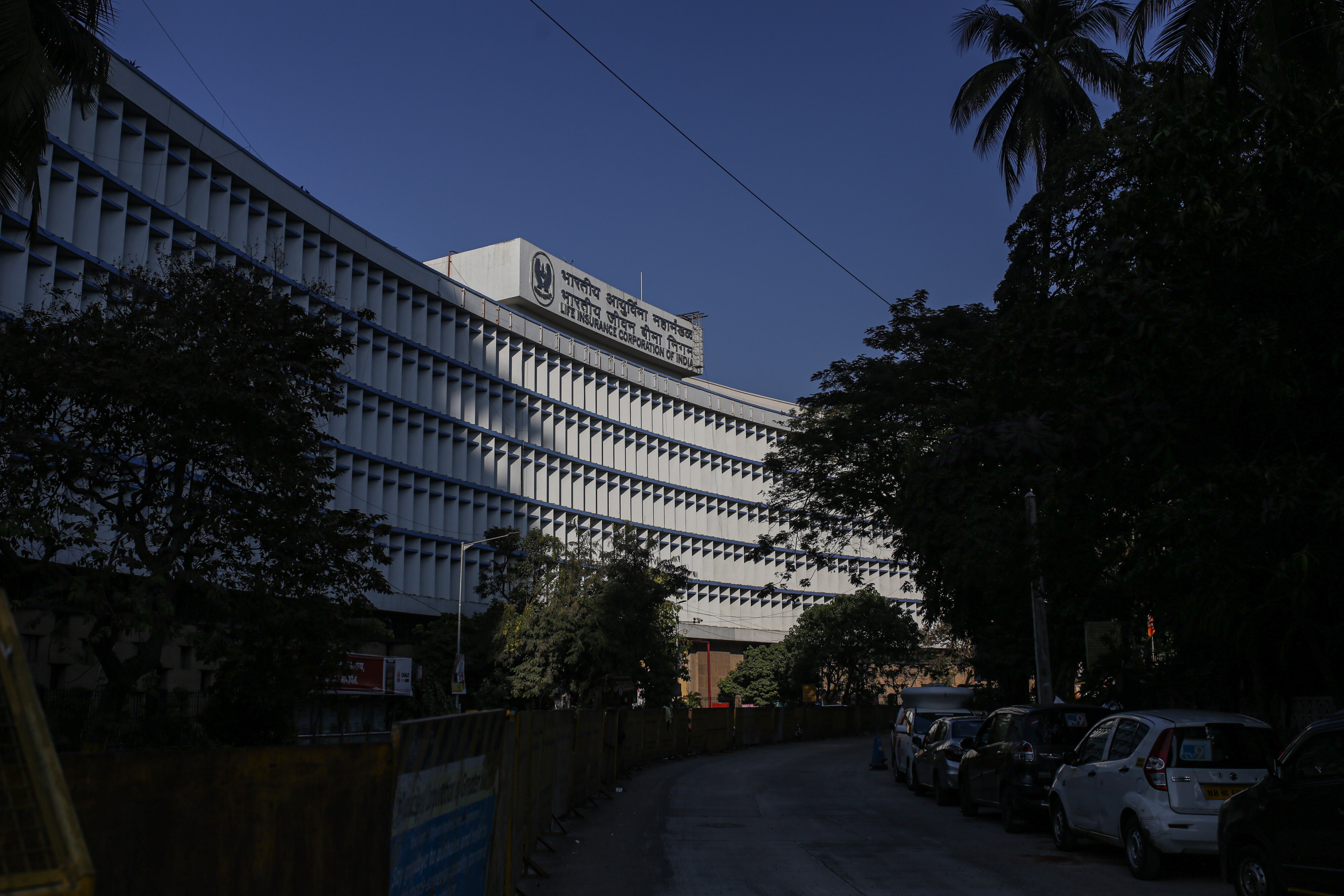
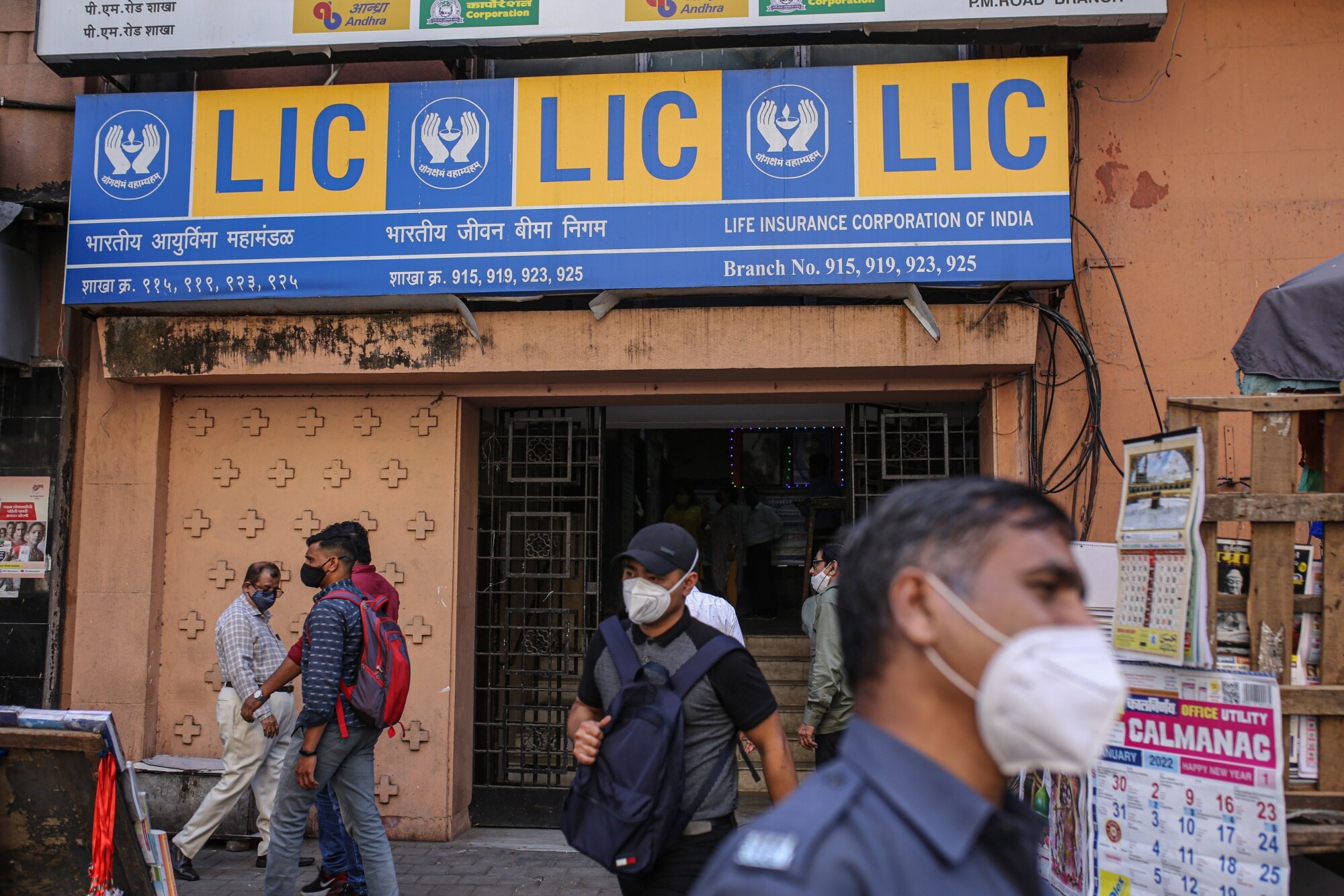
Headquartered in Mumbai, LIC is a household name in India, with 2,000 branches, more than 100,000 employees and 286 million policies. The 65-year-old firm has almost $500 billion in assets, 250 million policy holders and makes up almost two-thirds of the market.
“The emotional argument of LIC being a behemoth and its brand value need to be turned into profitability for retail investors,” said Subhash Chandra Garg, a former top bureaucrat at the Finance Ministry in the Modi government.
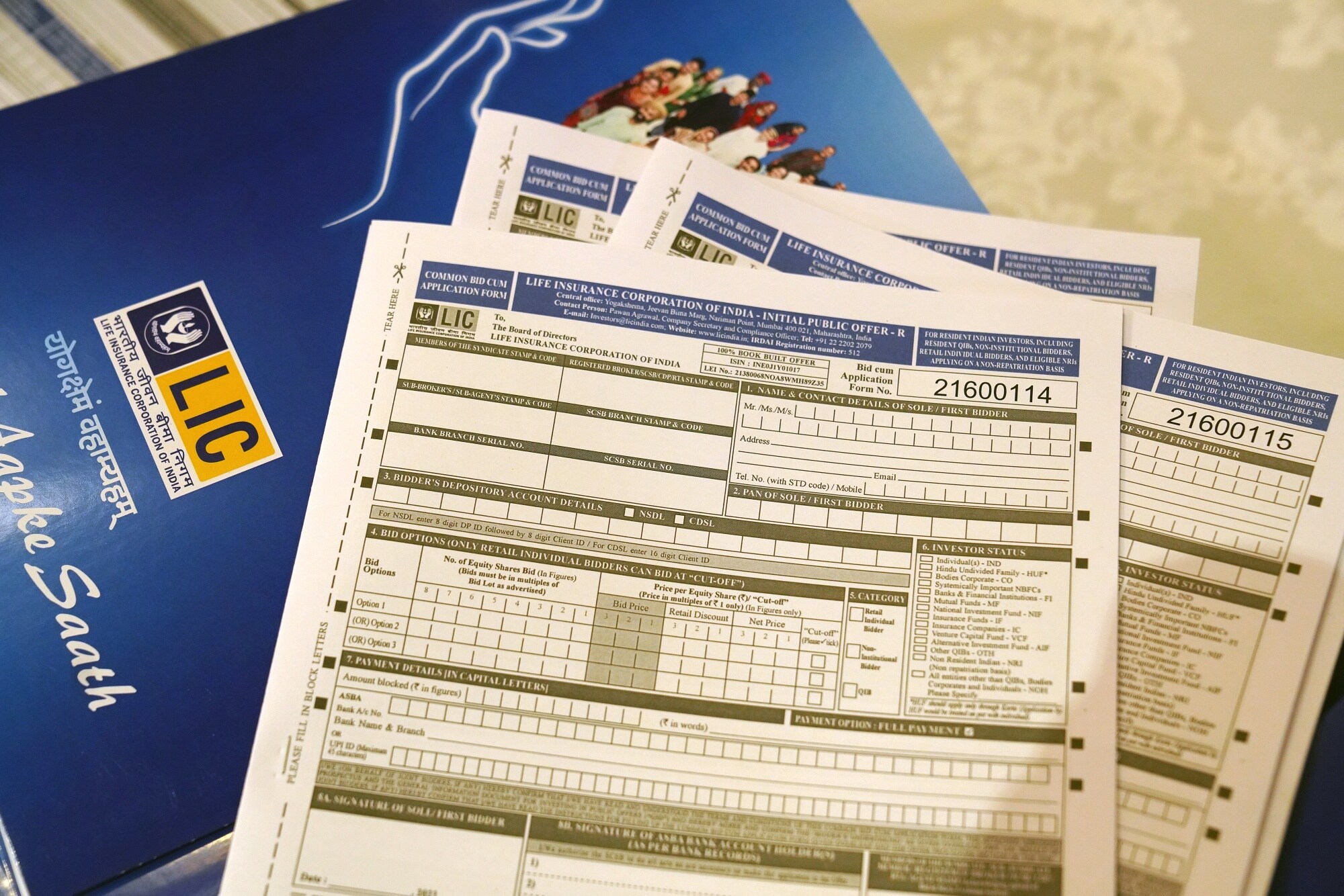
LIC's offer was oversubscribed by nearly three times, with policyholders placing bids for over six times and the employee portion receiving orders for four times the shares reserved for them. While the anchor portion of the IPO drew in sovereign funds from Norway and Singapore, most of the shares went to domestic mutual funds.
Funds from IPO will be critical to bolstering government finances and meeting a deficit target of 6.4% of gross domestic product for the fiscal year that began April 1. The funds could also be used to give tax relief on fuel to individuals, who are struggling with inflation at an eight-year high.
LIC's debut, which is expected to bolster Modi's image as a reformer and energize other privatization plans, comes when capital-market activity has significantly slowed amid weakness in global equity markets. Foreigners have pulled out a record almost $25 billion from local stocks since the start of October. The benchmark S&P BSE Sensex capped a fifth straight weekly loss on Friday, the longest run of declines since April 2020.
Modi's popularity is unlikely to be impacted if LIC shares slide, while his Bharatiya Janata Party faces no substantial opposition and has won several key states. “The government's popularity and image will be unscathed” as the fractured opposition can't challenge the narrative that a listing will make LIC efficient and profitable, said Akshay Dhume, professor at the department of economics in Alliance University, Bengaluru.
A spokesperson for the prime minister's office didn't respond to requests for comment.
Smaller investors are expected to ride out any early price swoon, which is likely given that the so-called “gray market” is indicating that shares may slip 30 rupees from their IPO price of 949.
The bigger test will be how LIC stock performs over a longer period, which may be a disappointment if earlier state IPOs are any indication, including Coal India Ltd., General Insurance Corp. and New India Assurance Co. Ltd. GIC and New India Assurance, the two state-run insurers that were listed in 2017, have been the worst performers, trading about 75% below their IPO prices.
The tide has also turned for recently-listed companies. The S&P BSE IPO Index, a gauge of newly listed shares, has fallen nearly 26% so far this year. The country's biggest IPO until LIC, Paytm, is the index's worst performer, down 75% since its highly anticipated float in November.
(Updates flows data in ninth paragraph.)
More stories like this are available on bloomberg.com
©2022 Bloomberg L.P.

-
Gold Is Rs 22,000 Cheaper Than A Month Ago. Should You Buy Amid The Wedding Season?

Gold's potential slide to $3,500 could save around Rs 4,700 per 10 grams, but a soft inflation print could just as easily push prices back up. One way to split the risk is to buy in parts, some now and the rest after the Fed's Dec. 9 decision.
-
AI Agents Are Gaining Power. Who Governs Them?
Artificial intelligence agents promise to transform productivity by moving machines from assisting decisions to executing them. But as organisations delegate greater authority to these AI-agents, they must first establish who controls that authority and who remains accountable when things go wrong.
-
Why Swapping Your Old Gold Can Trigger A Rs 5 Lakh Tax Bill, And How You Can Avoid It Legally
Swapping old gold for new is taxed as a sale and a fresh purchase. Getting your own gold remade can cut most of that bill, though it has its own costs.
-
The AI Trade is Done. The Real Opportunity for Investors Starts in 2027 | Unhedged Position
As pureplay AI stocks plunge and circular, capex-led financing unwinds, 2027 is set to be a year of reckoning for AI companies. Yet the bust clears the way for a better opportunity for investors in 2027 -- shifting the spotlight from AI builders to the companies using AI.
-
Leadership As Mission: Why The Age Of AI Demands More Human Leadership
Debjani Ghosh examines how AI is changing leadership, arguing that its success must be measured by its impact on people and the accountability of those guiding its use.
-
We May Need Another Tukaram Mundhe To Fight Air Pollution | The Reason Why
Developers may install basic measures such as sprinklers and green nets, resume work, and continue violating rules when this equipment stops working.
-
Extracting Value From Battery Scrap Could Be Challenging For India | The Reason Why
A discarded lithium-ion battery still contains valuable materials such as lithium, nickel and cobalt. These can be recovered and reused. When such batteries are crushed and shredded, they produce a dark powder called black mass.
-
One El Nino, India Can Handle. Two Could Break The Granary
India's grain stocks can absorb one bad year, but a second El Nino could drain the buffer in two to three years, economists say.
-
India's Troika Of Good Luck | Joining The Dots
As Jensen Huang's exit drags Nvidia down, a cooling AI trade and resilient earnings have revived investor interest in India. A likely RBI rate hike looms.
-
Talking Points This Week: Leadership Shock At Nvidia, Earnings Strength, And The Fog Over Hormuz
The Anthropic IPO pricing and first trading day, Nvidia's upcoming earnings, and any fresh signals from Iran will set the tone for the following week.









