Even a Diehard Covid Test Advocate Says China Going Too Far
(Bloomberg) --
Michael Mina has long pushed for widespread testing as a way to stop Covid-19 outbreaks in their tracks. But what China is doing, he says, is going too far.
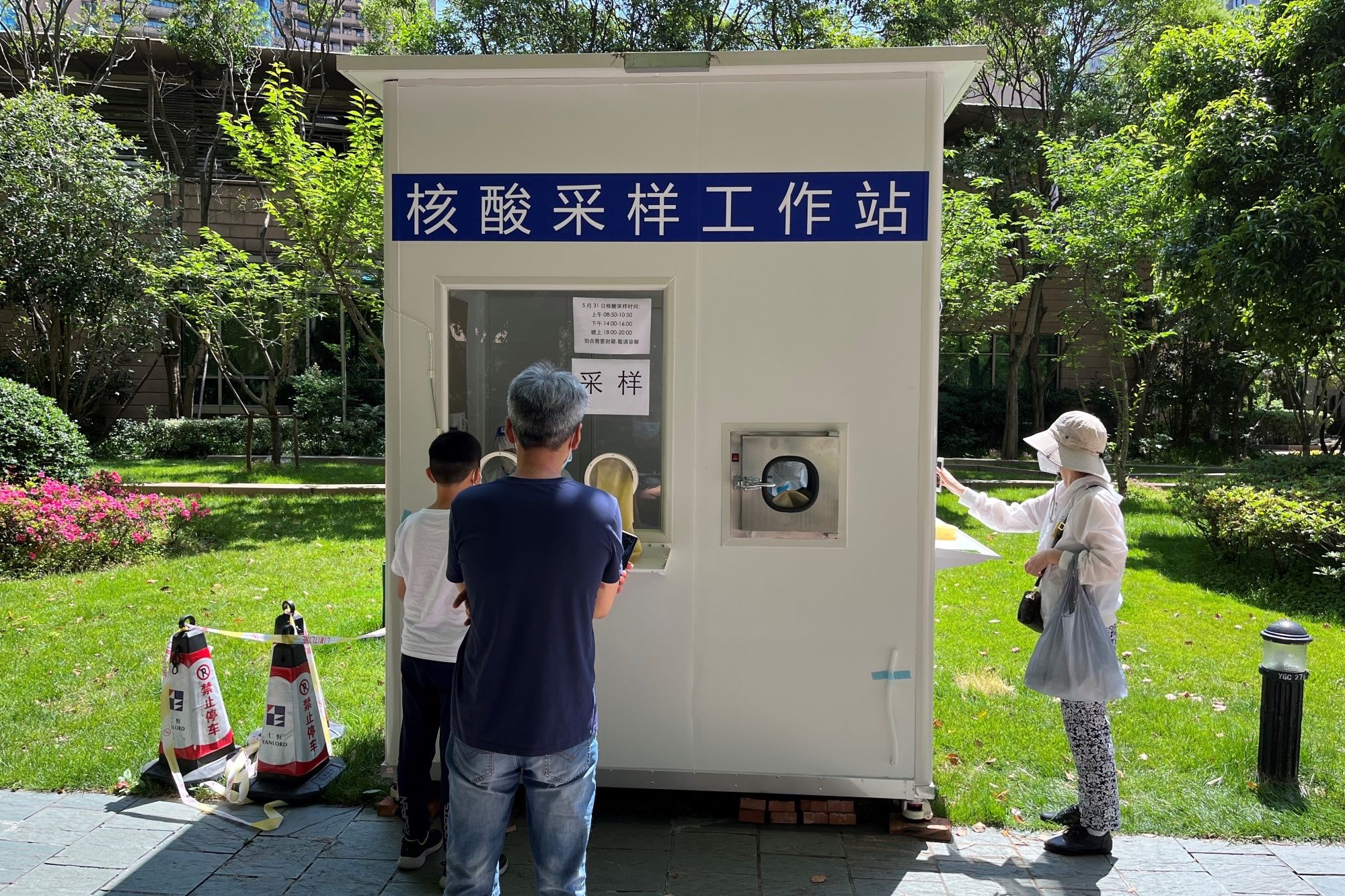
Wedded to a pandemic strategy that still seeks to eliminate every coronavirus case, the world's most populous country is rolling out a vast network of testing booths in urban areas so that millions of people are within a 15-minute walk of getting swabbed at all times. Cities like Beijing, Shanghai, Shenzhen and Hangzhou are requiring tests as often as every 48 hours to access public transit, entertainment venues -- and even workplaces.
China Plans for Years of Covid Zero With Tests on Every Corner
While Mina, a former Harvard epidemiologist, was an early proponent of using inexpensive at-home tests to screen populations for initial cases of Covid before they spread, he says China is taking the concept to another level. Entire cities and towns are covered by mass-testing mandates that require laboratory analysis, with results sent to health tracking apps on a person's smartphone.
The approach could temporarily wipe out the virus within China -- the authorities' aim -- yet leave the country even more vulnerable to it, Mina said.

“Watching what I have advocated for go too far, it really does demonstrate that sometimes these ideas can actually do damage,” said Mina, who is now the chief science officer at eMed, a company that offers at-home Covid tests and telemedicine services. “China taking this approach certainly makes me think twice about the approaches that I've advocated widely for.”
Mina says he questions the health implications of such widespread screening, and notes the economic costs. More than two years after the arrival of Covid, it's clear the virus is here to stay. By keeping people completely cut off from the pathogen, China may make them more vulnerable once they are exposed, he said.
Shanghai Braces for Long Road to Recovery as Lockdown Ends
“This policy puts China in a really dangerous position,” he said. “It's essentially dry kindling, ready to ignite anytime there's cases. Locking down and testing is going to lead you nowhere except to suppress the virus. This is going to go on in perpetuity until there's until there's some endemicity.”
There are benefits, with a permanent testing infrastructure meaning China will be able to fight future Covid flareups and other threats like monkeypox. It's something the US doesn't have, and will put China in a good position to deal with emerging pathogens.
Why China Is Sticking With Its Covid Zero Strategy: QuickTake
But once a virus becomes established like Covid, everyone will be exposed to it eventually, Mina said. Interfering with the process, rather than preparing for it, can be harmful.
“It's not just delaying the inevitable,” he said. “It's also potentially tipping over into a realm where the consequences of this type of activity are damaging, not just from a Covid perspective, but really from the way humans have evolved to be exposed to other infections on a frequent basis.”
(Updates with tout to QuickTake on Covid Zero. An earlier version of this story corrected a reference to China's population in the second paragraph.)
More stories like this are available on bloomberg.com
©2022 Bloomberg L.P.

-
Talking Points This Week: Leadership Shock At Nvidia, Earnings Strength, And The Fog Over Hormuz

The Anthropic IPO pricing and first trading day, Nvidia's upcoming earnings, and any fresh signals from Iran will set the tone for the following week.
-
Signature Play: The Classic Cocktail Is Dead. Or Is It?
Classic cocktails are disappearing from India's cocktail menus. But they're still being ordered, taught to bartenders and borrowed from. So, who's really having the last drink?
-
A New Samvat Wishlist: Inclusive Prosperity And Human Development
India has strengthened its economic foundations through infrastructure, digital access and enterprise. Its next growth chapter must deepen productivity, create better livelihoods and widen participation in prosperity.
-
Love, Sex Aur Dhokha: The Audacious Plot To Spy On Jensen Huang
A Taipei dinner, a Singapore chip buyer and a suspected Chinese asset: inside the alleged spy operation that got close to NVIDIA's Jensen Huang.
-
Ten Things I Learnt This Samvat
Patience can be a trap. Cheap stocks can stay cheap. Leverage can wipe you out. What did Samvat 2082 teach us? Niraj Shah writes on 10 lessons from the year gone by.
-
Talking Points This Week: Tech Nerves, FII Buying, And A Faraway Banking Shock
The global markets are not shining this Diwali. The exception in the large markets is, India.
-
Midterm Rally Lasted A Day. The Hard Reality Of A Divided US May Last Two Years | Opinion
Between a contested AI boom, a debt ceiling that arrives in 2027 and a president with every incentive to act alone, the next two years may prove more volatile than the first day's rally suggests.
-
Blue Wave Will Derail the AI Trade but Won't Dismantle the AI Era | Unhedged Position
The Democrats' sweep of the US Congress will see politics collide with economic forces both over the long and short term.
-
It's Time To Take The GST Council's Bet On Trust Global
Payment records can prove India's services exports, and clear, proportionate rules can bring foreign digital sellers into the tax net.
-
Opinion | India at 38: From Innovation Overperformer to Innovation Powerhouse
India now has 453 VC-backed deep science startups, 18 of them late-stage, after 117 percent growth since 2020. Laurus Labs, at USD 9.3 billion, is the most valuable deep science company in any middle-income economy outside China.









