European Commission Against Merger With Thyssenkrupp: Tata Steel
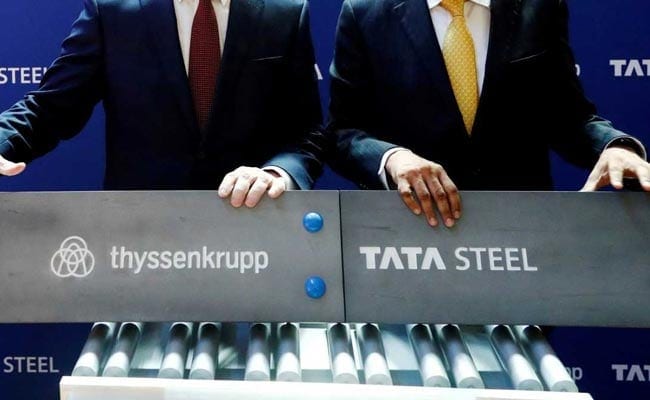
Tata Steel Group on Friday said the proposed merger of its European operations with Thyssenkrupp of Germany has hit a road block after the European Commission has raised many objections to the deal. Tata Steel Europe and Thyssenkrupp had signed definitive agreements on June 30, 2018 to create a 50:50 pan-European joint venture. "The European Commission on Friday discussed the proposed joint venture with both Thyssenkrupp and Tata Steel Europe.
Based on the feedback received from the Commission, it is increasingly clear that the Commission is not intending to clear the proposed JV as it expects substantial remedies in the form of sale of assets of the proposed venture," Tata Steel said in a statement.
The steel major further said based on the statement of objections published by the Commission, a comprehensive package of remedies was offered covering all the areas of concern highlighted by the Commission.
The remedies offered were aimed at developing the overall industrial strategy for the proposed JV, the integrated and complex nature of the supply chain to service customers and the need to build a sustainable business which would be able to endure the structural challenges faced by the European steel industry.
"However, the feedback from the Commission based on the market test it has undertaken suggests that it is unlikely to clear the proposal in spite of the significant remedies offered," Tata Steel said.
It further said further commitments or improvements to the remedy package would adversely affect the basic foundation of the proposed joint venture and the intended synergies arising from the merger to such an extent that the economic logic of the joint venture would no longer be valid and it's the fundamental sustainability would be severely impacted.
"Hence both partners are unable to offer any further remedies. Consequently, we assume with deep disappointment that the Commission will not approve the JV," it noted.
While the proposed JV was an important strategic initiative for it to create a sustainable portfolio in Europe that would have also helped to de-consolidate the European business and de-leverage its balance sheet, the company is committed to the strategy and would explore all options to achieve similar outcomes in the future, it said.
While pursuing the end state strategy for the European business in the near-term, Tata Steel will also continue to focus on its performance management to enhance its earnings and cash flows to build a sustainable and self-sustaining future for the business.
Tata Steel has also undertaken significant de-leveraging in the last six months and would continue to pursue the same through internal cash generation and asset sales, it added.

-
Signature Play: The Classic Cocktail Is Dead. Or Is It?

Classic cocktails are disappearing from India's cocktail menus. But they're still being ordered, taught to bartenders and borrowed from. So, who's really having the last drink?
-
A New Samvat Wishlist: Inclusive Prosperity And Human Development
India has strengthened its economic foundations through infrastructure, digital access and enterprise. Its next growth chapter must deepen productivity, create better livelihoods and widen participation in prosperity.
-
Love, Sex Aur Dhokha: The Audacious Plot To Spy On Jensen Huang
A Taipei dinner, a Singapore chip buyer and a suspected Chinese asset: inside the alleged spy operation that got close to NVIDIA's Jensen Huang.
-
Ten Things I Learnt This Samvat
Patience can be a trap. Cheap stocks can stay cheap. Leverage can wipe you out. What did Samvat 2082 teach us? Niraj Shah writes on 10 lessons from the year gone by.
-
Talking Points This Week: Tech Nerves, FII Buying, And A Faraway Banking Shock
The global markets are not shining this Diwali. The exception in the large markets is, India.
-
Midterm Rally Lasted A Day. The Hard Reality Of A Divided US May Last Two Years | Opinion
Between a contested AI boom, a debt ceiling that arrives in 2027 and a president with every incentive to act alone, the next two years may prove more volatile than the first day's rally suggests.
-
Blue Wave Will Derail the AI Trade but Won't Dismantle the AI Era | Unhedged Position
The Democrats' sweep of the US Congress will see politics collide with economic forces both over the long and short term.
-
It's Time To Take The GST Council's Bet On Trust Global
Payment records can prove India's services exports, and clear, proportionate rules can bring foreign digital sellers into the tax net.
-
Opinion | India at 38: From Innovation Overperformer to Innovation Powerhouse
India now has 453 VC-backed deep science startups, 18 of them late-stage, after 117 percent growth since 2020. Laurus Labs, at USD 9.3 billion, is the most valuable deep science company in any middle-income economy outside China.









