Euro, Asian Stocks Plunge as Greece Seen on Course to Default
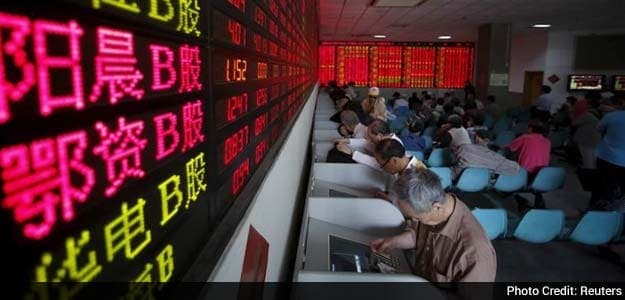
Tokyo: The euro fell almost 2 per cent and share prices tumbled across Asia on Monday as Greece looked set to default on its debt repayment this week, forcing Athens to impose capital controls to halt bank runs.
With the prospect of Greece being forced out of the euro in plain sight, the common currency fell as much as 1.9 per cent to $1.0955, its lowest in almost a month, and last stood down 1.4 per cent at $1.1007.
Against the yen, the common currency dropped more than 3 per cent to 133.80 yen, a five-week low.
U.S. stock futures dived almost 2 per cent at one point to hitting a three-month low, and last traded down 1.6 per cent.
Japan's Nikkei fell 2.1 per cent while MSCI's broadest index of Asia-Pacific shares outside Japan dropped 0.8 per cent, drawing little help from more policy easing from China's central bank at the weekend.
Chinese stocks have plunged over 20 per cent in the last two weeks, hit by tight liquidity conditions ahead of the quarter-end and uncertainty over the central bank's monetary policy.
Investors are flocking to safer assets, staggered at huge uncertainty on the future of Europe, as Greece could become the first country to leave the currency bloc after a default.
The 10-year U.S. Treasury yield fell 0.16 per centage point to 2.317 per cent.
The yen, which tends to gain at time of financial stress, strengthened against the dollar to hit one-month high of 122.10 to the dollar.
"We are in uncharted territory and European equities, like all markets, will have a difficult time processing this," said Deutsche Bank Managing Director Nick Lawson.
"The market was not positioned for this going into the weekend and the lack of liquidity that has impacted both sovereign and corporate debt markets, as well as equity recently, will exacerbate things.
Cash-strapped Greece looks certain to miss its debt repayment to the IMF on Tuesday as Greece's European partners shut the door on extending a credit lifeline after Greece's surprise move to hold a referendum on bailout terms.
Fear of an imminent default by Greece hit Greek banks, a major buyer of Greek government bills, triggering bank runs at weekend and forcing Prime Minister Alexis Tsipras to announce a bank holiday and capital controls.
Conspicuous by its absence so far from this year's Greek drama has been contagion to other "peripheral" euro nations government bond markets as other European banks have limited exposure to Greece.
Any speculative selling of debt of such countries as Italy, Spain and Portugal will also likely be countered by the European Central Bank, which started buying euro zone sovereign debt from markets in March to shore up the economy.
Yet the perception could change if investors grow more worried about the future of the currency union, as whether Greece can stay within the euro zone after default will be called into a question.
"Financial markets will say 'it's all Greek to me'. Markets will reset their trend until last week and will start the week with risk aversion," Yasunobu Katsuki, senior analyst at Mizuho Securities.
Some investors think Greece's attempt to abandon the austerity programme -- and possibly reset its economy through currency devaluation -- could fuel more scepticism towards the euro project among the populace in other euro zone countries.
Gold prices gained 0.9 per cent to $1,185.50 per ounce on safe-haven buying, while Brent crude oil futures fell 1.2 per cent to $62.52 per barrel.

-
A New Samvat Wishlist: Inclusive Prosperity And Human Development

India has strengthened its economic foundations through infrastructure, digital access and enterprise. Its next growth chapter must deepen productivity, create better livelihoods and widen participation in prosperity.
-
Love, Sex Aur Dhokha: The Audacious Plot To Spy On Jensen Huang
A Taipei dinner, a Singapore chip buyer and a suspected Chinese asset: inside the alleged spy operation that got close to NVIDIA's Jensen Huang.
-
Ten Things I Learnt This Samvat
Patience can be a trap. Cheap stocks can stay cheap. Leverage can wipe you out. What did Samvat 2082 teach us? Niraj Shah writes on 10 lessons from the year gone by.
-
Talking Points This Week: Tech Nerves, FII Buying, And A Faraway Banking Shock
The global markets are not shining this Diwali. The exception in the large markets is, India.
-
Midterm Rally Lasted A Day. The Hard Reality Of A Divided US May Last Two Years | Opinion
Between a contested AI boom, a debt ceiling that arrives in 2027 and a president with every incentive to act alone, the next two years may prove more volatile than the first day's rally suggests.
-
Blue Wave Will Derail the AI Trade but Won't Dismantle the AI Era | Unhedged Position
The Democrats' sweep of the US Congress will see politics collide with economic forces both over the long and short term.
-
It's Time To Take The GST Council's Bet On Trust Global
Payment records can prove India's services exports, and clear, proportionate rules can bring foreign digital sellers into the tax net.
-
Opinion | India at 38: From Innovation Overperformer to Innovation Powerhouse
India now has 453 VC-backed deep science startups, 18 of them late-stage, after 117 percent growth since 2020. Laurus Labs, at USD 9.3 billion, is the most valuable deep science company in any middle-income economy outside China.
-
Navigating Energy Crossroads: S Jaishankar's Call For Diversified Supply Chains At G20 Ministerial Meeting
As geopolitical fault lines continue to test maritime trade routes and commodity flows, Jaishankar's message remains pertinent: true economic resilience requires open markets, protected transit lines, and a genuine commitment to multilateral cooperation rather than coercion.









