Environmentalists Unimpressed by 'Pro-corporate' Budget
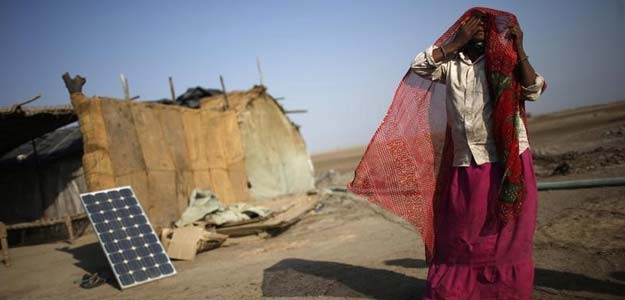
The Narendra Modi government's maiden Budget shows no real commitment towards the environment and is not transformational because it does not allocate enough funds towards promoting renewable energy or public transport and appears to favour corporates over people, according to environmentalists.
Prime Minister Mr Modi's government, which swept to power in May, said on Thursday that it would invest in very large solar power projects and establish a fund to help farmers adapt to changing weather patterns as a result of climate change.
But some environmental groups said that while they welcomed plans to boost clean energy such as solar and wind, the Budget proposals left much to be desired.
"The steps on renewable energy and energy efficiency are not transformational and the attempt to force fit coal production to clear the irrational power proposals, is a signal that the reality of climate change has far from been recognised by this government," said Vinuta Gopal, head of climate and energy at Greenpeace India.
"It's good that the government is talking of investments in renewable but it is largely focused on large scale renewables and not on decentralized renewable energy for meeting the electrification needs of rural India," Mr Gopal added.
Finance Minister Arun Jaitley told Parliament that renewable energy was "a very high priority" and announced around $100 million to build four "ultra-mega solar power projects" in the states of Rajasthan, Gujarat, Tamil Nadu, and Jammu and Kashmir.
He said the government also planned to launch scheme for solar power-driven agricultural water pumping stations, develop solar parks on canal banks and give tax breaks on imported solar components.
The Centre for Science and Environment (CSE), a leading Delhi-based environmental think-tank, agreed with Greenpeace saying the biggest potential for solar energy will come from decentralised and off-grid solutions.
CSE director Sunita Narain said it was important to invest in smaller power plants that provide clean energy to millions across India's grid and remote villages that have electricity lines but no power. Instead, she said, budget 2014-15 falls back on the "big" solar plants.
Lack of access to electricity
India is desperate for power, and coal is expected to remain at the heart of its energy security for decades. Seventy million households - up to 40 per cent of the country's 1.2 billion people - have no access to electricity.
Ms Narain also said allocations for building underground trains networks to boost public transport were way too little.
"Transportation is an important focus area, but budget 2014 does not provide directions that will work," she said.
"The FM sets aside Rs 100 crore ($18 million) for metro projects in Lucknow and Ahmedabad. But the fact is that metro systems cost between 150 crore to 300 crore per km to build. So, is this 100 crore going to build one km or just go into feasibility studies?"
Terming the Budget "paradoxical", Mr Gopal of Greenpeace said it "invites the foreign hand to key sectors in the country, though it has balked at any support that could raise uncomfortable questions on human rights or environmental violations".
"The budget is a pro-corporate (one) as was expected, with little to cheer for the people and the environment."
Copyright @ Thomson Reuters 2014

-
Indians Are Travelling, But Not Every Journey Is A Holiday | The Week In Whys

Pilgrims, patients and working women are the real travellers, and the system hasn't quite caught up with them.
-
Getting To Work Costs Women More | The Reason Why
It is not just about women paying more than men. It is about women paying much more in cities than in villages.
-
AI Bias In Investing Cannot Be Eliminated, But It Can Be Governed
Framing is a particularly important example as identical financial information presented in terms of gains rather than losses can lead an LLM to reach a different assessment.
-
Joining The Dots | Dark Skies, Steady Diya: Why Hope Holds This Diwali
With war, a weak rupee and foreign outflows weighing on sentiment, policymakers at the NDTV World Summit and market veterans at NDTV Profit Ignite: Diwali Edition offered the same advice: stay invested and filter out the noise.
-
The Curious Case of Equitas Small Finance Bank And A CEO Who Quit For Stock
PN Vasudevan believes persistent investor concerns over a perceived conflict of interest had become a governance overhang on Equitas Small Finance Bank's stock, even as the lender improved profitability and asset quality.
-
Talking Points This Week: AI Cash Burn, A Tiger Comeback And An India That Still Finds Its Own Path
India is not immune to higher oil or tighter global liquidity, yet its earnings base is broader, its domestic policy levers are still available.
-
Foreign Investors Own Half Of HDFC Bank and ICICI Bank. An LTCG Cut Could Matter Most Here
Foreign portfolio investors have US$115 billion parked in HDFC Bank, ICICI Bank. If the government cuts long-term capital gains tax, Jefferies says returning foreign money could land here first.
-
'Never Seen This Level Of Negativity': Sandeep Tandon Says The Next Rally May Be Closer Than You Think
Veteran investor Sandeep Tandon says foreign selling is easing, large-caps are due a comeback and mid-caps are crowded, while he turns positive on gold, power and pharma this Diwali.
-
Indians Stay With Family, Not In Hotels | The Reason Why
India still lacks enough clean, reliable and affordable hotels for budget-conscious travellers.
-
The Economic Imperative: Analysing The Material Driving Force Behind India-Canada Strategic Reset
This economic complementarity is further reinforced by deep institutional investment ties and talent mobility, which form the bedrock of the bilateral framework.










