Enhancement In Productivity Important For Higher GDP: NITI Aayog Member Bibek Debroy
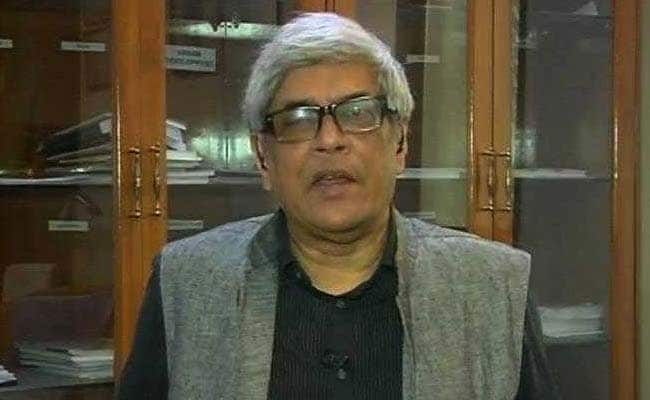
New Delhi: NITI Aayog member Bibek Debroy, who heads the five-member Economic Advisory Council (EAC), on Tuesday said enhancement of productivity was important for a country to increase its national income. "National income of any country is the productivity of its citizens in the working age group. There are different sources of growth and national income. Growth can come either through increase in land etc. But it is limited. Enhancement in productivity thus becomes important," Mr Debroy said at the Internet of Things Summit 2017 organised here by the Confederation of Indian Industry (CII).
He said that Internet of Things (IoT) holds the promise of being inclusive as it enables the relatively poor to access various opportunities that it brings.
"It helps bridge asymmetry in formation."
Mr Debroy heads the five-member EAC that was constituted by Prime Minister Narendra Modi on September 25 after the economic growth in the first quarter of this fiscal year fell to 5.7 per cent.
Asked about the immediate agenda of the Council, Mr Debroy said the EAC would brief the media on the same on Wednesday.
According to reports, the EAC is scheduled to have its first meeting on Wednesday.
The Economic Advisory Council to the Prime Minister (EAC-PM) is entrusted with analysing economic issues, addressing issues of macroeconomic importance and advising the Prime Minister on them. This could be either suo-motu or on reference from the Prime Minister or anyone else.
Ratan Watal, Principal Advisor, NITI Aayog, is the member-secretary of the EAC-PM. Other part-time members of the council are Surjit Bhalla, Rathin Ray and Ashima Goyal.
The EAC-PM has been constituted several times since independence. The last chairman of the Council, former Reserve Bank of India (RBI) Governor C Rangarajan, resigned in May 2014.
According to data from the Central Statistics Office (CSO), India's gross domestic product (GDP) for the first quarter at Rs 31.10 lakh crore grew 5.7 per cent over the same quarter last year. During the previous quarter, the GDP had grown by 6.1 per cent.
The principal reason for the decline in growth is a fall in the manufacturing sector, where the gross value added (GVA) fell sharply to 1.2 per cent, from 10.7 per cent a year ago.
The major reason for slowdown in growth at 5.7 per cent is on account of manufacturing, where the GVA is largely contributed by the private sector. In all, 74 per cent of the GVA comes from the corporate sector.
However, Chief Statistician T C A Anant had earlier said that there was a likely revival in the growth from the second quarter onwards.

-
Talking Points This Week: Leadership Shock At Nvidia, Earnings Strength, And The Fog Over Hormuz

The Anthropic IPO pricing and first trading day, Nvidia's upcoming earnings, and any fresh signals from Iran will set the tone for the following week.
-
Signature Play: The Classic Cocktail Is Dead. Or Is It?
Classic cocktails are disappearing from India's cocktail menus. But they're still being ordered, taught to bartenders and borrowed from. So, who's really having the last drink?
-
A New Samvat Wishlist: Inclusive Prosperity And Human Development
India has strengthened its economic foundations through infrastructure, digital access and enterprise. Its next growth chapter must deepen productivity, create better livelihoods and widen participation in prosperity.
-
Love, Sex Aur Dhokha: The Audacious Plot To Spy On Jensen Huang
A Taipei dinner, a Singapore chip buyer and a suspected Chinese asset: inside the alleged spy operation that got close to NVIDIA's Jensen Huang.
-
Ten Things I Learnt This Samvat
Patience can be a trap. Cheap stocks can stay cheap. Leverage can wipe you out. What did Samvat 2082 teach us? Niraj Shah writes on 10 lessons from the year gone by.
-
Talking Points This Week: Tech Nerves, FII Buying, And A Faraway Banking Shock
The global markets are not shining this Diwali. The exception in the large markets is, India.
-
Midterm Rally Lasted A Day. The Hard Reality Of A Divided US May Last Two Years | Opinion
Between a contested AI boom, a debt ceiling that arrives in 2027 and a president with every incentive to act alone, the next two years may prove more volatile than the first day's rally suggests.
-
Blue Wave Will Derail the AI Trade but Won't Dismantle the AI Era | Unhedged Position
The Democrats' sweep of the US Congress will see politics collide with economic forces both over the long and short term.
-
It's Time To Take The GST Council's Bet On Trust Global
Payment records can prove India's services exports, and clear, proportionate rules can bring foreign digital sellers into the tax net.
-
Opinion | India at 38: From Innovation Overperformer to Innovation Powerhouse
India now has 453 VC-backed deep science startups, 18 of them late-stage, after 117 percent growth since 2020. Laurus Labs, at USD 9.3 billion, is the most valuable deep science company in any middle-income economy outside China.









