End Of The Road For Nano? Just One Unit Produced In June
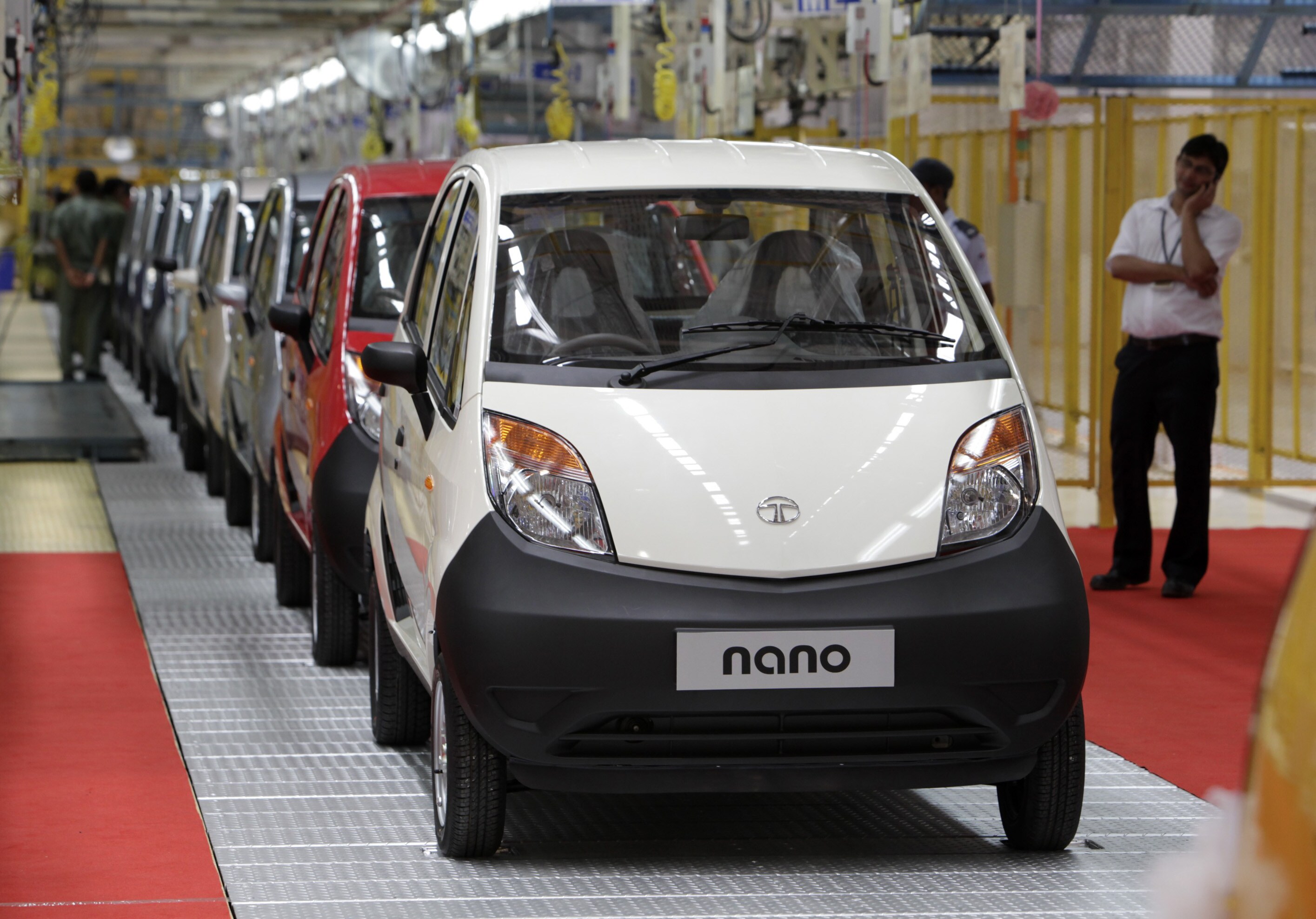
Tata Motors Ltd.'s small car Nano is inching closer towards the end of its journey with just one unit produced in June, although the company maintained that no decision has been taken yet on stopping its production.
The entry level car, a brainchild of Ratan Tata who envisaged giving a safer and affordable alternative to families riding on two-wheelers, sold three units last month in the domestic market.
In a regulatory filing, Tata Motors said there was no export of Nano in June this year. It had shipped 25 units in the same month last year. In terms of production, only one unit was produced last month as against 275 units in June 2017.
Domestic sales were at three units in June as against 167 units in the year-ago month. When contacted for comments on whether the company has taken a decision to stop its production of Nano, a Tata Motors spokesperson said, “We are well aware that the Nano in its present form cannot continue beyond 2019 and may need fresh investments to survive. No decision has been made yet in this regard.”
The spokesperson further said: "We continue to produce Nano catering to customer demand in key markets."
Nano, which was unveiled in January 2008 at the Auto Expo with expectations of being the people's car, could not live up to the billing. The car was launched in the market in March 2009 with an initial price of close to Rs 1 lakh for the basic model despite cost escalations, with Ratan Tata insisting that "a promise is a promise".
However, from the beginning, Nano courted trouble. It was originally planned to be rolled out from the Tata Motors' proposed plant at Singur in West Bengal, where it faced intense political and farmer protests against land acquisition. The company had to shift its production to a new plant at Sanand in Gujarat. Instances of the car catching fire initially after it was launched didn't help its cause either.
Ratan Tata had admitted that the company made the mistake of promoting the Nano as 'the cheapest car'. It became a loss-making model for Tata Motors with ex-Tata Sons chairman Mistry, who was abruptly removed from the post, even went on to claim that the Nano "consistently lost value, peaking at Rs 1,000 crore".
Mistry also termed the Nano as one of the "legacy hot-spots" and there was "no line of sight to profitability for the Nano, any turnaround strategy".” He had also claimed that Tata Motors did not stop producing the car due to "emotional reasons."

-
The Economic Imperative: Analysing The Material Driving Force Behind India-Canada Strategic Reset

This economic complementarity is further reinforced by deep institutional investment ties and talent mobility, which form the bedrock of the bilateral framework.
-
Medicine Pricing: Where Must Profit Stop?
India must confront excessive margins, hidden incentives and regulatory gaps that threaten the integrity of medicine.
-
Why Amazon And Flipkart Are Struggling To Beat Meesho In India's Smaller Cities
With 274 million users and lowest-cost logistics, Meesho is defending its value commerce crown against giants like Amazon and Flipkart.
-
High US Salaries, No Green Card Certainty: The Financial Calculation Facing Indian H-1B Families
The suspension of PERM processing at eight technology employers does not cancel existing H-1B visas. What it does is force a question many Indian families have been avoiding: is the US salary worth tying your career and family plans to one employer?
-
Swiggy vs Eternal: Food Delivery's Two Rivals Are No Longer In The Same Race
Eternal is building a private AI assistant, dark.ai. Swiggy is still working out how to make Instamart pay, with an operating loss of Rs 895 crore in the July-September quarter while Blinkit stayed profitable.
-
Where You Live Shapes How You Get To Work | The Reason Why
Two-wheelers are the most popular way to get to work in India, accounting for nearly 43% of workplace commutes.
-
Unhedged Position: Can India See An Indonesia-Style Time Correction?
The Nifty is trading below levels it first clocked in 2024. Is there, then, as I have suggested in the headline, potential that the current time correction drags on painfully for the next three-five, even ten years?
-
Navigating Friction And Energy Realities: An Analysis Of Marco Rubio's October Visit To India
Occurring at a critical juncture marked by stalled trade negotiations and escalating geopolitical pressures over global energy supplies, the visit offers a profound window into modern US-India relations.
-
India Exports Capital. Why Not Export Trusteeship?
The big question, then, is whether India can build an institution that global borrowers, investors, banks, and lawyers can trust, even without an Indian connection.
-
France's Economy & Politics Are In Crisis | The Reason Why
Let's look at how the French economy and politics evolved under Nicolas Sarkozy, Franois Hollande and Emmanuel Macron.










