Emerging Markets Outlook Gloomy After Stormy Start To The Year
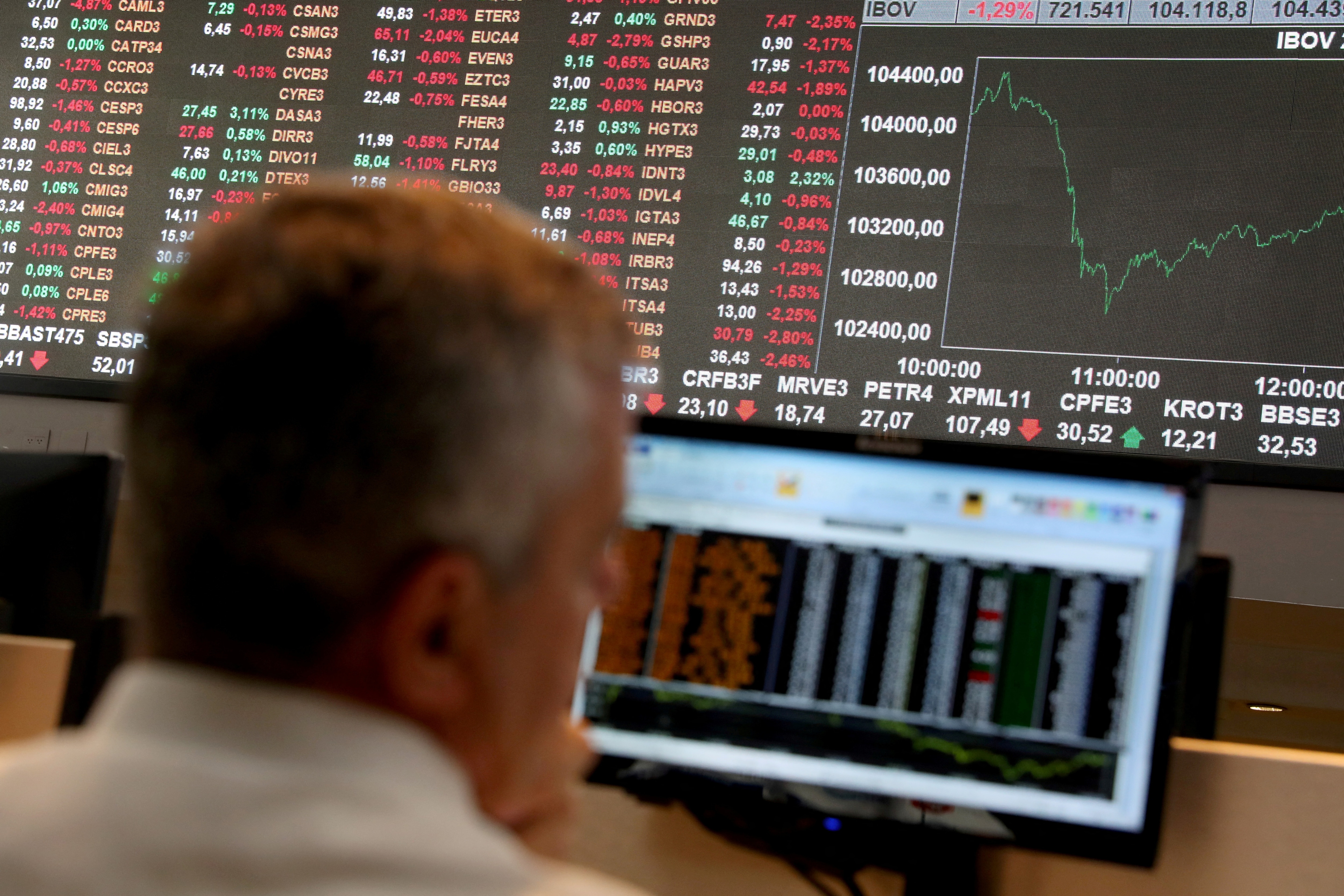
It's been a torrid first half for emerging market assets and with the Federal Reserve kicking off its tightening cycle amid soaring inflation shock waves might be on the horizon.
Adding to that are supply chain problems out of China, a war in Europe's bread basket, stalling global growth and fears that the world's largest economy could tip into recession - all casting a pall over riskier assets.
Data from the Institute of International Finance (IIF) showed that small inflows into emerging market debt for the year until end-May were almost all offset by outflows from equities. The IIF predicted that year-on-year foreign portfolio flows to emerging markets could shrink by 42% to less than a trillion dollars in 2022.
"If you are a global investor and you are not forced to be in emerging markets, to be honest it is hard to convince you to invest in the asset class at this time," said Luis Oganes, JPMorgan's head of Global Macro Research.
Below five take-aways of what's in store for emerging markets.
Currencies
Despite the U.S. dollar hitting near-two decade highs against developed-world peers, emerging currencies held up somewhat with the index down 3.8%.
Latin American currencies posted sharp gains in the first quarter thanks to rising commodity prices and central banks frontrunning the Fed, and remained in the black despite massive de-risking in the second quarter.
Performance will hinge on sensitivity to commodity price shocks, and whether central banks can focus on growth rather than inflation.
"EM FX will stay under pressure over the immediate horizon, as fragile investor sentiment keeps USD bid," said Phoenix Kalen, director of emerging markets strategy at Societe Generale.
Graphic: Emerging market currencies versus the US dollar
Stocks
Emerging equities are set for their largest first-half drop since the 1998 Asian financial crisis with the MSCI benchmark down 17 per cent year-to-date while China, the index's single biggest component, is down 12 per cent.
The latter could offer some respite for equity investors, as Beijing needed to stimulate the world's number two economy, said Ashish Chugh, portfolio manager for Loomis Sayles.
"I am bullish on China, because valuations are very attractive due to policy support and significant pressure from government officials to boost growth," he said.
Graphic: Emerging market stocks performance in USD
Rate Hikes
Emerging central banks started the rate hike cycle well before the US Fed to curb inflation after the COVID-19 pandemic.
Brazil leads the group with the most aggressive monetary tightening cycle, lifting its key rate from 2 per cent in March 2021 to 13.25 per cent this month.
But with soaring inflation pushing major central banks to ramp up rates faster, the goal posts are shifting and policy makers in developing nations might be forced to extend or adapt their rate hiking cycles.
"Once we see the Fed hike another 75 basis points and that is under our belts, it is all about expectations of where the terminal rates are going to be," said Nathalie Marshik, head of EM sovereign research at Stifel.
Graphic: EM benchmark interest rates
Rising Spreads
JPMorgan's EMBIG hard-currency sovereign bond index shows 17 countries' spreads over safe-have U.S. Treasuries above 1,000 basis points, effectively locking them out of international markets. That number is higher than during the peak COVID-19 rout or the 2008 global financial crisis, and shows the strain economies are facing, particularly frontier markets.
World Bank economists estimate 40 poor countries and about half a dozen middle income ones are either in debt distress or at a high risk of it.
Sri Lanka, Zambia, Pakistan and Lebanon are among countries negotiating debt relief with creditors or International Monetary Fund bailouts - expect the list to grow in the second half.
Emerging hard-currency bonds clocked up negative returns of 20 per cent year-to-date - one of their worst starts to the year in decades.
"In a range of scenarios you should be expecting positive total returns for the asset class, which is also looking relatively cheap compared to competitors like U.S. high yield," said Alejo Czerwonko, CIO for emerging markets Americas at UBS Global Wealth Management.
"It's still a very, very uncertain environment, the dust hasn't settled in terms of just how far the Fed will go."
Graphic: The most distressed emerging market bonds
Russia Default
The single biggest emerging - or global - markets story of the first half of 2022 was Russia's war in Ukraine. An investment grade emerging market in January, Russia tipped into default after being severed from global financial markets amid sweeping sanctions.
The rouble, which hit historic lows in the aftermath of the invasion, is the best performing emerging currency this year - though one subject to strong controls from Moscow and no longer freely traded.
While Russia's ejection from financial markets has largely happened, wider consequences of the war from elevated energy, commodities and food prices and geopolitical instabilities will remain a driving factor over the months to come.
Graphic: The Russian rouble under war stress

-
Gold Is Rs 22,000 Cheaper Than A Month Ago. Should You Buy Amid The Wedding Season?

Gold's potential slide to $3,500 could save around Rs 4,700 per 10 grams, but a soft inflation print could just as easily push prices back up. One way to split the risk is to buy in parts, some now and the rest after the Fed's Dec. 9 decision.
-
AI Agents Are Gaining Power. Who Governs Them?
Artificial intelligence agents promise to transform productivity by moving machines from assisting decisions to executing them. But as organisations delegate greater authority to these AI-agents, they must first establish who controls that authority and who remains accountable when things go wrong.
-
Why Swapping Your Old Gold Can Trigger A Rs 5 Lakh Tax Bill, And How You Can Avoid It Legally
Swapping old gold for new is taxed as a sale and a fresh purchase. Getting your own gold remade can cut most of that bill, though it has its own costs.
-
The AI Trade is Done. The Real Opportunity for Investors Starts in 2027 | Unhedged Position
As pureplay AI stocks plunge and circular, capex-led financing unwinds, 2027 is set to be a year of reckoning for AI companies. Yet the bust clears the way for a better opportunity for investors in 2027 -- shifting the spotlight from AI builders to the companies using AI.
-
Leadership As Mission: Why The Age Of AI Demands More Human Leadership
Debjani Ghosh examines how AI is changing leadership, arguing that its success must be measured by its impact on people and the accountability of those guiding its use.
-
We May Need Another Tukaram Mundhe To Fight Air Pollution | The Reason Why
Developers may install basic measures such as sprinklers and green nets, resume work, and continue violating rules when this equipment stops working.
-
Extracting Value From Battery Scrap Could Be Challenging For India | The Reason Why
A discarded lithium-ion battery still contains valuable materials such as lithium, nickel and cobalt. These can be recovered and reused. When such batteries are crushed and shredded, they produce a dark powder called black mass.
-
One El Nino, India Can Handle. Two Could Break The Granary
India's grain stocks can absorb one bad year, but a second El Nino could drain the buffer in two to three years, economists say.
-
India's Troika Of Good Luck | Joining The Dots
As Jensen Huang's exit drags Nvidia down, a cooling AI trade and resilient earnings have revived investor interest in India. A likely RBI rate hike looms.
-
Talking Points This Week: Leadership Shock At Nvidia, Earnings Strength, And The Fog Over Hormuz
The Anthropic IPO pricing and first trading day, Nvidia's upcoming earnings, and any fresh signals from Iran will set the tone for the following week.









