Elon Musk Nears Record $346 Million Pay As Tesla Market Value Soars
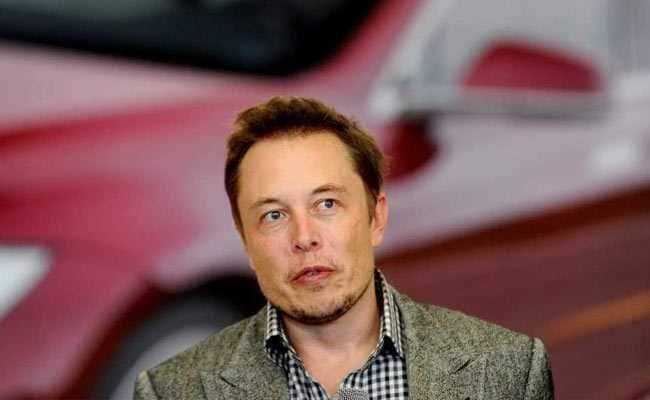
Tesla Inc Chief Executive Elon Musk is coming close to earning the first $346 million tranche of options in a record-breaking pay package, after the electric vehicle maker's stock more than doubled in the last three months.
Shares of Tesla surged 9 per cent to a record high on Monday. They need to rise another 6 per cent to put Tesla's stock market value at $100 billion and then be sustained at that level for both a one-month and six-month average in order to trigger the vesting of the first of 12 tranches of options granted to Mr Musk to buy Tesla stock.
Mr Musk has already hit an operational target that is also necessary for the options to vest.
For Mr Musk's subsequent tranches to vest under the terms of the 2018 package, the company's market cap would have to continue to sustainably rise by $50 billion increments over the agreement's 10-year period, with the billionaire earning the full package if Tesla's market capitalization reaches $650 billion and the electric car maker achieves several revenue and profit targets.
A full payoff for Mr Musk, who is also the majority owner and CEO of the SpaceX rocket maker, would surpass anything previously granted to US executives, according Institutional Shareholder Services, a proxy advisor that recommended investors reject the pay package deal at the time.
Mr Musk receives no salary or cash bonus, only options that vest based on Tesla's market cap and milestones for growth.
"This is the very definition of pay for performance," said Ian Keas, senior director at Longnecker & Associates, an executive compensation consulting firm. "But is he the only individual that could serve in that seat as CEO and deliver that value to shareholders? That's the billion dollar question."
Mr Musk's potential payout compares to the $638 million received by Snap Inc founder Evan Spiegel in 2017 after the social network company's initial public offering. In 2018, Walt Disney CEO Robert Iger earned stock grants worth as much as $149.6 million, including awards related to Disney's purchase of film and television assets from Twenty-First Century Fox.
Mr Musk has transformed Tesla from a niche car maker with production problems into the global leader in electric vehicles, with US and Chinese factories. So far it has stayed ahead of more established rivals including BMW and Volkswagen.
Last week, Tesla's stock market value hit nearly $89 billion, eclipsing the sum of General Motors' and Ford's for the first time, fueled by a surprise third-quarter profit, progress at a new factory in China and better-than-expected car deliveries in the fourth quarter.
Many investors remain skeptical that Tesla can consistently deliver profit, cash flow and growth. More Wall Street analysts rate Tesla "sell" than "buy," and the company's stock has been one of the most shorted on Wall Street.
Tesla was valued at about $53 billion when shareholders approved the pay package in January 2018 and faced a cash crunch, production delays and increasing competition from rivals. It was viewed as massively ambitious because it implied the company's value could grow as much as ten-fold in 10 years.
Last year, Mr Musk hit two operational milestones, pulling in revenue above $20 billion and adjusted earnings before interest, tax, depreciation and amortization of $1.5 billion over four straight quarters. Tesla's "adjusted" EBITDA excludes stock-based compensation, which in the first nine months of 2019 reached $617 million.
Mr Musk currently owns about 34 million Tesla shares, equivalent to 19 per cent of the company. His compensation package would let him buy another 20.3 million shares if all of his options vest.
When Tesla first unveiled Mr Musk's package in 2018, it said Mr Musk could in theory reap as much as $55.8 billion if no new shares were issued. Tesla has since awarded stock to employees and last year sold $2.7 billion in shares and convertible bonds.

-
Why Swapping Your Old Gold Can Trigger A Rs 5 Lakh Tax Bill, And How You Can Avoid It Legally

Swapping old gold for new is taxed as a sale and a fresh purchase. Getting your own gold remade can cut most of that bill, though it has its own costs.
-
The AI Trade is Done. The Real Opportunity for Investors Starts in 2027 | Unhedged Position
As pureplay AI stocks plunge and circular, capex-led financing unwinds, 2027 is set to be a year of reckoning for AI companies. Yet the bust clears the way for a better opportunity for investors in 2027 -- shifting the spotlight from AI builders to the companies using AI.
-
Leadership As Mission: Why The Age Of AI Demands More Human Leadership
Debjani Ghosh examines how AI is changing leadership, arguing that its success must be measured by its impact on people and the accountability of those guiding its use.
-
We May Need Another Tukaram Mundhe To Fight Air Pollution | The Reason Why
Developers may install basic measures such as sprinklers and green nets, resume work, and continue violating rules when this equipment stops working.
-
Extracting Value From Battery Scrap Could Be Challenging For India | The Reason Why
A discarded lithium-ion battery still contains valuable materials such as lithium, nickel and cobalt. These can be recovered and reused. When such batteries are crushed and shredded, they produce a dark powder called black mass.
-
One El Nino, India Can Handle. Two Could Break The Granary
India's grain stocks can absorb one bad year, but a second El Nino could drain the buffer in two to three years, economists say.
-
India's Troika Of Good Luck | Joining The Dots
As Jensen Huang's exit drags Nvidia down, a cooling AI trade and resilient earnings have revived investor interest in India. A likely RBI rate hike looms.
-
Talking Points This Week: Leadership Shock At Nvidia, Earnings Strength, And The Fog Over Hormuz
The Anthropic IPO pricing and first trading day, Nvidia's upcoming earnings, and any fresh signals from Iran will set the tone for the following week.
-
Signature Play: The Classic Cocktail Is Dead. Or Is It?
Classic cocktails are disappearing from India's cocktail menus. But they're still being ordered, taught to bartenders and borrowed from. So, who's really having the last drink?
-
A New Samvat Wishlist: Inclusive Prosperity And Human Development
India has strengthened its economic foundations through infrastructure, digital access and enterprise. Its next growth chapter must deepen productivity, create better livelihoods and widen participation in prosperity.









