Economy Likely Grew Faster in June Quarter: Reuters Poll
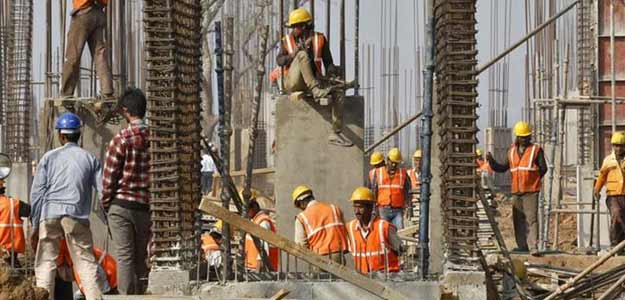
India's economy likely grew at its fastest in two years between April and June, according to a Reuters poll, as improved sentiment after Narendra Modi's election victory in the middle of the quarter coincided with a rebound in investment, manufacturing and construction.
Prime Minister Modi is expected to deliver major reforms, but the lack of progress on that front, along with poor monsoon rains is expected to hamper the recovery in growth from worryingly low levels.
Asia's third largest economy likely grew 5.3 per cent in the first quarter of this fiscal year (April-March), up from 4.6 per cent in January-March, according to the median consensus of over 40 economists surveyed by Reuters last week.
That would be the fastest since the quarter that ended in March 2012 and reflects the upturn in factory activity during recent months. Official gross domestic product data is due to be released on Friday.
"Capital goods, a leading indicator for investment activity, logged a significant 13.9 percent rise in output in the first quarter of FY15," said Aditi Nayar, Senior Economist at ICRA.
Indian manufacturing activity grew at its quickest pace in 17 months in July as order books swelled, marking the ninth consecutive month of expansion according to the HSBC Purchasing Managers' Index (PMI) survey, compiled by Markit.
And factory production grew for the third straight month in June.
Economists however did not significantly change their growth forecast for the 2014-15 fiscal year, with the average at 5.4 per cent.
For all the hopes invested in Modi's government, economists cautioned that the economy's momentum depended on reforms that could prove difficult to pass through parliament.
Despite is massive majority in the lower house, the government lacks a majority in the upper house and it has so far failed to initiate major reforms, and has been confined to taking minor steps to encourage saving and investment.
"Additional reforms are required to ensure that a sustained and broad-based recovery takes root," said ICRA's Nayar.
The poll also showed India's current account deficit likely widened to $7.1 billion in the April-June quarter, compared to a deficit of $1.2 billion in the previous three months, after restrictions on gold imports were lifted.
In percentage terms, the current account deficit probably widened to 1.50 per cent of gross domestic product against 0.20 per cent in Januray-March quarter.
India's Finance Secretary Arvind Mayaram said last month that India needs to keep its current account deficit between 2.0-2.5 per cent for 2014/15.
Copyright: Thomson Reuters 2014

-
The Curious Case of Equitas Small Finance Bank And A CEO Who Quit For Stock

PN Vasudevan believes persistent investor concerns over a perceived conflict of interest had become a governance overhang on Equitas Small Finance Bank's stock, even as the lender improved profitability and asset quality.
-
Talking Points This Week: AI Cash Burn, A Tiger Comeback And An India That Still Finds Its Own Path
India is not immune to higher oil or tighter global liquidity, yet its earnings base is broader, its domestic policy levers are still available.
-
Foreign Investors Own Half Of HDFC Bank and ICICI Bank. An LTCG Cut Could Matter Most Here
Foreign portfolio investors have US$115 billion parked in HDFC Bank, ICICI Bank. If the government cuts long-term capital gains tax, Jefferies says returning foreign money could land here first.
-
'Never Seen This Level Of Negativity': Sandeep Tandon Says The Next Rally May Be Closer Than You Think
Veteran investor Sandeep Tandon says foreign selling is easing, large-caps are due a comeback and mid-caps are crowded, while he turns positive on gold, power and pharma this Diwali.
-
Indians Stay With Family, Not In Hotels | The Reason Why
India still lacks enough clean, reliable and affordable hotels for budget-conscious travellers.
-
The Economic Imperative: Analysing The Material Driving Force Behind India-Canada Strategic Reset
This economic complementarity is further reinforced by deep institutional investment ties and talent mobility, which form the bedrock of the bilateral framework.
-
Medicine Pricing: Where Must Profit Stop?
India must confront excessive margins, hidden incentives and regulatory gaps that threaten the integrity of medicine.
-
Why Amazon And Flipkart Are Struggling To Beat Meesho In India's Smaller Cities
With 274 million users and lowest-cost logistics, Meesho is defending its value commerce crown against giants like Amazon and Flipkart.
-
High US Salaries, No Green Card Certainty: The Financial Calculation Facing Indian H-1B Families
The suspension of PERM processing at eight technology employers does not cancel existing H-1B visas. What it does is force a question many Indian families have been avoiding: is the US salary worth tying your career and family plans to one employer?
-
Swiggy vs Eternal: Food Delivery's Two Rivals Are No Longer In The Same Race
Eternal is building a private AI assistant, dark.ai. Swiggy is still working out how to make Instamart pay, with an operating loss of Rs 895 crore in the July-September quarter while Blinkit stayed profitable.










