Economic Survey: India Plays Down Hit To Growth From PM Modi's Cash Crunch
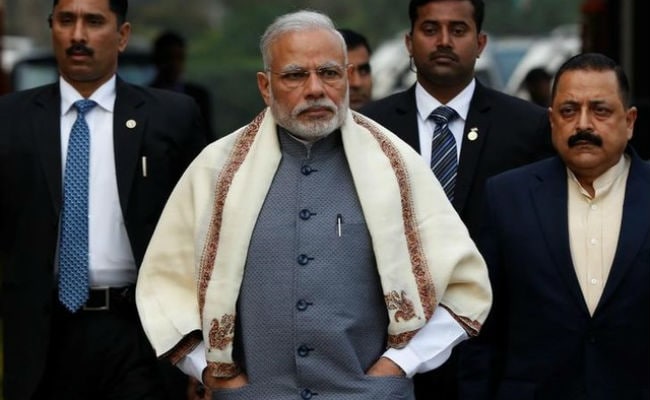
New Delhi: India's growth rate will slow by up to half a percentage point due to the government's decision to scrap high-value banknotes, the top finance ministry economist said on Tuesday, challenging independent estimates of a far bigger impact. Chief Economic Adviser Arvind Subramanian rejected the view of the International Monetary Fund, where he used to work, that growth would be knocked a full percentage point lower by Prime Minister Narendra Modi's shock decision in November to scrap 86 per cent of the cash in circulation.
PM Modi launched the "demonetisation" drive to expose untaxed wealth and the proceeds of crime and corruption. Yet the measure - unprecedented in a stable, modern, peacetime democracy - has caused huge disruption to daily and business life in Asia's third-largest economy.
It will also complicate the fiscal arithmetic in Finance Minister Arun Jaitley's fourth annual budget, which he will present to parliament on Wednesday.
Presenting India's pre-budget Economic Survey, which combines analysis and forecasts with a broader look at policy issues, Mr Subramanian called demonetisation a "radical currency-cum-governance-cum social-engineering measure".
He also maintained the currency squeeze was "less severe than is commonly perceived".
'SIGNIFICANT HARDSHIPS'
Still, Mr Subramanian acknowledged that official GDP figures may not fully reflect the "real and significant hardships" experienced by the informal sector, in which an estimated nine out of 10 Indian workers are employed.
Without giving a figure for growth in the fiscal year that ends in March, Mr Subramanian said it was likely to be between one- quarter and one-half percentage point below an earlier official forecast of around 7 per cent.
Growth is expected to "return to normal" in 2017/18, when it is forecast in a 6.75-7.5 per cent range, as cash liquidity is restored to the economy, according to the 335-page report.
By contrast, the IMF slashed its India growth forecast for the current fiscal year by a full point to 6.6 per cent, handing the title of the world's fastest-growing economy back to China, which reported 6.7 per cent growth for 2016.
Mr Subramanian pointedly declined to comment on whether there had been failings in the planning and implementation of the banknote ban. He expected that a shortage of new Rs 500 ($7.40) and Rs 2,000 notes to end by April.
The new notes are being issued to replace high-value ones scrapped overnight on Nov. 8.
NO LONGER IN DENIAL
Despite Mr Subramanian's cautious assessment, private sector economists said it was important he at least recognised that demonetisation had taken a toll on the Indian economy.
"This is perhaps the first acknowledgement coming from the government. Otherwise so far there has been a denial," said Aneesh Srivastava, chief investment office at IDBI Federal Life Insurance Co in Mumbai.
Mr Jaitley is expected in Wednesday's budget to offer some tax "sops" to individuals to ease the pain of demonetisation, and ramp up public sector investment to offset weak consumption and private capital investment.
Such steps would seek to boost the electoral prospects of PM Modi's Bharatiya Janata Party in a round of five regional elections that kick off this weekend, the most important in the battleground state of Uttar Pradesh.
The survey said government pay rises and muted tax receipts could put pressure on the fiscal deficit in the coming fiscal year. A sharp rise in prices could also cap the headroom to ease monetary policy, it added.
Senior officials say Mr Jaitley may allow the federal deficit to overshoot an earlier target of 3 per cent of GDP to create room for more public investment - a move against that ratings agencies such as Standard & Poor's have warned against because of India's high national debt.
Mr Subramanian took a poke at the "poor standards" of the ratings agencies and included a factbox in his report that chided S&P for upgrading China despite its slowing growth and deteriorating debt metrics, while overlooking India.
(This story has not been edited by NDTV staff and is auto-generated from a syndicated feed.)

-
Indians Are Travelling, But Not Every Journey Is A Holiday | The Week In Whys

Pilgrims, patients and working women are the real travellers, and the system hasn't quite caught up with them.
-
Getting To Work Costs Women More | The Reason Why
It is not just about women paying more than men. It is about women paying much more in cities than in villages.
-
AI Bias In Investing Cannot Be Eliminated, But It Can Be Governed
Framing is a particularly important example as identical financial information presented in terms of gains rather than losses can lead an LLM to reach a different assessment.
-
Joining The Dots | Dark Skies, Steady Diya: Why Hope Holds This Diwali
With war, a weak rupee and foreign outflows weighing on sentiment, policymakers at the NDTV World Summit and market veterans at NDTV Profit Ignite: Diwali Edition offered the same advice: stay invested and filter out the noise.
-
The Curious Case of Equitas Small Finance Bank And A CEO Who Quit For Stock
PN Vasudevan believes persistent investor concerns over a perceived conflict of interest had become a governance overhang on Equitas Small Finance Bank's stock, even as the lender improved profitability and asset quality.
-
Talking Points This Week: AI Cash Burn, A Tiger Comeback And An India That Still Finds Its Own Path
India is not immune to higher oil or tighter global liquidity, yet its earnings base is broader, its domestic policy levers are still available.
-
Foreign Investors Own Half Of HDFC Bank and ICICI Bank. An LTCG Cut Could Matter Most Here
Foreign portfolio investors have US$115 billion parked in HDFC Bank, ICICI Bank. If the government cuts long-term capital gains tax, Jefferies says returning foreign money could land here first.
-
'Never Seen This Level Of Negativity': Sandeep Tandon Says The Next Rally May Be Closer Than You Think
Veteran investor Sandeep Tandon says foreign selling is easing, large-caps are due a comeback and mid-caps are crowded, while he turns positive on gold, power and pharma this Diwali.
-
Indians Stay With Family, Not In Hotels | The Reason Why
India still lacks enough clean, reliable and affordable hotels for budget-conscious travellers.
-
The Economic Imperative: Analysing The Material Driving Force Behind India-Canada Strategic Reset
This economic complementarity is further reinforced by deep institutional investment ties and talent mobility, which form the bedrock of the bilateral framework.










