Economic 'Shock' From Indian Cash Ban To Last Until March - Bibek Debroy
NEW DELHI: The negative shock from India's ban on high-value banknotes will last until the end of March but improved growth next year should fully compensate for the loss, a top economic adviser to Prime Minister Narendra Modi told Reuters.
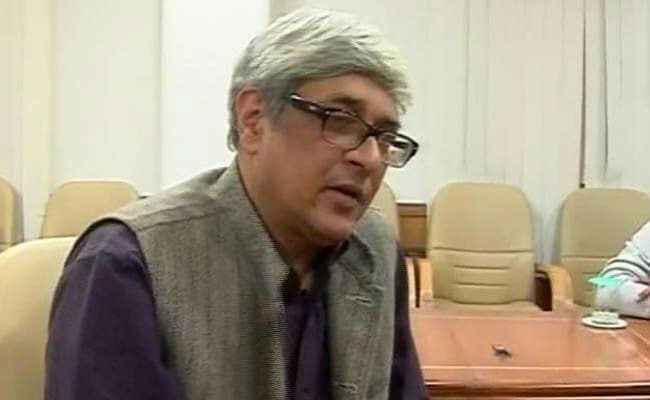
Bibek Debroy, a member of the government's main policy think tank, said on Wednesday the "demonetisation" drive would improve the fiscal position and urged the government to spend any extra revenue on public investment.
By outlawing all 500 and 1,000 rupee notes in the surprise Nov. 8 announcement, the government hoped people would deposit illicit or untaxed income into banks, boosting tax collection and incentivising the millions operating in the "shadow" economy to enter the formal economy.
The decision sucked 86 per cent of cash out of circulation, forcing millions of people to cut outlays and clog banks in search of money, and leaving businesses struggling to pay wages.
"There is certainly going to be a negative shock in Q3 and Q4 of 16/17, which should be compensated by a positive impact in 17/18," Debroy said in an interview, referring to the Indian fiscal year that runs until March.
"A whole lot that was informal will become formal and a bit more organised," he added. "That is a positive externality in the slightly longer term."
PAIN, THEN GAIN
Most economists predict a short-term hit to economic growth from demonetisation, while the Reserve Bank of India has trimmed its growth forecast for the current fiscal year by half a percentage point to 7.1 per cent.
Debroy, however, said it was impossible to quantify the impact, because the government does not yet know how much cash will come back into the system and what it would do with any extra tax revenue.
Some economists have called for emergency fiscal stimulus to stave off a sharp slowdown, but Debroy said the government should instead focus on public investment.
"I don't like the word fiscal stimulus - even before November 8 there was an issue about increasing investments, both private and public," he said.
"What we are talking about is greater public investments in the form of creating assets. That requirement existed before November 8."
Debroy said the political fallout from demonetisation meant the government was now unlikely to meet an April 1 deadline to finalise its crucial nationwide Goods and Services Tax - the largest taxation overhaul in independent India. He said September 1 was a more reasonable target.
Modi needs to clinch a deal with India's 29 states on the tax, but the last parliamentary session was a washout as the opposition and government squabbled over the impact of his cash crackdown.
Debroy expects the next session, set to begin before the government presents its federal budget in early February, to be more productive, narrowing the risk that GST is further delayed.
"We are all suffering from a bit of myopia because the last parliamentary session was a bit of a mess. It might well be that the budget session would be a bit more productive," he said.
(This story has not been edited by NDTV staff and is auto-generated from a syndicated feed.)

-
Talking Points This Week: Leadership Shock At Nvidia, Earnings Strength, And The Fog Over Hormuz

The Anthropic IPO pricing and first trading day, Nvidia's upcoming earnings, and any fresh signals from Iran will set the tone for the following week.
-
Signature Play: The Classic Cocktail Is Dead. Or Is It?
Classic cocktails are disappearing from India's cocktail menus. But they're still being ordered, taught to bartenders and borrowed from. So, who's really having the last drink?
-
A New Samvat Wishlist: Inclusive Prosperity And Human Development
India has strengthened its economic foundations through infrastructure, digital access and enterprise. Its next growth chapter must deepen productivity, create better livelihoods and widen participation in prosperity.
-
Love, Sex Aur Dhokha: The Audacious Plot To Spy On Jensen Huang
A Taipei dinner, a Singapore chip buyer and a suspected Chinese asset: inside the alleged spy operation that got close to NVIDIA's Jensen Huang.
-
Ten Things I Learnt This Samvat
Patience can be a trap. Cheap stocks can stay cheap. Leverage can wipe you out. What did Samvat 2082 teach us? Niraj Shah writes on 10 lessons from the year gone by.
-
Talking Points This Week: Tech Nerves, FII Buying, And A Faraway Banking Shock
The global markets are not shining this Diwali. The exception in the large markets is, India.
-
Midterm Rally Lasted A Day. The Hard Reality Of A Divided US May Last Two Years | Opinion
Between a contested AI boom, a debt ceiling that arrives in 2027 and a president with every incentive to act alone, the next two years may prove more volatile than the first day's rally suggests.
-
Blue Wave Will Derail the AI Trade but Won't Dismantle the AI Era | Unhedged Position
The Democrats' sweep of the US Congress will see politics collide with economic forces both over the long and short term.
-
It's Time To Take The GST Council's Bet On Trust Global
Payment records can prove India's services exports, and clear, proportionate rules can bring foreign digital sellers into the tax net.
-
Opinion | India at 38: From Innovation Overperformer to Innovation Powerhouse
India now has 453 VC-backed deep science startups, 18 of them late-stage, after 117 percent growth since 2020. Laurus Labs, at USD 9.3 billion, is the most valuable deep science company in any middle-income economy outside China.









