ECB Unexpectedly Cuts Asset Purchases, Extends Until End-2017
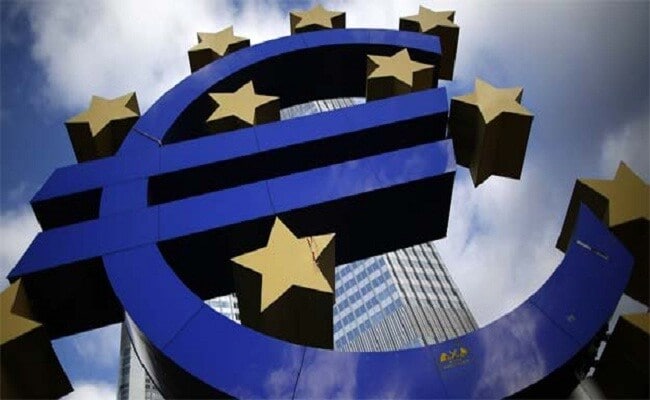
Frankfurt: The European Central Bank (ECB) unexpectedly reduced its asset buys on Thursday but reserved the right to increase purchases once again, a decision that may be seen as a concession to conservative Eurozone members such as Germany.
The ECB will reduce its asset buys to 60 billion euros from next April from the current 80 billion euros, maintaining the buys until the end of the year.
Markets had expected the purchases to stay at 80 billion but only for 6 more months, suggesting a compromise solution in the Governing Council.
"If, in the meantime, the outlook becomes less favourable or if financial conditions become inconsistent with further progress towards a sustained adjustment of the path of inflation, the Governing Council intends to increase the programme in terms of size and/or duration," the ECB said.
The euro jumped to a three-week high after the announcement.
With high risk elections looming in four of the Eurozone's five biggest economies, the ECB was fully expected to keep the asset buys going, likely fearing that cutting back prematurely could abort a still timid recovery and unravel the impact of its purchases.
But as much of its firepower is already exhausted and conservative member states, particularly Germany, grow increasingly frustrated with its unprecedented stimulus, the ECB was also pushed by some to cut back.
The ECB has already spent more than 1.4 trillion euros ($1.5 trillion) buying bonds and has been at pains in the past month to emphasise that maintaining easy financing conditions is 'crucial' as underlying inflation seems to be stuck below 1 per cent.
"To ensure the continued smooth implementation of the Eurosystem's asset purchases, the Governing Council decided to change some of the parameters of the(asset-purchase plan) which will be communicated at today's press conference and in a separate press release," the ECB added.
Interest rates, seen by most to have bottomed out, were kept unchanged, with the deposit rate kept deep in negative territory. Markets attention now turn to Mr Draghi's 1330 GMT (7:00 p.m. in India) news conference, where he will also unveil fresh economic forecasts.
On the face of it, the new projections are likely to be relatively upbeat. Inflation - which has been dangerously low - is now at its highest in more than two years and rising.
Higher oil prices and predictions for more US budget spending are bolstering expectations and 2019 forecasts may show price growth finally hitting the ECB's target of almost 2 per cent for the first time since early 2013.
Eurozone economic growth is shrugging off Britain's decision to leave the European Union, and Germany, the bloc's growth engine, seems to be picking up speed again.
Ironically, the collapse of Italy's government this week may actually hasten instead of delay the recapitalisation of ailing lender Monte dei Paschi, much to the ECB's relief. It has pointed to weak banks as a key obstacle to transmitting stimulus.
Italian bank shares are up 13 per cent this week, and the yield differentials between the sovereign bonds of Germany and peripheral countries like Italy and Spain have narrowed since Sunday's vote.
The euro hovered near a three-week high versus the dollar on Thursday and European shares rose for a fourth straight day.
Weak outlook
But beneath the surface, the outlook is far from comforting.
The inflation rise is almost entirely due to past declines in oil price being knocked out of statistics. Underlying inflation is flat, if not slowing, suggesting that price growth is far from sustainable, a key condition for removing stimulus.
Wage growth has also disappointed, suggesting that companies have cut their inflation expectations. This is a hard-to-break cycle that could entrench anaemic price growth, making it harder to get it back to the desired at-or-just-below 2 per cent.
Even consumption, the key driver of growth is not as good as it looks. Consumption has been driven a jump in disposable income due to oil price falls and loose ECB policy. But Brent crude is up 14 per cent in the past three months, leaving monetary policy as the chief driver of consumption.
The rising clout of populist parties could also weaken governments' resolve to push ahead with painful but needed reforms. Elections in France, Germany, the Netherlands and possibly Italy could leave the ECB with more of the burden.
Even if many of the ECB's fresh economic forecasts will be broadly unchanged from three months ago, the projection for underlying inflation is likely to be cut, a sign that the rise in inflation may be temporary.
($1 = 0.9294 euros)

-
Gold Is Rs 22,000 Cheaper Than A Month Ago. Should You Buy Amid The Wedding Season?

Gold's potential slide to $3,500 could save around Rs 4,700 per 10 grams, but a soft inflation print could just as easily push prices back up. One way to split the risk is to buy in parts, some now and the rest after the Fed's Dec. 9 decision.
-
AI Agents Are Gaining Power. Who Governs Them?
Artificial intelligence agents promise to transform productivity by moving machines from assisting decisions to executing them. But as organisations delegate greater authority to these AI-agents, they must first establish who controls that authority and who remains accountable when things go wrong.
-
Why Swapping Your Old Gold Can Trigger A Rs 5 Lakh Tax Bill, And How You Can Avoid It Legally
Swapping old gold for new is taxed as a sale and a fresh purchase. Getting your own gold remade can cut most of that bill, though it has its own costs.
-
The AI Trade is Done. The Real Opportunity for Investors Starts in 2027 | Unhedged Position
As pureplay AI stocks plunge and circular, capex-led financing unwinds, 2027 is set to be a year of reckoning for AI companies. Yet the bust clears the way for a better opportunity for investors in 2027 -- shifting the spotlight from AI builders to the companies using AI.
-
Leadership As Mission: Why The Age Of AI Demands More Human Leadership
Debjani Ghosh examines how AI is changing leadership, arguing that its success must be measured by its impact on people and the accountability of those guiding its use.
-
We May Need Another Tukaram Mundhe To Fight Air Pollution | The Reason Why
Developers may install basic measures such as sprinklers and green nets, resume work, and continue violating rules when this equipment stops working.
-
Extracting Value From Battery Scrap Could Be Challenging For India | The Reason Why
A discarded lithium-ion battery still contains valuable materials such as lithium, nickel and cobalt. These can be recovered and reused. When such batteries are crushed and shredded, they produce a dark powder called black mass.
-
One El Nino, India Can Handle. Two Could Break The Granary
India's grain stocks can absorb one bad year, but a second El Nino could drain the buffer in two to three years, economists say.
-
India's Troika Of Good Luck | Joining The Dots
As Jensen Huang's exit drags Nvidia down, a cooling AI trade and resilient earnings have revived investor interest in India. A likely RBI rate hike looms.
-
Talking Points This Week: Leadership Shock At Nvidia, Earnings Strength, And The Fog Over Hormuz
The Anthropic IPO pricing and first trading day, Nvidia's upcoming earnings, and any fresh signals from Iran will set the tone for the following week.









