ECB To Finally Join Global Rate-Hike Club: Decision Guide
(Bloomberg) --
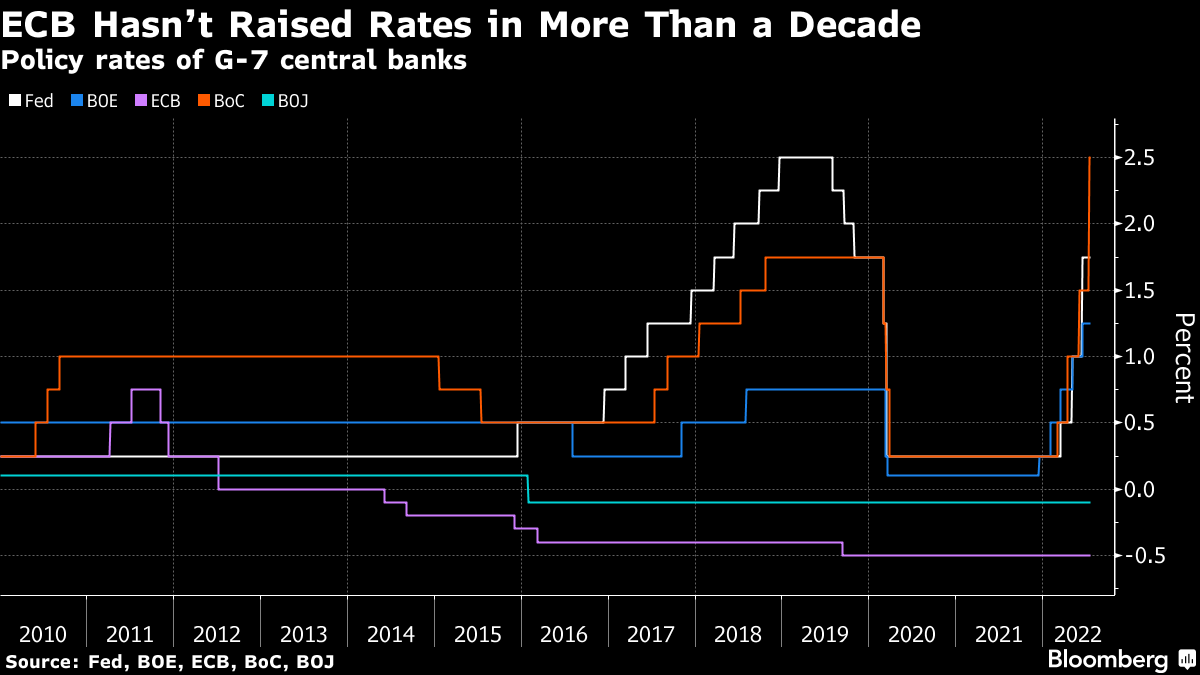
The European Central Bank is about to raise interest rates for the first time in 11 years, joining peers around the world in confronting a historic spike in inflation after months of standing on the sidelines.
With soaring prices an ever-growing concern for households, companies and governments across the 19-nation euro zone, the ECB may even deviate from guidance by considering a hike of double the planned quarter-point at Thursday's meeting.
News of it discussing such a step prompted ABN Amro to change its prediction to 50 basis points from 25. Money markets put the likelihood of each at 50%.
Whatever the size, the move is set to be flanked by the presentation of a new instrument to contain debt-market jitters as borrowing costs are lifted. The exact make-up of the bond-buying tool is likely to go down to the wire as officials tangle over conditions for countries benefiting from the purchases.
- Follow the ECB TLIV blog here
While the ECB's long-awaited rate liftoff brings it closer to the more than 80 central banks that have already raised this year, it still trails the likes of the Federal Reserve, which began hiking in March and opted most recently for a jumbo 75 basis-point increase.
What's more, just as it gets under way, the case for caution is stacking up. While the immediate threat of economic chaos triggered by a cut-off of Russian gas was deferred on Thursday with flows via the Nord Stream pipeline resuming, recession risks in Europe remain high and will be amplified if Moscow halts winter energy supplies.
Elsewhere, a political crisis in Italy -- where Prime Minister Mario Draghi resigned this morning -- showed how quickly government-bond markets can become unnerved, while the euro recently slipped to parity with the US dollar, feeding record inflation that's four times the 2% target.
What Bloomberg Economics Says...
“Progress on the ECB's anti-fragmentation tool could determine whether we get the 25 basis-point hike telegraphed in June or the 50 basis points the Governing Council is now considering. Our view remains that a truly credible solution to fragmentation is only likely to emerge in the midst of a crisis -- that points to an underwhelming announcement and a smaller rate hike.”
--Jamie Rush, Chief Europe Economist. For full preview, click here
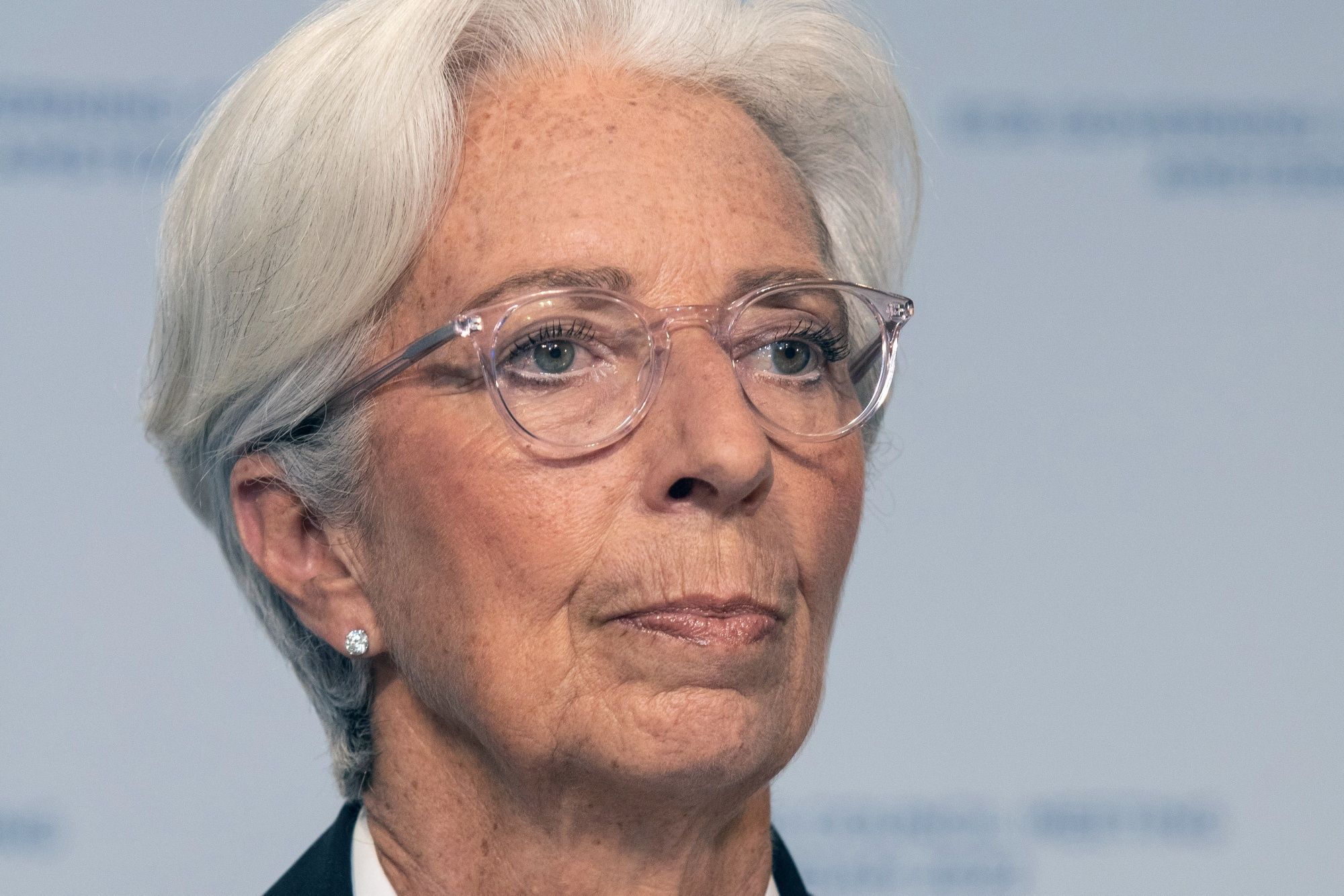
Following a revamp of the decision-day timetable, the ECB's initial statement will come at 2:15 p.m. in Frankfurt -- 30 minutes later than before. President Christine Lagarde's briefing will start at 2:45 p.m. -- 15 minutes later.
Interest Rates
When the Governing Council met in June, it made an unusual commitment to lift its deposit rate by a quarter-point this month to -0.25%. It penciled in a bigger move at the next meeting in September, if the inflation outlook doesn't improve, advocating a “sustained path of further increases” beyond that.
In the runup to this week's announcement, however, policy makers have had second thoughts and are now weighing a hike of 50 basis points, according to people familiar with their discussions. That would end eight years of negative rates in one go, as well as topping all but four predictions in a Bloomberg poll of 53 economists.
The reason for the more hawkish debate is inflation, which hit a fresh record in June. Despite the economic headwinds, analysts say price gains have yet to peak. Officials fret that expectations may become de-anchored, stoked by potential natural gas shortages, even if an economic downturn ensues.
Fragmentation Tool
A crucial part of the ECB's ability to accelerate rate hikes will be the effectiveness of measures designed to contain the fallout.
A bond-market wobble after the Governing Council's last policy meeting prompted officials to speed up work on what they've so far dubbed the Transmission Protection Mechanism -- part of a two-pronged defense that also includes flexible reinvestments from the ECB's pandemic bond portfolio.
The new tool is needed, they say, so their inflation-fighting efforts aren't derailed by unwarranted swings in government-debt yields. First, though, the Governing Council's 25 members must agree on its design, with a failure to unveil anything bound to disappoint investors.
- Read more: What to Watch for When ECB Unveils Its Anti-Fragmentation Tool
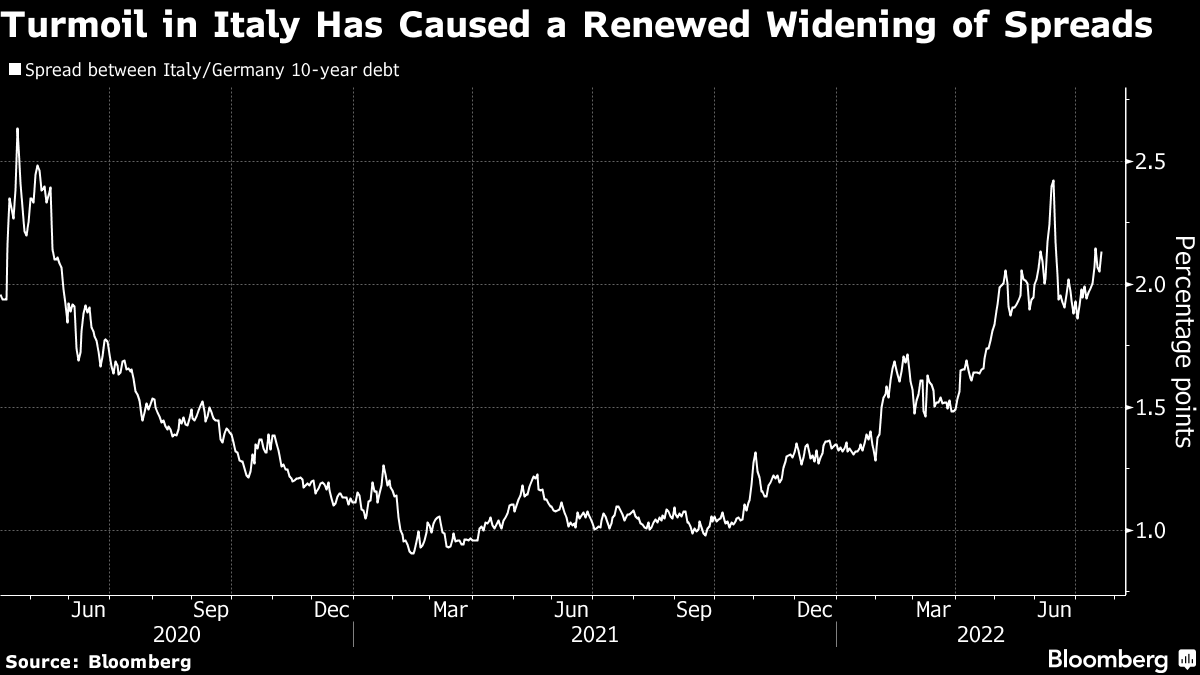
Italy's political storm has raised the risk of speculative attacks. That's driven the spread between 10-year government bonds and their German counterparts past 200 basis points, fueling fears the ECB's instrument may be needed sooner than expected.
Some analysts worry the tool won't be nimble enough to shore up bond markets, with officials keen for it to look like a backstop for emergencies rather than a rescue measure for governments facing political turmoil or poor economic fundamentals.
(Updates with Italy in seventh paragraph)
More stories like this are available on bloomberg.com
©2022 Bloomberg L.P.

-
Gold Is Rs 22,000 Cheaper Than A Month Ago. Should You Buy Amid The Wedding Season?

Gold's potential slide to $3,500 could save around Rs 4,700 per 10 grams, but a soft inflation print could just as easily push prices back up. One way to split the risk is to buy in parts, some now and the rest after the Fed's Dec. 9 decision.
-
AI Agents Are Gaining Power. Who Governs Them?
Artificial intelligence agents promise to transform productivity by moving machines from assisting decisions to executing them. But as organisations delegate greater authority to these AI-agents, they must first establish who controls that authority and who remains accountable when things go wrong.
-
Why Swapping Your Old Gold Can Trigger A Rs 5 Lakh Tax Bill, And How You Can Avoid It Legally
Swapping old gold for new is taxed as a sale and a fresh purchase. Getting your own gold remade can cut most of that bill, though it has its own costs.
-
The AI Trade is Done. The Real Opportunity for Investors Starts in 2027 | Unhedged Position
As pureplay AI stocks plunge and circular, capex-led financing unwinds, 2027 is set to be a year of reckoning for AI companies. Yet the bust clears the way for a better opportunity for investors in 2027 -- shifting the spotlight from AI builders to the companies using AI.
-
Leadership As Mission: Why The Age Of AI Demands More Human Leadership
Debjani Ghosh examines how AI is changing leadership, arguing that its success must be measured by its impact on people and the accountability of those guiding its use.
-
We May Need Another Tukaram Mundhe To Fight Air Pollution | The Reason Why
Developers may install basic measures such as sprinklers and green nets, resume work, and continue violating rules when this equipment stops working.
-
Extracting Value From Battery Scrap Could Be Challenging For India | The Reason Why
A discarded lithium-ion battery still contains valuable materials such as lithium, nickel and cobalt. These can be recovered and reused. When such batteries are crushed and shredded, they produce a dark powder called black mass.
-
One El Nino, India Can Handle. Two Could Break The Granary
India's grain stocks can absorb one bad year, but a second El Nino could drain the buffer in two to three years, economists say.
-
India's Troika Of Good Luck | Joining The Dots
As Jensen Huang's exit drags Nvidia down, a cooling AI trade and resilient earnings have revived investor interest in India. A likely RBI rate hike looms.
-
Talking Points This Week: Leadership Shock At Nvidia, Earnings Strength, And The Fog Over Hormuz
The Anthropic IPO pricing and first trading day, Nvidia's upcoming earnings, and any fresh signals from Iran will set the tone for the following week.









