Early Signals Indicate Limited Covid- Related Stress For SBI: Chairman Dinesh Khara
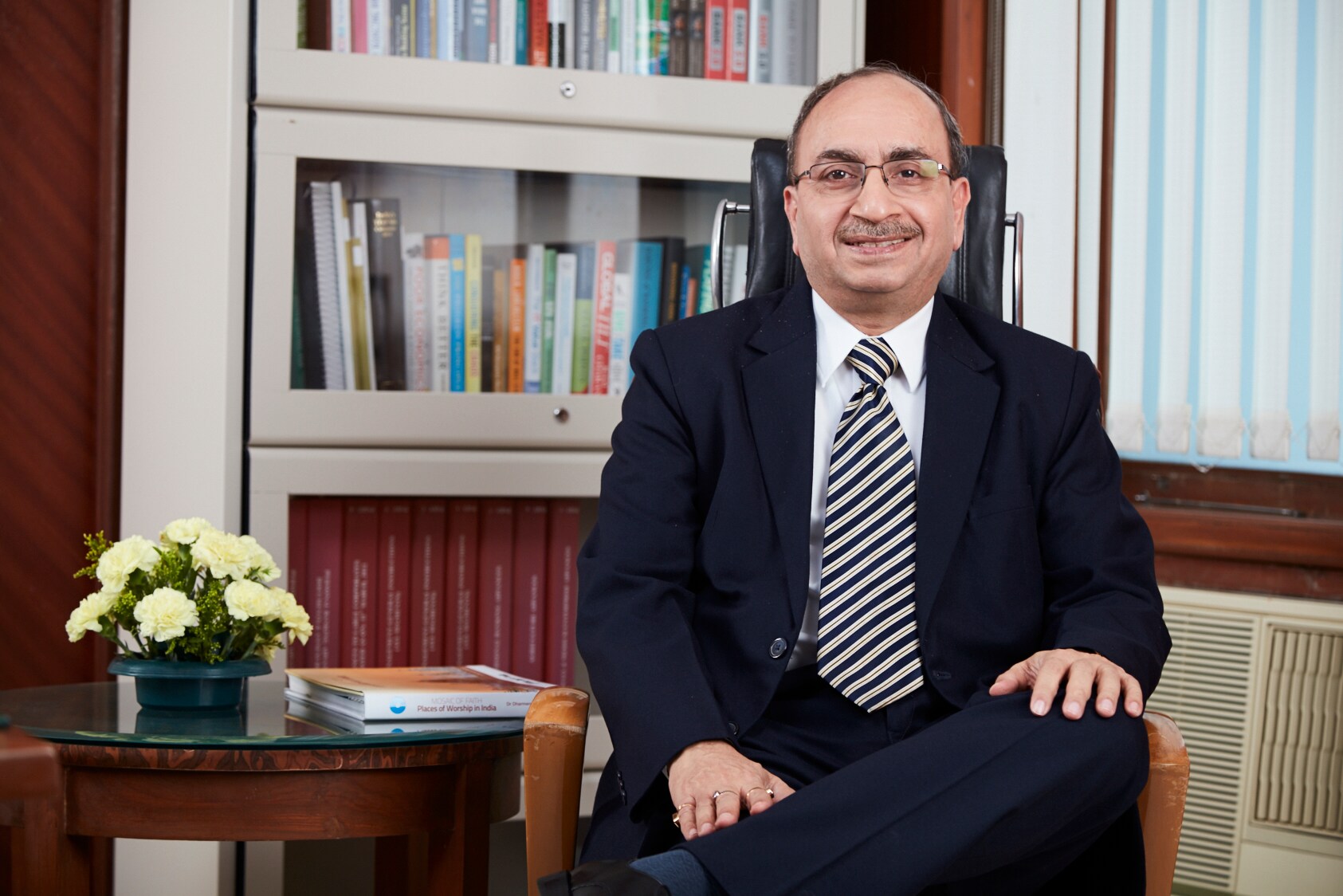
State Bank of India has seen limited signs of pandemic-related stress building up on its books, said Dinesh Kumar Khara, who took over as chairman on Wednesday. Early indicators show that one-time restructuring requests are within expected levels, he said.
“When we look at the hits on our restructuring portal, it is an indication of the stress on our book. The indications are that stress is not very high,” Khara told reporters at a press conference. While some corporate customers have approached the bank for restructuring their outstanding dues, the number is not alarming, he said.
On Sept. 21, India's largest lender released the details of its restructuring scheme for retail and small business borrowers affected by the Covid-19 pandemic. To facilitate easier applications, the bank has created a special restructuring portal where its customers can check eligibility. Borrowers who have income impacted due to the Covid crisis can apply the restructuring.
While the Reserve Bank of India has allowed lenders to keep these restructured assets as standard, they will need to disclose the amount of restructuring done and increase provisions against such assets.
Well Capitalised
The regulator has nudged Indian banks to raise capital to deal with the fallout of the Covid-19 crisis. While SBI has raised tier-1 and tier-2, it has not tapped the market for equity yet.
Khara said the bank is well-capitalised given the current credit growth environment. As on June 30, SBI's capital adequacy ratio stood at 13.4%. Last month, the bank raised Rs 4,000 crore through the additional tier-1 bonds, which will provide it more cushion.
“We will approach the market for capital raising when there is a spike in credit growth,” Khara said.
The bank also does not have any immediate plans to monetise its asset management and general insurance subsidiaries to raise capital. SBI has already listed its life insurance arm and its credit card business in the last three years, when Khara was the managing director in-charge of subsidiaries and international banking. There are no immediate plans to take any other subsidiaries to market.
While loan growth has been slow, SBI, like others, has been growing its investment book. Excluding the statutory liquidity ratio portfolio, total investments for SBI have grown by 9% quarter-on-quarter between March 31 and June 30, 2020. “We have to get used to the new realities of the market,” Khara said.
The bank's total investment except SLR securities, according to analyst presentation, stood at Rs 2.77 lakh crore as on June 30 compared with Rs 2.55 lakh crore as on March 31.
Listing The Priorities
Detailing his priorities, Khara said the lender is trying to ensure safety of its customers and its employees, while also focusing on the balance sheet. Recently, SBI had to temporarily shut six floors in its corporate headquarters after a few cases of the Covid-19 virus were detected, BloombergQuint reported.
SBI will also try to convince the markets and analysts that it deserves a better valuation. “Obviously it is an objective to have a better valuation. But we also need to highlight the fact that SBI's uniqueness lies in its large size and its ability to reach a wide number of customers with services and products,” Khara said.
Alongside, the bank will continue to remain digitally agile. SBI has seen considerable traction for its You Only Need One (YONO) mobile application and will continue to invest in technology, the new chairman said.
The bank is also evaluating its options in setting up a new umbrella entity for payments, as recently permitted by the RBI. Such an entity can develop payment solutions just like the National Payment Corporation of India but will be a for-profit entity. “We cannot hold more than 40% stake in the entity as per norms. So naturally there will be more than one participant involved in setting it up,” Khara said.

-
'Never Seen This Level Of Negativity': Sandeep Tandon Says The Next Rally May Be Closer Than You Think

Veteran investor Sandeep Tandon says foreign selling is easing, large-caps are due a comeback and mid-caps are crowded, while he turns positive on gold, power and pharma this Diwali.
-
Indians Stay With Family, Not In Hotels | The Reason Why
India still lacks enough clean, reliable and affordable hotels for budget-conscious travellers.
-
The Economic Imperative: Analysing The Material Driving Force Behind India-Canada Strategic Reset
This economic complementarity is further reinforced by deep institutional investment ties and talent mobility, which form the bedrock of the bilateral framework.
-
Medicine Pricing: Where Must Profit Stop?
India must confront excessive margins, hidden incentives and regulatory gaps that threaten the integrity of medicine.
-
Why Amazon And Flipkart Are Struggling To Beat Meesho In India's Smaller Cities
With 274 million users and lowest-cost logistics, Meesho is defending its value commerce crown against giants like Amazon and Flipkart.
-
High US Salaries, No Green Card Certainty: The Financial Calculation Facing Indian H-1B Families
The suspension of PERM processing at eight technology employers does not cancel existing H-1B visas. What it does is force a question many Indian families have been avoiding: is the US salary worth tying your career and family plans to one employer?
-
Swiggy vs Eternal: Food Delivery's Two Rivals Are No Longer In The Same Race
Eternal is building a private AI assistant, dark.ai. Swiggy is still working out how to make Instamart pay, with an operating loss of Rs 895 crore in the July-September quarter while Blinkit stayed profitable.
-
Where You Live Shapes How You Get To Work | The Reason Why
Two-wheelers are the most popular way to get to work in India, accounting for nearly 43% of workplace commutes.
-
Unhedged Position: Can India See An Indonesia-Style Time Correction?
The Nifty is trading below levels it first clocked in 2024. Is there, then, as I have suggested in the headline, potential that the current time correction drags on painfully for the next three-five, even ten years?
-
Navigating Friction And Energy Realities: An Analysis Of Marco Rubio's October Visit To India
Occurring at a critical juncture marked by stalled trade negotiations and escalating geopolitical pressures over global energy supplies, the visit offers a profound window into modern US-India relations.










