Dollar Steals Gold’s Thunder In 2022. Should You Bet On A Resurgence?
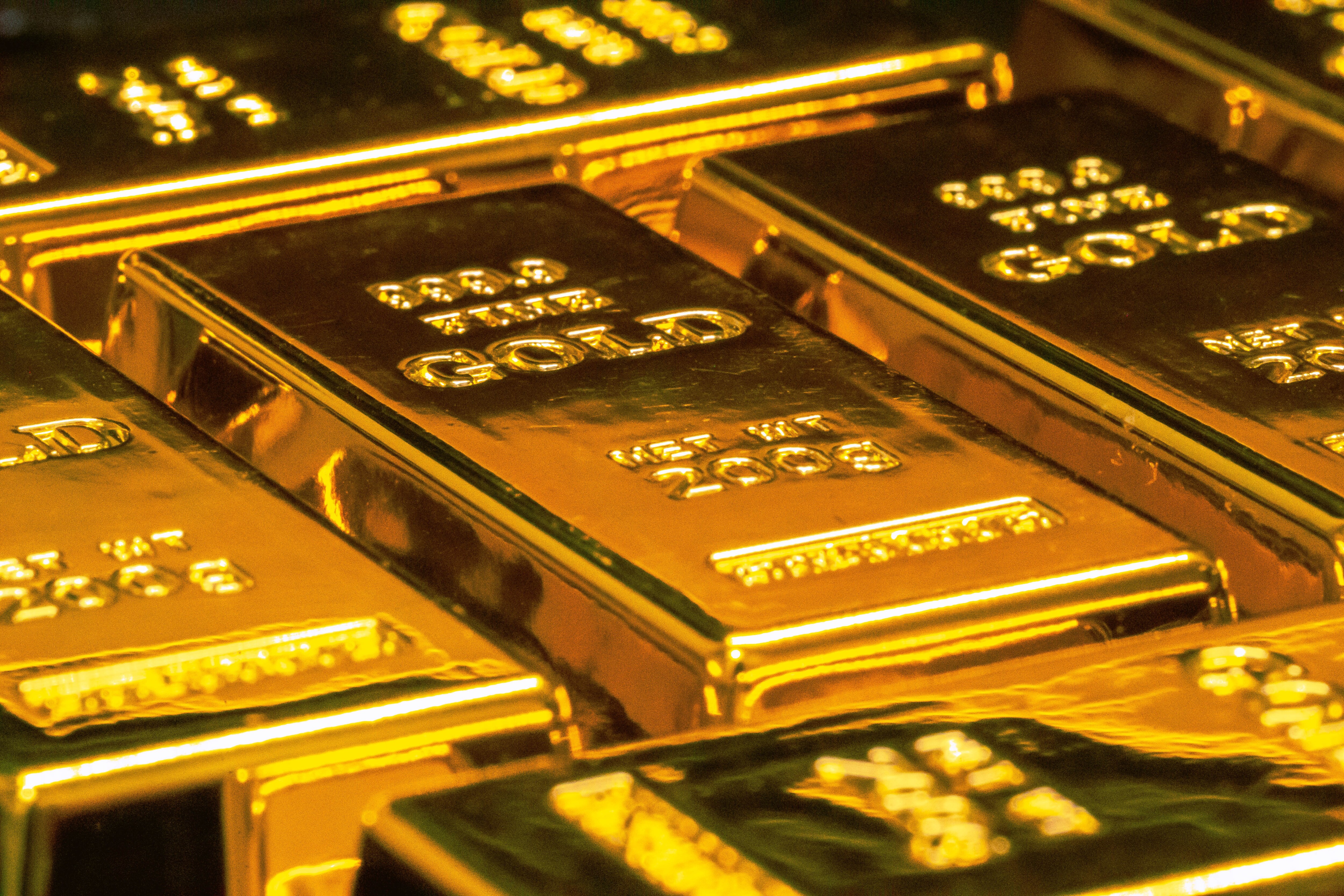
Gold has offered muted returns in 2022, with its sheen having been stolen by the U.S. greenback. And what's more, with the dollar's ascent and higher bond yields in most major economies, prices of the yellow metal could remain subdued till the end of 2024.
The international price of gold started the year at over $1,800 per ounce. It hit a high of $2,050.76 per ounce on March 8 and has, over the intervening months, lost ground. As of Oct. 4, gold was trading at above $1700 per ounce, up from $1,622 at the end of September.
The fall in gold prices has been matched by a rapid rise in the value of the dollar. The dollar index, which measures the value of the greenback against a basket of international currencies, rose to a high of $114 last week, up 19% year to date. Since then, it has cooled off to $111 as of Oct. 4.
“A major reason for the decline in the price of gold this year is the rise in the value of the dollar,” said Kishore Narne, director and head of commodities and currency business at Motilal Oswal Financial Services, explaining the clear inverse correlation between the two safe-haven assets.
Part of this correlation is mathematical. Simply put, when the dollar strengthens, commodities that are priced in dollar become cheaper. But the significant deviations between the two assets over the past two decades coincide with a few major events in financial markets.
In the current century, the first big rise in gold prices took place at the start of the financial crisis. The Federal Reserve, desperate to support a floundering economy, slashed the federal funds rate by 150 basis points within two months to 0-0.25%. These rates prevailed for the next seven years, during which time gold prices rose to a record high.
The Fed began to tighten once again at the end of 2015 and continued to push rates up till the end of 2018. The major fall in gold prices coincided with the start of the tightening cycle. The price of the yellow metal then remained rangebound till the onset of the pandemic, when the Fed once again sharply cut rates to 0-0.25%.

Gold prices had already started rising at the end of 2019, but they rose to a record high on the back of safe-haven demand after the onset of the pandemic.
The most recent fall in gold prices also coincides with major action by the U.S. Fed. Between March and September this year, the U.S. central bank, in its fight against runaway inflation, has raised the policy rate by 300 basis points to 3.00-3.25%.
Battle Of The Safe Havens
The attractiveness of gold depends on the prevailing yields in the U.S., said Narne. When yields are high in the U.S., the dollar's strength waxes and gold wanes.
“Dollar and gold are both currencies,” Narne said. “The difference between any currency and gold is that gold doesn't carry an interest rate. It is a non-yielding currency. When interest rates went up in dollar terms, the dollar becomes more and more attractive.”
In recent times, cryptocurrency has entered the conversation as a safe haven. But it was quickly struck off the list, because it behaved more like a risk asset, moving in lock-step with the equity markets, Narne said.
When Will Gold Regain Its Lustre?
The downside on gold prices from this point will be limited, according to Ravindra Rao, head of commodities research at Kotak Securities.
“Most commodity prices have fallen in the recent past, led by crude. Inflation is likely to come down in two-three months. That will give the Fed some room to stop increasing rates. The hawkish stance could last till the beginning of 2023, but it will turn after that,” Rao said, pegging the near-term low of gold at $1,570 per ounce. “We are advising clients to buy gold in a staggered manner,” he said.
Narne anticipates that the dollar rally will eventually lose steam, possibly in the next two months. This would be “moderately” positive for gold prices, he said.
“We are not bullish on gold at least till mid-2023. From there, it is likely to consolidate. By end of 2024, we could see prices moving up,” Narne said. “For gold prices to rise, it needs low cost of money and supply of money. These things will happen at the end of the recession.”
How Much Gold Should You Ideally Hold?
Individuals should ideally restrict gold, excluding jewellery, to up to 10% of your investment portfolio, said Harshvardhan Roongta, certified financial planner and co-founder of Roongta Securities.
Here, too, Roongta said individuals should buy gold in non-physical form. The Sovereign Gold Bond, issued periodically by the Reserve Bank of India on behalf of the government, is a good option to consider, because the interest it bears acts as a buffer against potential capital loss.

-
Indians Are Travelling, But Not Every Journey Is A Holiday | The Week In Whys

Pilgrims, patients and working women are the real travellers, and the system hasn't quite caught up with them.
-
Getting To Work Costs Women More | The Reason Why
It is not just about women paying more than men. It is about women paying much more in cities than in villages.
-
AI Bias In Investing Cannot Be Eliminated, But It Can Be Governed
Framing is a particularly important example as identical financial information presented in terms of gains rather than losses can lead an LLM to reach a different assessment.
-
Joining The Dots | Dark Skies, Steady Diya: Why Hope Holds This Diwali
With war, a weak rupee and foreign outflows weighing on sentiment, policymakers at the NDTV World Summit and market veterans at NDTV Profit Ignite: Diwali Edition offered the same advice: stay invested and filter out the noise.
-
The Curious Case of Equitas Small Finance Bank And A CEO Who Quit For Stock
PN Vasudevan believes persistent investor concerns over a perceived conflict of interest had become a governance overhang on Equitas Small Finance Bank's stock, even as the lender improved profitability and asset quality.
-
Talking Points This Week: AI Cash Burn, A Tiger Comeback And An India That Still Finds Its Own Path
India is not immune to higher oil or tighter global liquidity, yet its earnings base is broader, its domestic policy levers are still available.
-
Foreign Investors Own Half Of HDFC Bank and ICICI Bank. An LTCG Cut Could Matter Most Here
Foreign portfolio investors have US$115 billion parked in HDFC Bank, ICICI Bank. If the government cuts long-term capital gains tax, Jefferies says returning foreign money could land here first.
-
'Never Seen This Level Of Negativity': Sandeep Tandon Says The Next Rally May Be Closer Than You Think
Veteran investor Sandeep Tandon says foreign selling is easing, large-caps are due a comeback and mid-caps are crowded, while he turns positive on gold, power and pharma this Diwali.
-
Indians Stay With Family, Not In Hotels | The Reason Why
India still lacks enough clean, reliable and affordable hotels for budget-conscious travellers.
-
The Economic Imperative: Analysing The Material Driving Force Behind India-Canada Strategic Reset
This economic complementarity is further reinforced by deep institutional investment ties and talent mobility, which form the bedrock of the bilateral framework.










