Dharavi Redevelopment Project Lands At PMO’s Doorstep
A U.A.E.-based consortium has approached the Prime Minister's Office for expediting the contract for the Dharavi redevelopment project, nearly seven months after it emerged the highest bidder.
The three-company consortium—led by Seclink Technology Corporation, which has four Indians as directors and is backed by the royal family offices of Dubai and Bahrain—is yet to receive a letter of award after outbidding Adani Infrastructure, the only other bidder for the Dharavi redevelopment project.
The delay came as the Maharashtra government has sought opinion of the Advocate General over whether it can continue with the current tender or float a new one after the state acquired railway land.
“We feel that Prime Minister Narendra Modi would lead the inclusive growth of India and would enhance the vision of housing for all by taking a historic decision, which none of his earlier governments had taken in past 70 years,” Hiten Shah, Indian partner of Seclink, said in an emailed statement to BloombergQuint.
“The decision would be to cement his relationship with Royal families of U.A.E. by awarding Dharavi (redevelopment project) to entities funded by Royal families.
“Royal families of the U.A.E. and Bahrain have very significant brotherhood with our Prime Minister and they have pledged $1 billion for NIIF (National Investment and Infrastructure Fund)... We are very confident that our Prime Minister would take a humble decision in favour of 5,00,000 citizens of Dharavi and provide them a quality living,” Shah added.
BloombergQuint has emailed queries to Sitanshu Kar, principal spokesperson for the Government of India and principal director general of Press Information Bureau; and SVR Srinivas, chief executive officer at Dharavi Redevelopment Authority.
The story will be updated once they respond.
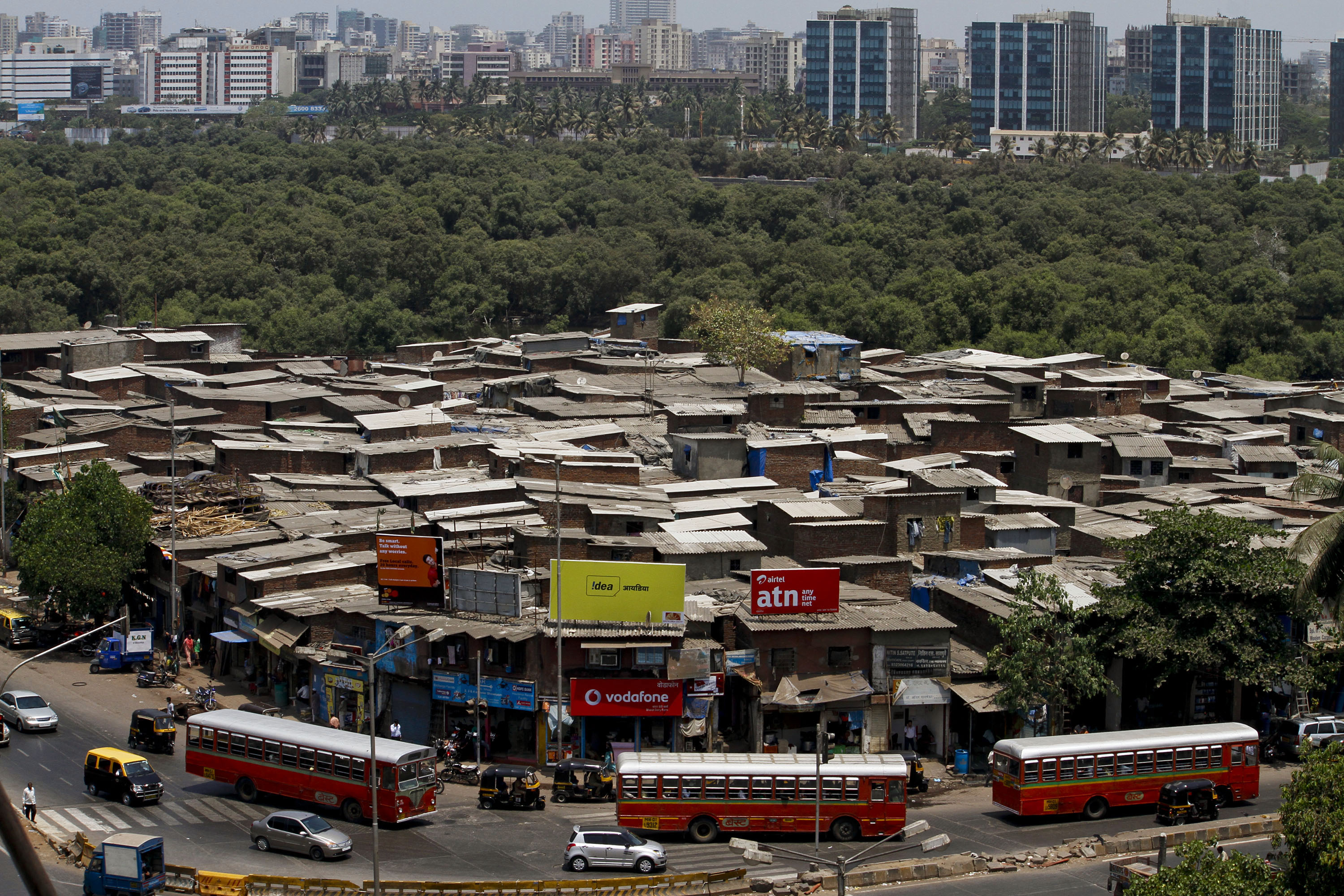
Dharavi, a sprawl of shanties spread over 240 hectares in the prime Central Mumbai area, has a population of 8 lakh and over 13,000 small businesses, Srinivas had told BloombergQuint in February. The plan to give slum-dwellers homes was first mooted by architect Mukesh Mehta in 1997 and the Maharashtra government issued regulations for its redevelopment 15 years ago.
No developer came forward despite the state offering incentives.
Seclink submitted a Rs 7,500-crore bid for for the Dharavi redevelopment project after Maharashtra floated a tender in November—Adani quoted Rs 4,529 crore. According to the terms, Seclink was supposed to receive the letter of award by February 7. The latest delay stems from the government's Rs 1,000-crore acquisition of 45 acres of land belonging to the Indian Railways in adjoining Matunga—it would be used to build transit camps for slum dwellers. The land wasn't part of the original tender, Chief Minister Devendra Fadnavis said in the state assembly in June, Indian Express reported. The state, he said, has sought legal opinion on whether the deal affects the tender sanctity.

Dharavi, located on the northernmost tip of Mumbai's island city, was one of the original six koliwadas, or home of the fisherfolk, according to the website of Slum Rehabilitation Authority. Other people began settling here, starting with potters from Saurashtra by the end of 1800s to leather tanners from Tamil Nadu and embroidery workers from Uttar Pradesh. And, as the city expanded, this once-swamp transformed into a decrepit sprawl of shanties on government land with a flourishing economy.
Maharashtra plans to develop it as an integrated project, providing concessions for its speedy completion, including creation of a special purpose vehicle with Rs 500 crore equity in which the selected partner would hold 80 percent stake.
The Dharavi redevelopment project aims to provide 350-square-feet homes, schools and hospitals to slum-dwellers. The selected developer will get a floor space index—the ratio of saleable space to plot size—of 4 compared with the usual 1.5, allowing construction of greater number of towers closer to each other. That will give the builder additional space outside the slum rehabilitation scheme that can be sold at market prices.
Shah said the redevelopment project will also allow Seclink to bring 7-8 crore square-feet of saleable real estate into the market. “The saleable component will be designed in the manner in which it will provide a huge opportunity to the existing realtors in Mumbai,” said Shah. “If you look at the kind of investment we're making, it's going to create a turnover of almost Rs 15,000-20,000 crore per annum. It will revive the entire economy and real estate industry in Maharashtra.”
That also depends on how quickly the government decides on the final bidder for the Dharavi redevelopment project, now that Seclink has approached Prime Minister Narendra Modi's office.
India and the U.A.E. have been improving their bilateral times. In fact, the Gulf nation conferred its highest civilian honour, the Zayed Medal, on Modi. But the prime minister couldn't visit the U.A.E. in April because of the election code of conduct.

According to Ashutosh Limaye, director and head (valuations and advisory services) at Anarock Property Consultants, Dharavi's strategic location means it can be considered the mirror image of Bandra-Kurla Complex—Mumbai's new business district. “It's well connected, the upcoming metro line will also service this area,” said Limaye.
But Dharavi can't be looked upon just as a slum but it's also a great contributor to the economy, he said. “While BKC is formal, Dharavi is informal employment generator. People live as well as work here,” he said, adding that employment needs should be kept in mind while redeveloping the area.
It will, however, be premature to estimate now what premium the area will command post-redevelopment, he said. “By the time this entire process is completed, it will easily surpass one, or perhaps even two, property cycles.”
Still, there's a lot at stake as the plan will unlock prime real estate in one of Mumbai's most crowded areas. And Mehta, the original architect of the Dharavi redevelopment project, is delighted that the government has restarted the process after decades of delay.

“I was able to show there is a lot of money that can be made in slums. And I think a lot of builders also think that Dharavi will make Mumbai a lot affordable. Which means their profits will come down, and they might have a challenge with Dharavi itself,” he said. “The opportunity here is whoever gets control of Dharavi almost virtually drives the real estate of Mumbai.”

-
The Curious Case of Equitas Small Finance Bank And A CEO Who Quit For Stock

PN Vasudevan believes persistent investor concerns over a perceived conflict of interest had become a governance overhang on Equitas Small Finance Bank's stock, even as the lender improved profitability and asset quality.
-
Talking Points This Week: AI Cash Burn, A Tiger Comeback And An India That Still Finds Its Own Path
India is not immune to higher oil or tighter global liquidity, yet its earnings base is broader, its domestic policy levers are still available.
-
Foreign Investors Own Half Of HDFC Bank and ICICI Bank. An LTCG Cut Could Matter Most Here
Foreign portfolio investors have US$115 billion parked in HDFC Bank, ICICI Bank. If the government cuts long-term capital gains tax, Jefferies says returning foreign money could land here first.
-
'Never Seen This Level Of Negativity': Sandeep Tandon Says The Next Rally May Be Closer Than You Think
Veteran investor Sandeep Tandon says foreign selling is easing, large-caps are due a comeback and mid-caps are crowded, while he turns positive on gold, power and pharma this Diwali.
-
Indians Stay With Family, Not In Hotels | The Reason Why
India still lacks enough clean, reliable and affordable hotels for budget-conscious travellers.
-
The Economic Imperative: Analysing The Material Driving Force Behind India-Canada Strategic Reset
This economic complementarity is further reinforced by deep institutional investment ties and talent mobility, which form the bedrock of the bilateral framework.
-
Medicine Pricing: Where Must Profit Stop?
India must confront excessive margins, hidden incentives and regulatory gaps that threaten the integrity of medicine.
-
Why Amazon And Flipkart Are Struggling To Beat Meesho In India's Smaller Cities
With 274 million users and lowest-cost logistics, Meesho is defending its value commerce crown against giants like Amazon and Flipkart.
-
High US Salaries, No Green Card Certainty: The Financial Calculation Facing Indian H-1B Families
The suspension of PERM processing at eight technology employers does not cancel existing H-1B visas. What it does is force a question many Indian families have been avoiding: is the US salary worth tying your career and family plans to one employer?
-
Swiggy vs Eternal: Food Delivery's Two Rivals Are No Longer In The Same Race
Eternal is building a private AI assistant, dark.ai. Swiggy is still working out how to make Instamart pay, with an operating loss of Rs 895 crore in the July-September quarter while Blinkit stayed profitable.










