Developing Countries See Swelling Middle Class: International Labour Organization
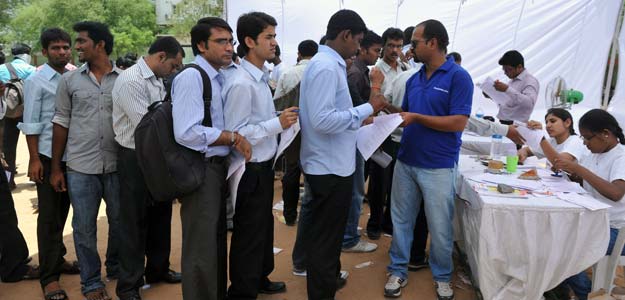
Workers in developing countries are increasingly moving to better jobs and joining the middle class, but 839 million workers still earn less than $2.00 a day, the International Labour Organization said.
"The developing countries are generally in a process of catching up with the advanced economies," ILO chief Guy Ryder told reporters in Geneva ahead of the release of the agency's annual World of Work Report on Tuesday.
Between 1980 and 2011, per capita income in the developing countries like Senegal, Vietnam and Tunisia on average grew 3.3 per cent each year, which is far faster than the 1.8 per cent growth seen in advanced economies, the report said.
Today, more than four in 10 workers in such countries are considered to be in the so-called "developing middle class" -- meaning that they earn more than $4.00 a day -- up from fewer than two in 10 two decades ago, it said.
Yet, more than half of all workers in the developing world -- some 1.5 billion people -- are in precarious positions, without contracts and social protections and often wallowing in poverty.
Around 839 million of them -- a full third of all workers in such countries -- earn less than $2.00 a day.
That however is down from more than half of all workers in such countries in the early 2000s, the report said.
Improve worker rights, create growth
In its analysis of the situation in 140 developing and emerging economies, the ILO concluded that nations that tackled working poverty, invested in creating quality jobs and in getting workers out of precarious employment had weathered the global financial crisis far better than those that did not.
"The investment in human capital is coming through in improved growth," Ryder said, adding: "one needs to depart from any simplistic notion that development can be kick-started by reducing worker rights."
Since the global financial crisis of 2007, the convergence between conditions in the developed and developing worlds has picked up speed.
Some 30.6 million more people have been added to the global ranks of the unemployed since the crisis began, leaving a total of 199.8 million people jobless last year, with the number set to swell to 213 million by 2019.
The global unemployment rate has stabilised at around six percent -- a level expected to remain through 2017 -- but advanced economies have suffered the biggest rise in jobless numbers.
Developed countries have on average seen their unemployment rate stabilise at around 8.5 per cent, up from 5.8 per cent before the crisis, while developing countries suffered only a brief hike before their jobless rate fell back to around pre-crisis levels of 5.4 per cent, the report said.
And the crisis has affected working conditions everywhere.
"Many developing countries, notably in Latin America and Asia, are making efforts to tackle inequalities and improve job quality as well as social protection," lead author of the ILO report Moazam Mahmood said.
"By contrast," he said, "a number of advanced economies, notably in Europe, seem to be going in the opposite direction."
Migration patterns shifting
The shift in opportunities is meanwhile impacting migration patterns.
Some 231.5 million people last year were living in a country other than the one they were born in, the report said.
While the European Union by far remains the favoured destination, with 51 per cent of migrants settled there, migrants have since the crisis increasingly been moving between developing countries, the ILO said.
More and more educated young people from crisis-hit developed countries are also emigrating to emerging economies, the report found.
"Already south-south migration is on the rise while workers are also leaving advanced economies, particularly some hard-hit European countries, for work opportunities in developing countries," Mahmood said.
Some 213 million people will enter the labour market over the next five years -- 200 million of them in emerging and developing countries, the ILO said, voicing optimism that most of the new jobs created will provide a decent living.
"For the first time in history, over the next several years, most new jobs in the developing world are likely to be of sufficient quality to allow workers and their families to live above the equivalent of the poverty line in the United States," the report said.
Despite its optimism, ILO acknowledged that 85 per cent of the workforce in the developing world will still be living below the US-equivalent poverty line in 2018.

-
Indians Are Travelling, But Not Every Journey Is A Holiday | The Week In Whys

Pilgrims, patients and working women are the real travellers, and the system hasn't quite caught up with them.
-
Getting To Work Costs Women More | The Reason Why
It is not just about women paying more than men. It is about women paying much more in cities than in villages.
-
AI Bias In Investing Cannot Be Eliminated, But It Can Be Governed
Framing is a particularly important example as identical financial information presented in terms of gains rather than losses can lead an LLM to reach a different assessment.
-
Joining The Dots | Dark Skies, Steady Diya: Why Hope Holds This Diwali
With war, a weak rupee and foreign outflows weighing on sentiment, policymakers at the NDTV World Summit and market veterans at NDTV Profit Ignite: Diwali Edition offered the same advice: stay invested and filter out the noise.
-
The Curious Case of Equitas Small Finance Bank And A CEO Who Quit For Stock
PN Vasudevan believes persistent investor concerns over a perceived conflict of interest had become a governance overhang on Equitas Small Finance Bank's stock, even as the lender improved profitability and asset quality.
-
Talking Points This Week: AI Cash Burn, A Tiger Comeback And An India That Still Finds Its Own Path
India is not immune to higher oil or tighter global liquidity, yet its earnings base is broader, its domestic policy levers are still available.
-
Foreign Investors Own Half Of HDFC Bank and ICICI Bank. An LTCG Cut Could Matter Most Here
Foreign portfolio investors have US$115 billion parked in HDFC Bank, ICICI Bank. If the government cuts long-term capital gains tax, Jefferies says returning foreign money could land here first.
-
'Never Seen This Level Of Negativity': Sandeep Tandon Says The Next Rally May Be Closer Than You Think
Veteran investor Sandeep Tandon says foreign selling is easing, large-caps are due a comeback and mid-caps are crowded, while he turns positive on gold, power and pharma this Diwali.
-
Indians Stay With Family, Not In Hotels | The Reason Why
India still lacks enough clean, reliable and affordable hotels for budget-conscious travellers.
-
The Economic Imperative: Analysing The Material Driving Force Behind India-Canada Strategic Reset
This economic complementarity is further reinforced by deep institutional investment ties and talent mobility, which form the bedrock of the bilateral framework.










