Despite Stimulus, Data Shows The Government May Be Spending Less, Not More
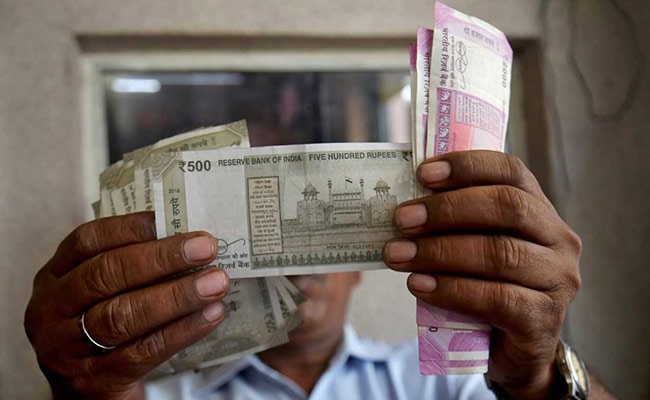
In a year when the government has announced multiple stimulus packages to revive India's covid-hit economy, the central government has spent less than the previous year, NDTV has found. The total expenditure for the April- September period in the current financial year (2020) was almost 1 per cent lower than the total expenditure of the central government for the same period the previous financial year.
This despite the government claiming to have announced stimulus packages worth Rs 30 lakh crores.
In a press conference on November 12, announcing the latest stimulus package, the Minister of Finance, Nirmala Sitharaman had said that total spending was "going up," when asked whether the government will be spending more than what they budgeted because of the multiple measures to help boost the economy.
According to the data available with the Controller General of Accounts, however, the central government's total spending fell from Rs 14.9 lakh crore in April-September 2019 to Rs 14.8 lakh crore in April-September 2020, a drop of almost 1 per cent.
The main reason seems to be a drop in capital expenditure, essentially what the government spends on infrastructure projects like roads, bridges, ports and so on. This dropped by 12 per cent from Rs 1.9 lakh crore in the previous year to Rs 1.7 lakh crore this year.
On the other hand, revenue expenditure, which is what the government spends on salaries, pensions, interest payments, and other operating expenses has risen by 1 per cent from Rs 13 lakh crore in April-September 2019 to Rs 13.1 lakh crore in the same period this year.
One reason for this slight increase, say experts, could be spending on welfare schemes that were announced during the pandemic, like the money transfer to Jan Dhan accounts, and early payments under the PM-KISAN scheme.
So where is the government cutting expenses?
A scrutiny of spending by individual ministries and departments finds that of the 55 major ministries and departments, 43 had seen a drop in expenditure compared to the previous year.
The Ministry of Statistics and Programme Implementation has seen the biggest drop in expenditure, of 72 per cent, but even crucial economic ministries have seen drops in spending. The Ministry of Micro, Small, and Medium Enterprises, for instance, spent 59 per cent less this year. Ministries of Textiles, Power, Shipping, Skill Development and Entrepreneurship, Commerce and Industry, and Coal have all seen spending reduced by 46-58 per cent this year, compared to the previous year.
Only 12 ministries have seen an increase in spending, with the Ministry of Civil Aviation seeing the highest rise in spending. They spent 90 per cent more this year, compared to the previous year. Other ministries like that of Rural Development (75 per cent), Agriculture and Farmers' Welfare (30 per cent), Food processing industries (18 per cent) and Health (14 per cent) have also seen an increase in their expenditures.
The drop in expenditure also comes with a larger drop in the government's revenues, creating a crash crunch. The total receipts of the government dropped by 32 per cent from Rs 8.4 lakh crore in 2019 to Rs 5.7 lakh crore in 2020 in the April-September period. This includes a sharp dip of 25 per cent in the Tax revenue of the government as well.
Pronab Sen, former chief statistician of India, said the numbers helps uncover the "difference between the hype and the reality."
"The CGA numbers are telling you exactly what is happening on the ground, whereas the various announcements were announcements of intent," he said.
He also stressed the need to spend more. "This is actually fairly basic economics. We do know that states have been spending more, they have been spending beyond their capabilities, and towards the end of the year the states are going to go into a situation where they will not have resources, they can't borrow more. So unless the central government steps in at that point, you can really imagine the economy going for a tail spin," he said.

-
The Curious Case of Equitas Small Finance Bank And A CEO Who Quit For Stock

PN Vasudevan believes persistent investor concerns over a perceived conflict of interest had become a governance overhang on Equitas Small Finance Bank's stock, even as the lender improved profitability and asset quality.
-
Talking Points This Week: AI Cash Burn, A Tiger Comeback And An India That Still Finds Its Own Path
India is not immune to higher oil or tighter global liquidity, yet its earnings base is broader, its domestic policy levers are still available.
-
Foreign Investors Own Half Of HDFC Bank and ICICI Bank. An LTCG Cut Could Matter Most Here
Foreign portfolio investors have US$115 billion parked in HDFC Bank, ICICI Bank. If the government cuts long-term capital gains tax, Jefferies says returning foreign money could land here first.
-
'Never Seen This Level Of Negativity': Sandeep Tandon Says The Next Rally May Be Closer Than You Think
Veteran investor Sandeep Tandon says foreign selling is easing, large-caps are due a comeback and mid-caps are crowded, while he turns positive on gold, power and pharma this Diwali.
-
Indians Stay With Family, Not In Hotels | The Reason Why
India still lacks enough clean, reliable and affordable hotels for budget-conscious travellers.
-
The Economic Imperative: Analysing The Material Driving Force Behind India-Canada Strategic Reset
This economic complementarity is further reinforced by deep institutional investment ties and talent mobility, which form the bedrock of the bilateral framework.
-
Medicine Pricing: Where Must Profit Stop?
India must confront excessive margins, hidden incentives and regulatory gaps that threaten the integrity of medicine.
-
Why Amazon And Flipkart Are Struggling To Beat Meesho In India's Smaller Cities
With 274 million users and lowest-cost logistics, Meesho is defending its value commerce crown against giants like Amazon and Flipkart.
-
High US Salaries, No Green Card Certainty: The Financial Calculation Facing Indian H-1B Families
The suspension of PERM processing at eight technology employers does not cancel existing H-1B visas. What it does is force a question many Indian families have been avoiding: is the US salary worth tying your career and family plans to one employer?
-
Swiggy vs Eternal: Food Delivery's Two Rivals Are No Longer In The Same Race
Eternal is building a private AI assistant, dark.ai. Swiggy is still working out how to make Instamart pay, with an operating loss of Rs 895 crore in the July-September quarter while Blinkit stayed profitable.










