Demonetisation Not Done In Haste, Says RBI Governor Urjit Patel
Mumbai: The demonetisation decision was taken after detailed deliberations and not in haste, while nearly Rs 11.85 lakh crore or 80 per cent of junked notes have come back into the system, RBI on Wednesday said promising to maintain steady supply of new currency to ease cash crunch.
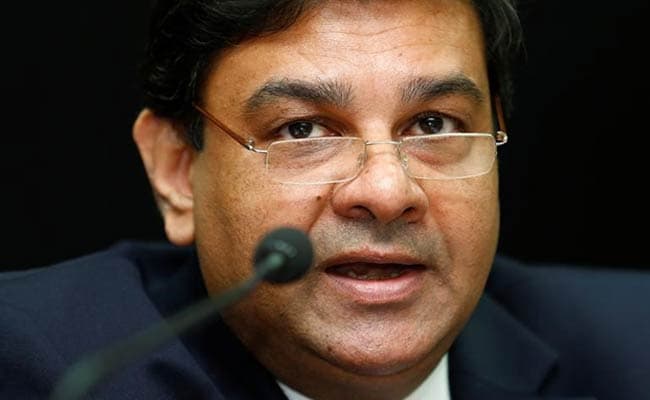
"The decision was not and has not been taken in haste but after detailed deliberations," said RBI Governor Urjit Patel.
"The consequences that have emanated from that were taken on board. That is why the planning, the process and implementation was what it was, keeping in mind high secrecy had to be maintained. The central bank and the government were conscious of certain immediate difficulties for the public at large and all efforts were made to mitigate them," he added.
After the 5th bi-monthly monetary policy review, Dr Patel told the media that the problems of the common person were at "the top of our radar" and all dispensation were put into the place so "that period for disruption is minimal while we recalibrate our note supply to the denomination that were not withdrawn in terms of legal tender character".
RBI Deputy Governor R Gandhi said that almost Rs 11.85 lakh crore in the scrapped Rs 500/1000 notes have come back to the banking system.
Government had announced that the old Rs 500/1000 notes will no longer be legal tender from November 9. Public has been given time to exchange/withdraw the notes by December 30.
Mr Gandhi further said printing presses of RBI and the government are working to full capacity and all efforts are being made to reach the notes in every part of the country.
"In fact, during this period that is from November 10 to December 5, the RBI supplied to the public banknotes of various denominations near about Rs 4 lakh crore.
"As regards lower denomination of notes, the RBI through its counters and bank branches have supplied 19.1 billion (pieces) in this period which is more than what RBI had supplied to the public in whole of last three years," he said.
Dr Patel said presses have been recalibrated in the past two weeks to print more of new Rs 500 and Rs 100 notes.
RBI also urged the public not to hoard the new currency and put it into circulation to ease the situation.
"Large quantity of notes of various denomination have already been supplied... I appeal to the public that they may not worry about availability. It is continuously coming. If they freely re-circulate the notes...this problem will not be there," Mr Gandhi said, adding that "hoarding of notes helps nobody's cause".
Even as the public continues to throng banks and ATMs for cash withdrawals, the RBI Governor said that in the last two weeks printing presses have been recalibrated for production of Rs 500 and Rs 100 notes.
"...the circulation of Rs 2,000 will also go up and we will see the benefits in the coming days as the production, supply reach the banks. Some of these concerns will be alleviated in practical sense rather than just theoretical sense," Dr Patel said.
Stressing that due deliberations were done before demonetisation and secrecy was to be maintained, Deputy Governor, Gandhi said that "such a large country was indeed taken by surprise when the decision was announced".
On withdrawal limits, he said that it is constantly on the RBI's radar.
"Constantly we are recalibrating the needs of the public and accordingly modifying it," Mr Gandhi said.
To a question, Dr Patel said the withdrawal of legal tender characteristic status of old notes "does not extinguish any of RBI's balance sheet and therefore there is no implication on the balance sheet as of now."
When asked about possible changes in the deadline for the deposit of old notes, Mr Gandhi said that based on the requirements of the public it will be determined as time goes on.
"It is continuous review, this programme as of now is up to December 30."
On printing of new Rs 1,000 notes, he said, "whether Rs 1,000 notes coming or not, there can be decision down the line. Based on the requirements of public it will be determined as time goes on."
(This story has not been edited by NDTV staff and is auto-generated from a syndicated feed.)

-
Getting To Work Costs Women More | The Reason Why

It is not just about women paying more than men. It is about women paying much more in cities than in villages.
-
AI Bias In Investing Cannot Be Eliminated, But It Can Be Governed
Framing is a particularly important example as identical financial information presented in terms of gains rather than losses can lead an LLM to reach a different assessment.
-
Joining The Dots | Dark Skies, Steady Diya: Why Hope Holds This Diwali
With war, a weak rupee and foreign outflows weighing on sentiment, policymakers at the NDTV World Summit and market veterans at NDTV Profit Ignite: Diwali Edition offered the same advice: stay invested and filter out the noise.
-
The Curious Case of Equitas Small Finance Bank And A CEO Who Quit For Stock
PN Vasudevan believes persistent investor concerns over a perceived conflict of interest had become a governance overhang on Equitas Small Finance Bank's stock, even as the lender improved profitability and asset quality.
-
Talking Points This Week: AI Cash Burn, A Tiger Comeback And An India That Still Finds Its Own Path
India is not immune to higher oil or tighter global liquidity, yet its earnings base is broader, its domestic policy levers are still available.
-
Foreign Investors Own Half Of HDFC Bank and ICICI Bank. An LTCG Cut Could Matter Most Here
Foreign portfolio investors have US$115 billion parked in HDFC Bank, ICICI Bank. If the government cuts long-term capital gains tax, Jefferies says returning foreign money could land here first.
-
'Never Seen This Level Of Negativity': Sandeep Tandon Says The Next Rally May Be Closer Than You Think
Veteran investor Sandeep Tandon says foreign selling is easing, large-caps are due a comeback and mid-caps are crowded, while he turns positive on gold, power and pharma this Diwali.
-
Indians Stay With Family, Not In Hotels | The Reason Why
India still lacks enough clean, reliable and affordable hotels for budget-conscious travellers.
-
The Economic Imperative: Analysing The Material Driving Force Behind India-Canada Strategic Reset
This economic complementarity is further reinforced by deep institutional investment ties and talent mobility, which form the bedrock of the bilateral framework.
-
Medicine Pricing: Where Must Profit Stop?
India must confront excessive margins, hidden incentives and regulatory gaps that threaten the integrity of medicine.










