Demonetisation And Digitisation: Every Picture Tells A Story
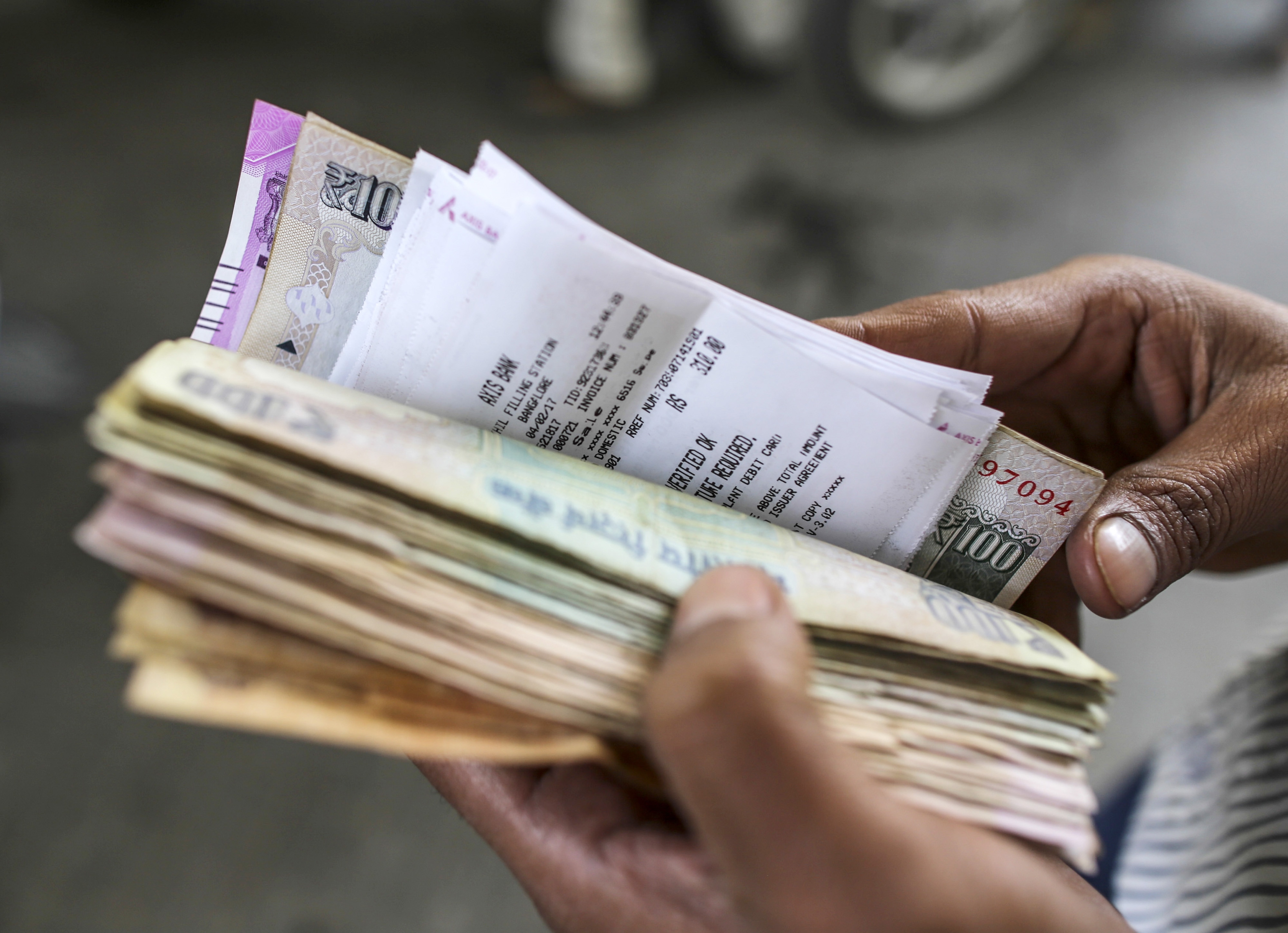
The jury on the net benefit of demonetisation is still out and we might have to wait a while for them to return. Has it, however, brought a significant decline in transaction behavior or in cash holdings by the public? Early evidence in this regard suggests that the impact might not be too large if the right comparisons are made.
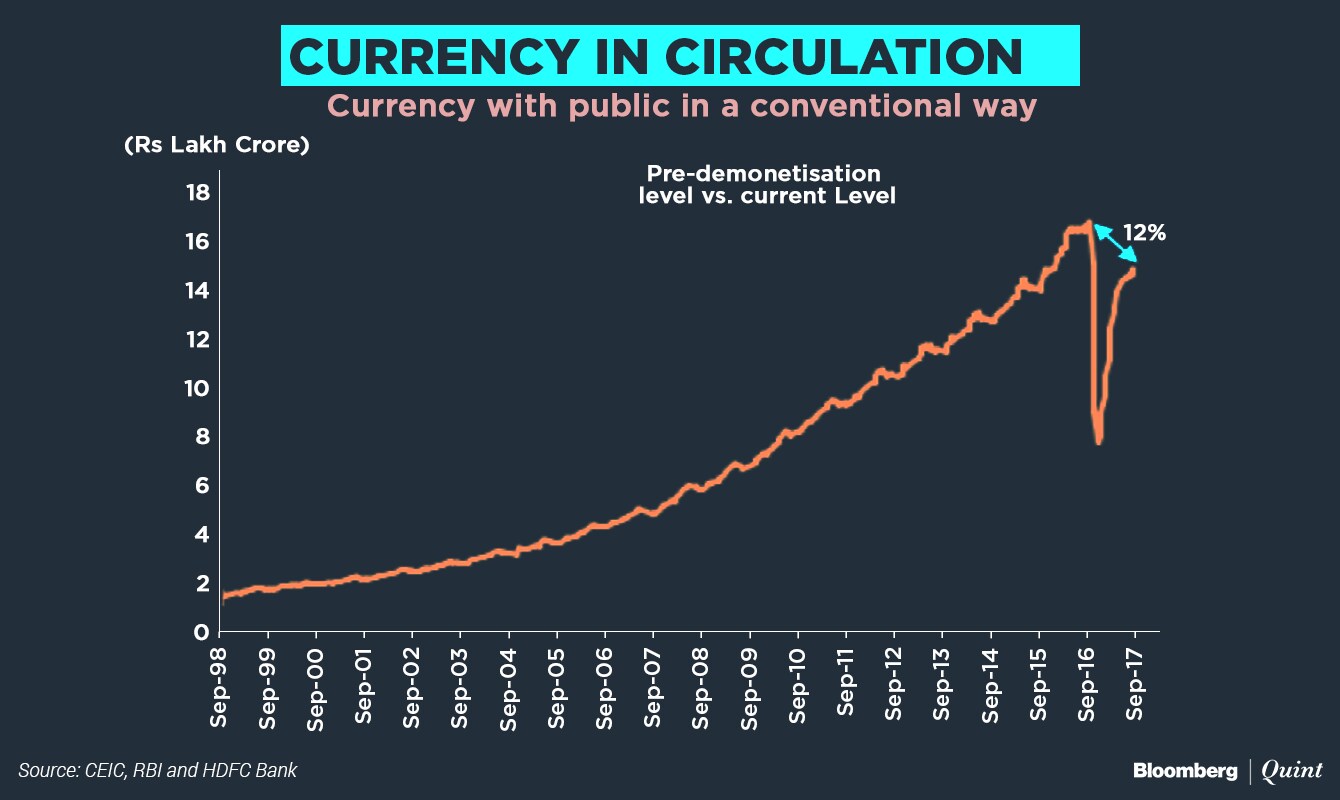
One year after the government's strike on black money by invalidating high value currency notes, currency holding by the public is significantly lower than what it was on the eve of demonetisation, even after rising substantially over the last few months.
But does this necessarily imply a major structural change in transaction behavior? We argue that comparing the current levels of currency with the public with the level immediately before demonetisaton might lead to some misleading conclusions.
What's wrong with the comparison? To answer this, one has to recall the sudden spike in currency in circulation, which became a big cause of concern for the central bank and the government in early 2016.
Between January and October 2016, currency-with-the-public increased at a monthly average rate of 15 percent year-on-year compared to average growth of 11 percent between 2014 and 2015.
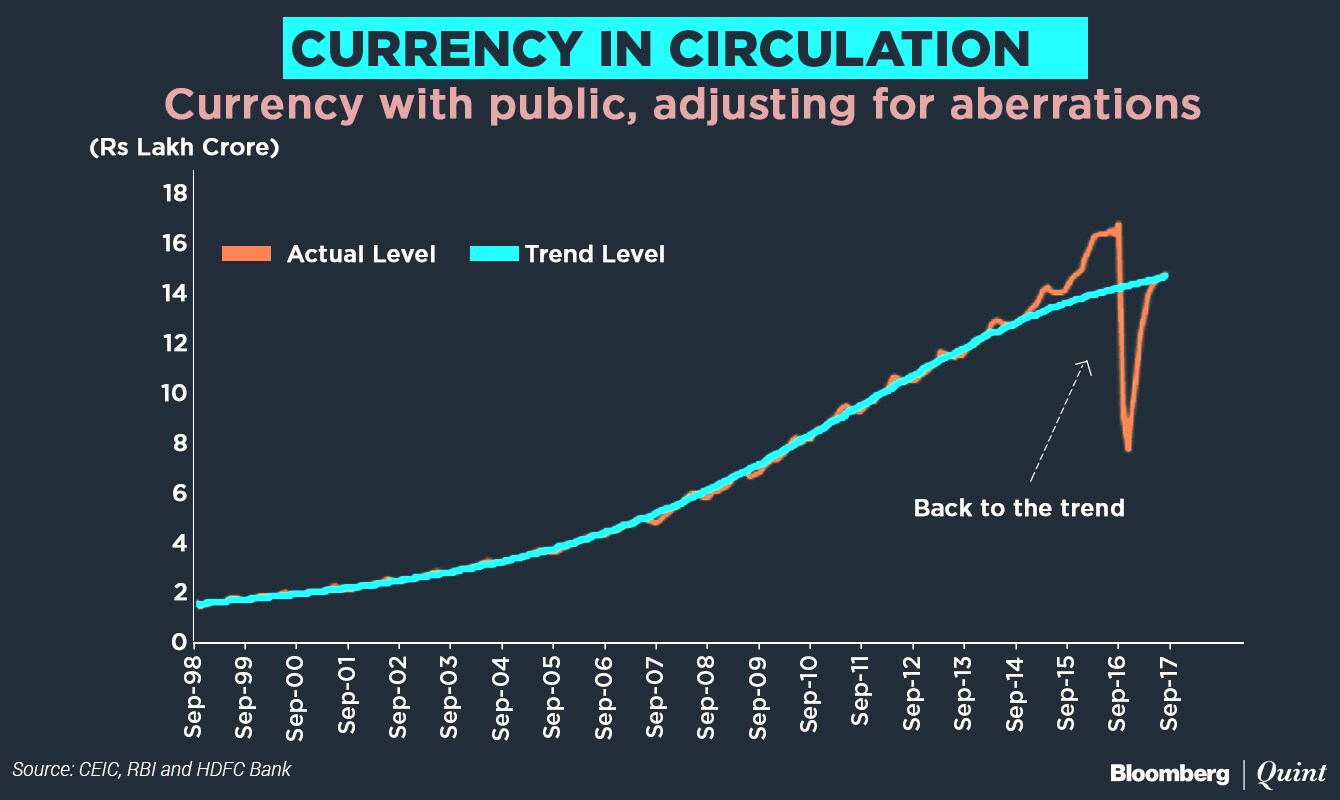
At the time, a number of hypotheses were floated to make sense of the manic rush for cash. Some, including the Reserve Bank of India governor Raghuram Rajan, attributed it to elections in Assam, Kerala, Tamil Nadu and West Bengal. Others blamed low real interest rates that made savings in instruments such as fixed deposits less attractive. Whatever the reason was, the 2016 level of currency-with-the-public was an aberration. Consequently using 2016 as a benchmark for currency holdings is misleading and statistical adjustments are needed for effective comparison.
To do this we fell back on a widely used tool, the Hodrick-Prescott (HP) filter tool that draws a trend through the data points. This helps to differentiate between the long-term trends and deviations from it. From this, the conclusion is fairly clear.
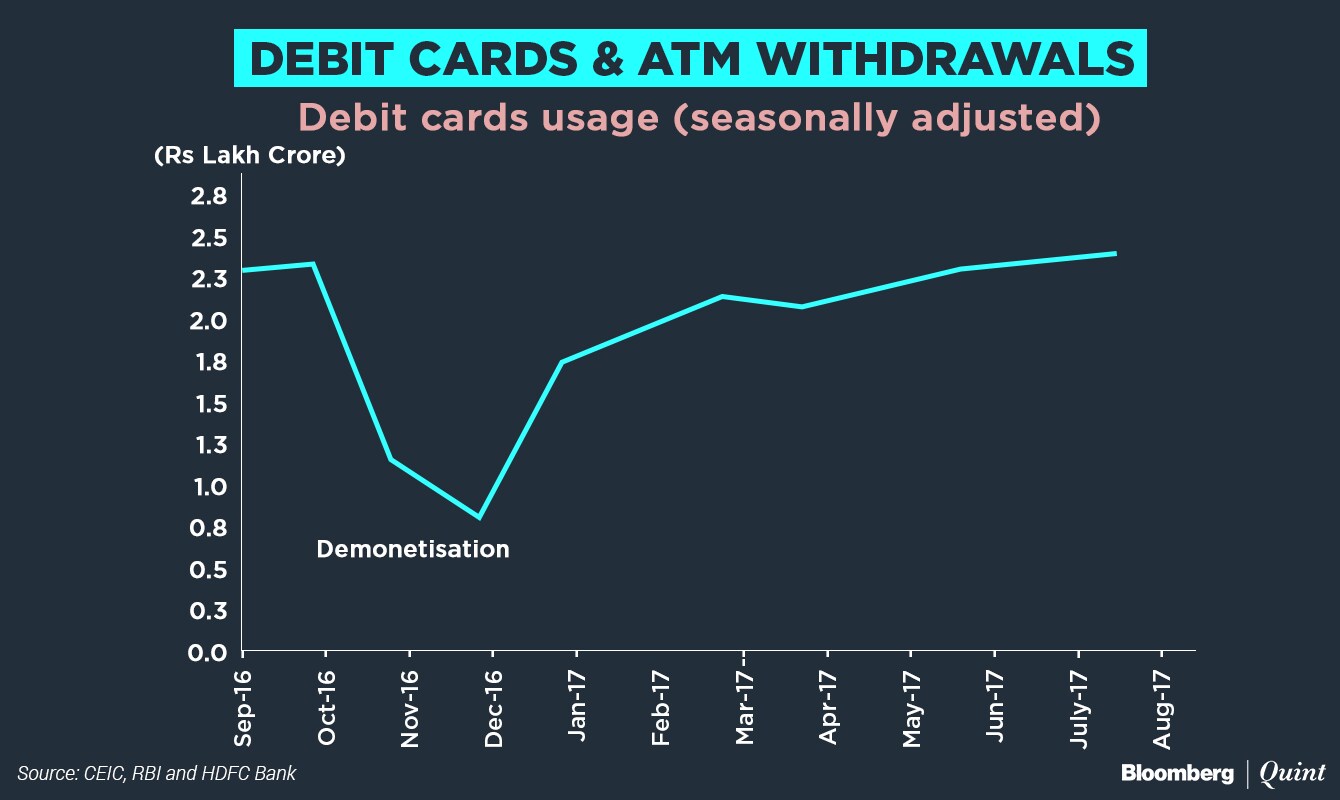
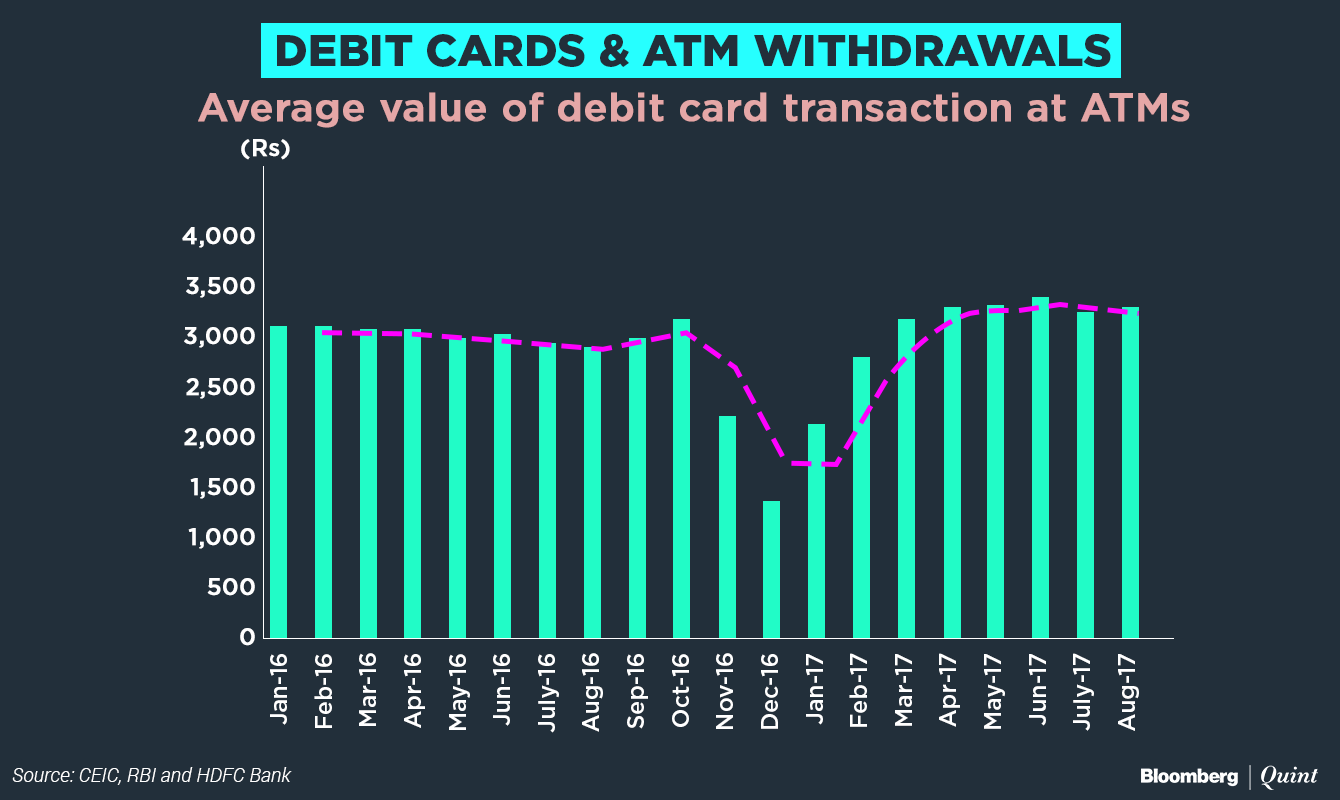
Incidentally, all our data was adjusted for seasonal variations to ensure that we did not mistake a typical seasonal pattern for something more significant.
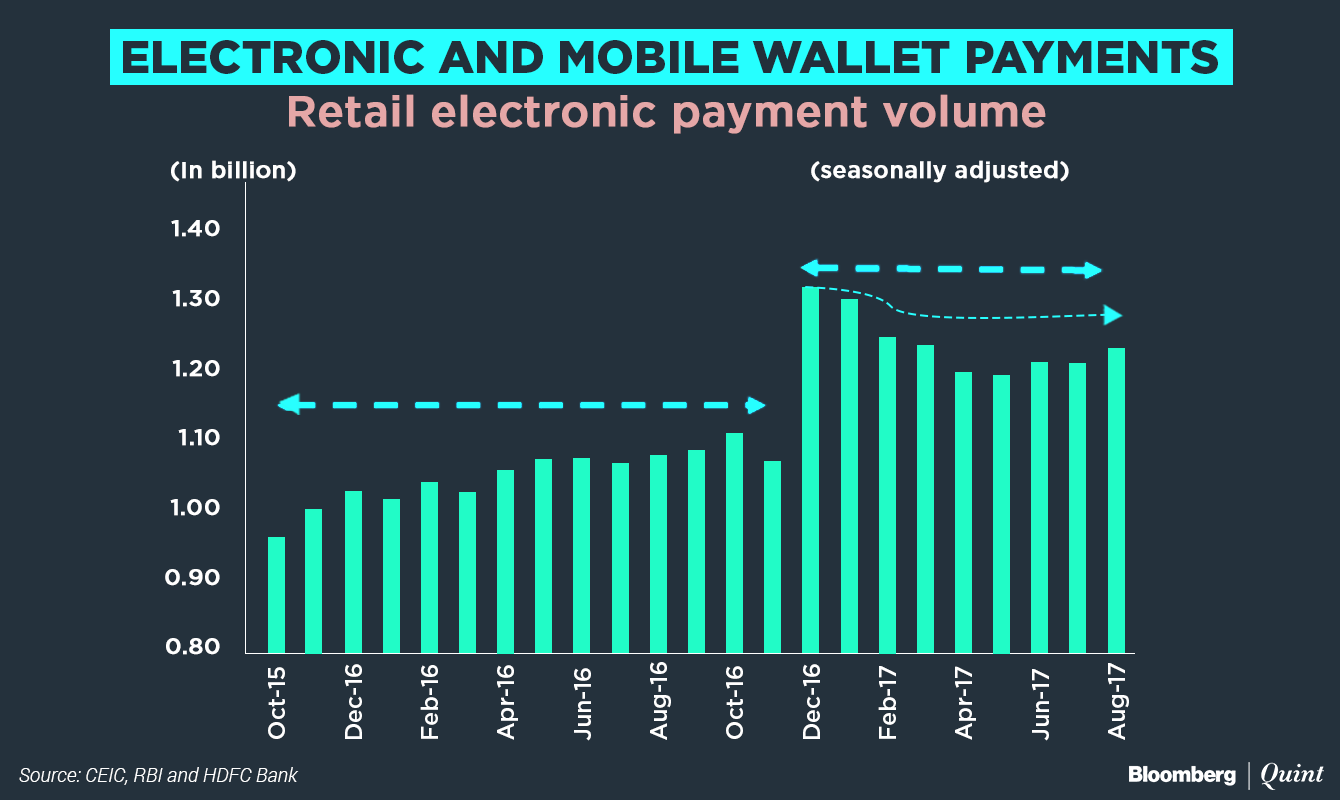
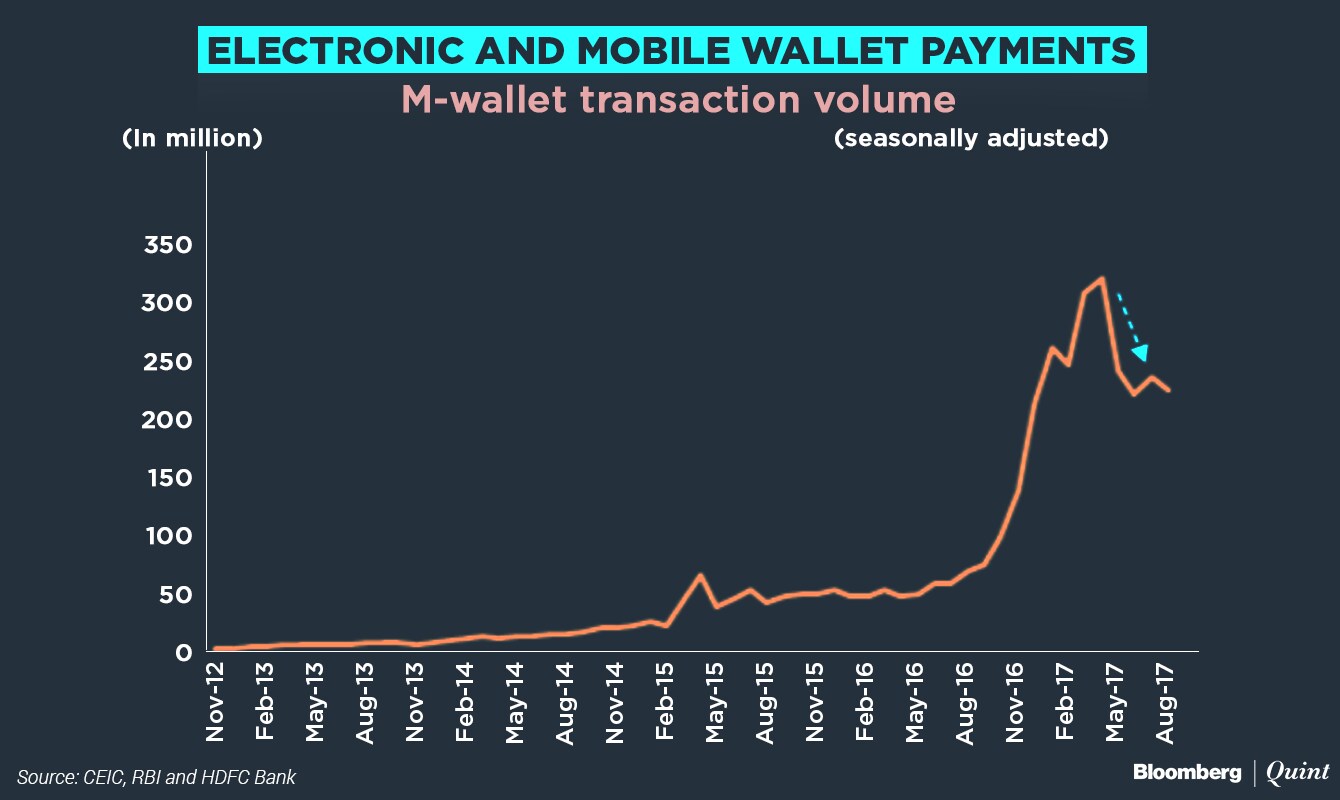
Now let's look at the rising level of cash post-demonetisation from the perspective of retailers. After an initial spike in digital payments, there is some anecdotal evidence that small merchants are reverting to cash.
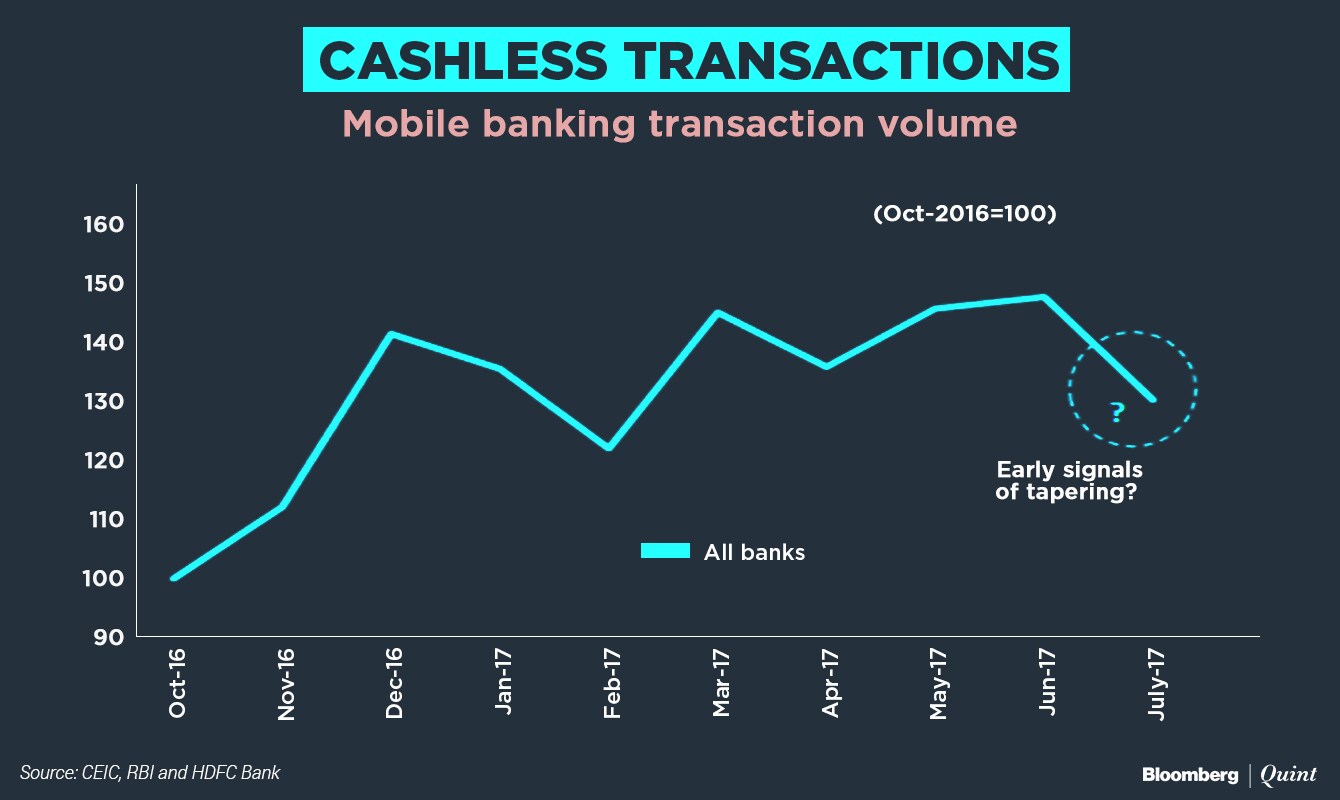
With the easing of the liquidity crunch, transaction volumes for overall retail electronic payments have seen a dip.
Mobile-wallet transactions too have tapered off after the initial bounce.
Also Read: A Year Since Demonetisation And The Cash Crisis Continues For Onion Farmers
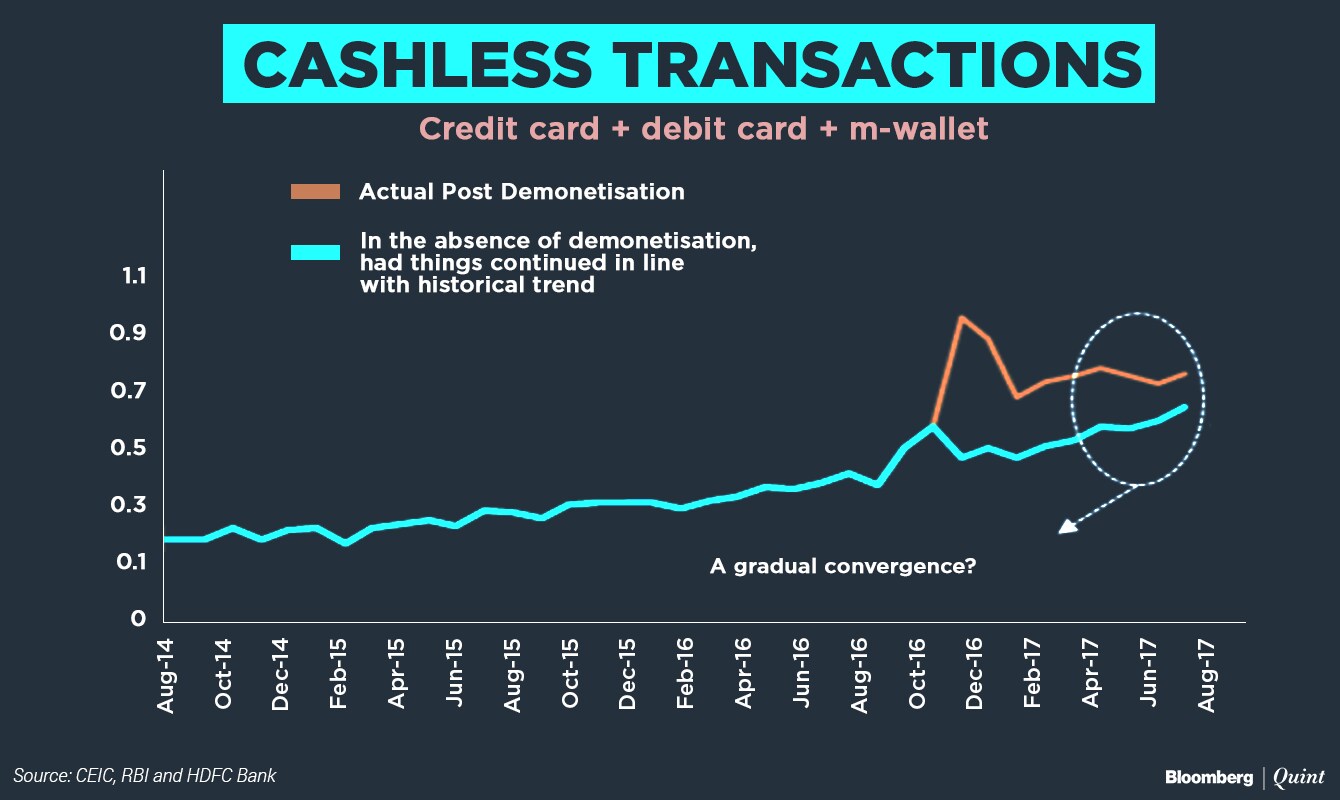
Clearly just as actual cash holdings have not fully reverted to pre-demonetisaion levels, digital transactions too have not seen a full reversal. Thus, as we argue in the case of currency-with-the-public, while the monetary shock of November 2016 might not have brought about a radical shift, some shift in the transaction pattern is visible at this stage.
Let's hope that digital transactions don't fall further and cash holdings stabilize at current levels.
Also Read: Was Modi's Grand Cash Ban A Big Waste Of Time?
So is there an unambiguous gauge of success for some aspect of demonetisation?
Yes.
It is important to recognise that for extensive consumer adoption of digital transactions it is important that digital infrastructure exists.
According to an EY report, there were only 693 machines per million of India's population, compared to 32,995 terminals per million people in Brazil and 4,000 terminals per million people in China.
The RBI too, in its concept paper on ‘Card Acceptance Infrastructure' highlighted the lack of adequate digital infrastructure in the country and high cost of acquiring business as one of the main reasons inhibiting the growth of digital platforms in India.
It is in this context that demonetisation has been a success.
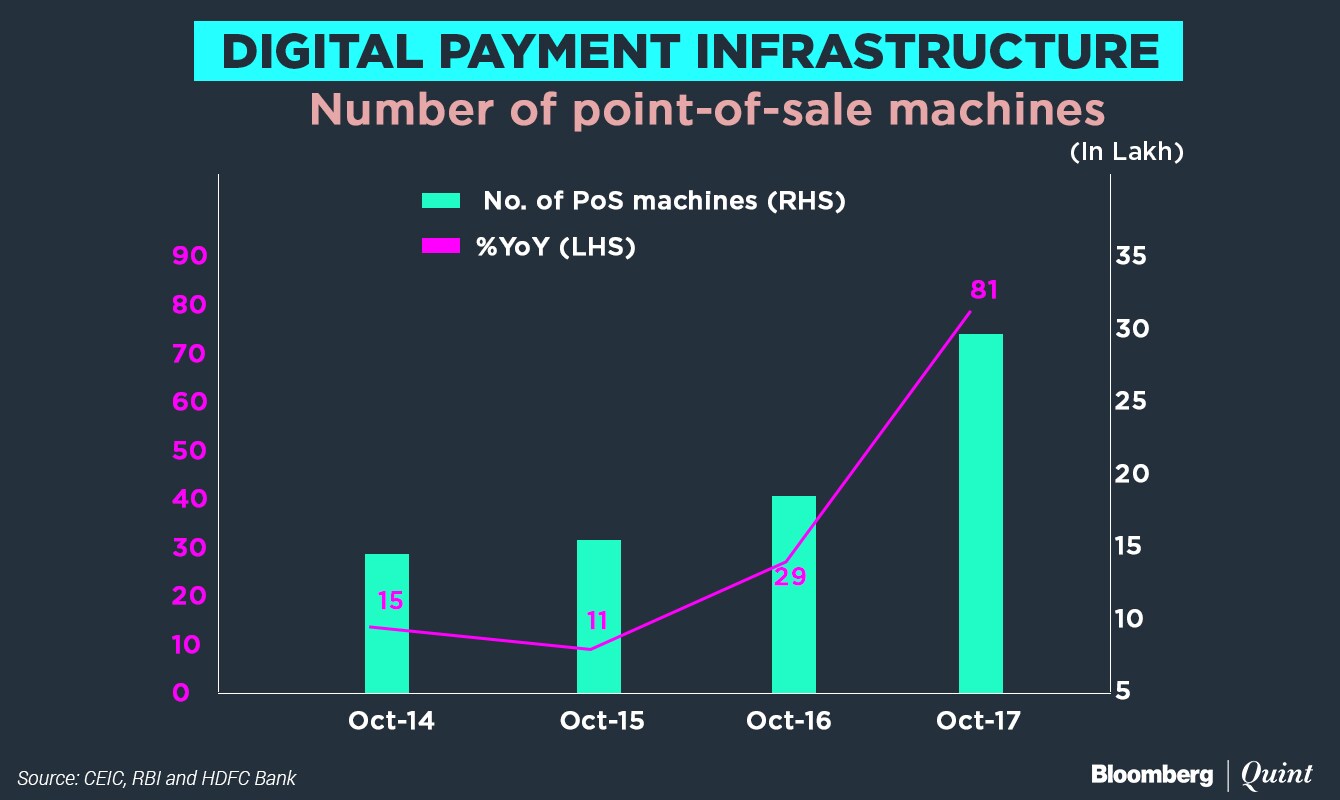
Payment behavior might take quite some time to change but demonetisation has accelerated the process of building the infrastructure to enable this.
As per recent data from the National Payments Corporation of India (NPCI), the number of point-of-sale (PoS) terminals in the country has touched the 3 million mark, double that of the 1.5 mn PoS terminals as of November 8 last year.
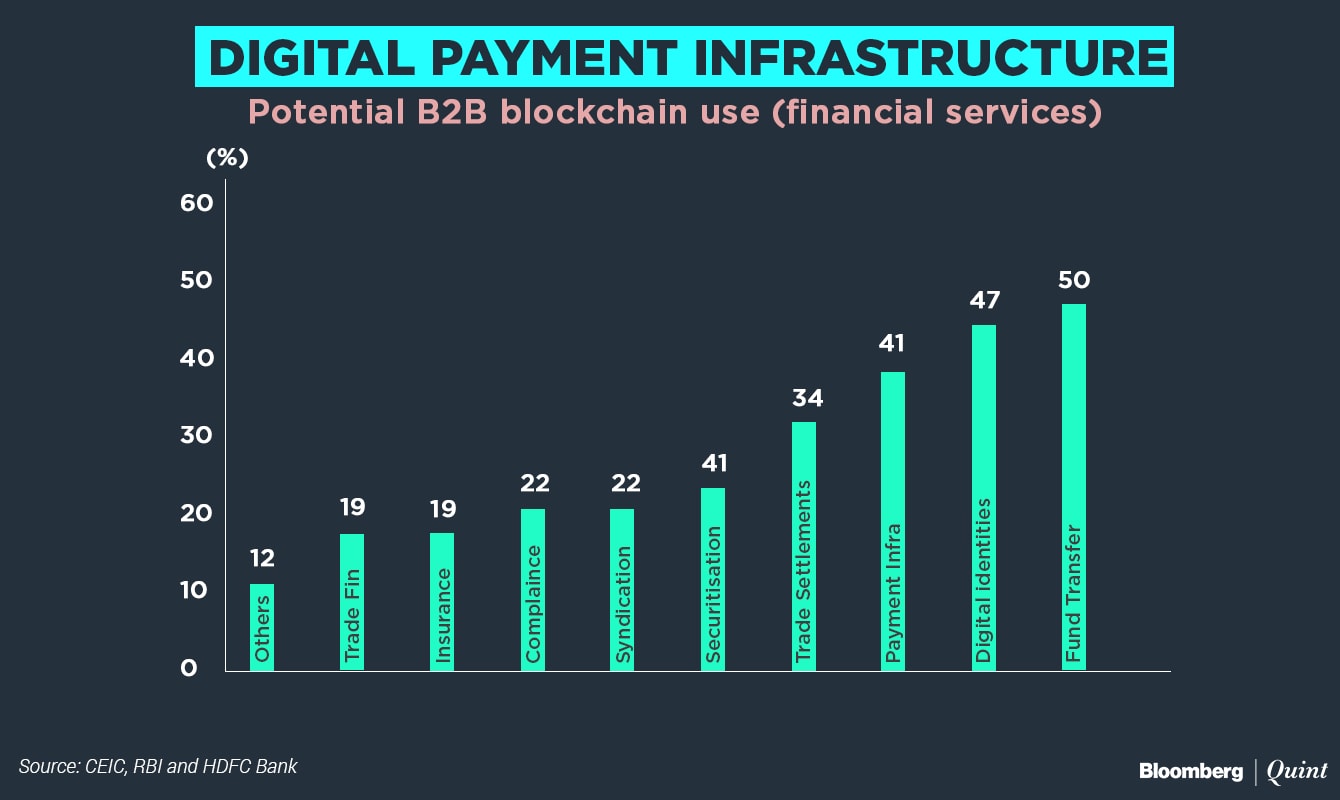
Finally, focusing entirely on demonetisation as a driver of change is unfair. Digitisation, particularly in the business-to-business segment, has seen substantial expansion over the last couple of years.
The 5-odd crore small and medium enterprises in the country (accounting for nearly 40 percent of GDP) are catching up fast with digital payments.
Thus B2B digital transactions are likely to gain more traction than B2C digital transactions. To understand B2B related gains, it is important to analyse data pertinent to cross-border B2B payments, B2B e-commerce, virtual commercial cards, corporate payments to suppliers and employees, and blockchain usage for liquidity and treasury management.
Abheek Barua is Chief Economist and Tushar Arora is Senior Economist at HDFC Bank. Views are personal.
The views expressed here are those of the author's and do not necessarily represent the views of BloombergQuint or its editorial team.

-
Signature Play: The Classic Cocktail Is Dead. Or Is It?

Classic cocktails are disappearing from India's cocktail menus. But they're still being ordered, taught to bartenders and borrowed from. So, who's really having the last drink?
-
A New Samvat Wishlist: Inclusive Prosperity And Human Development
India has strengthened its economic foundations through infrastructure, digital access and enterprise. Its next growth chapter must deepen productivity, create better livelihoods and widen participation in prosperity.
-
Love, Sex Aur Dhokha: The Audacious Plot To Spy On Jensen Huang
A Taipei dinner, a Singapore chip buyer and a suspected Chinese asset: inside the alleged spy operation that got close to NVIDIA's Jensen Huang.
-
Ten Things I Learnt This Samvat
Patience can be a trap. Cheap stocks can stay cheap. Leverage can wipe you out. What did Samvat 2082 teach us? Niraj Shah writes on 10 lessons from the year gone by.
-
Talking Points This Week: Tech Nerves, FII Buying, And A Faraway Banking Shock
The global markets are not shining this Diwali. The exception in the large markets is, India.
-
Midterm Rally Lasted A Day. The Hard Reality Of A Divided US May Last Two Years | Opinion
Between a contested AI boom, a debt ceiling that arrives in 2027 and a president with every incentive to act alone, the next two years may prove more volatile than the first day's rally suggests.
-
Blue Wave Will Derail the AI Trade but Won't Dismantle the AI Era | Unhedged Position
The Democrats' sweep of the US Congress will see politics collide with economic forces both over the long and short term.
-
It's Time To Take The GST Council's Bet On Trust Global
Payment records can prove India's services exports, and clear, proportionate rules can bring foreign digital sellers into the tax net.
-
Opinion | India at 38: From Innovation Overperformer to Innovation Powerhouse
India now has 453 VC-backed deep science startups, 18 of them late-stage, after 117 percent growth since 2020. Laurus Labs, at USD 9.3 billion, is the most valuable deep science company in any middle-income economy outside China.









