How Cultural Solutions Can Reduce Pollution
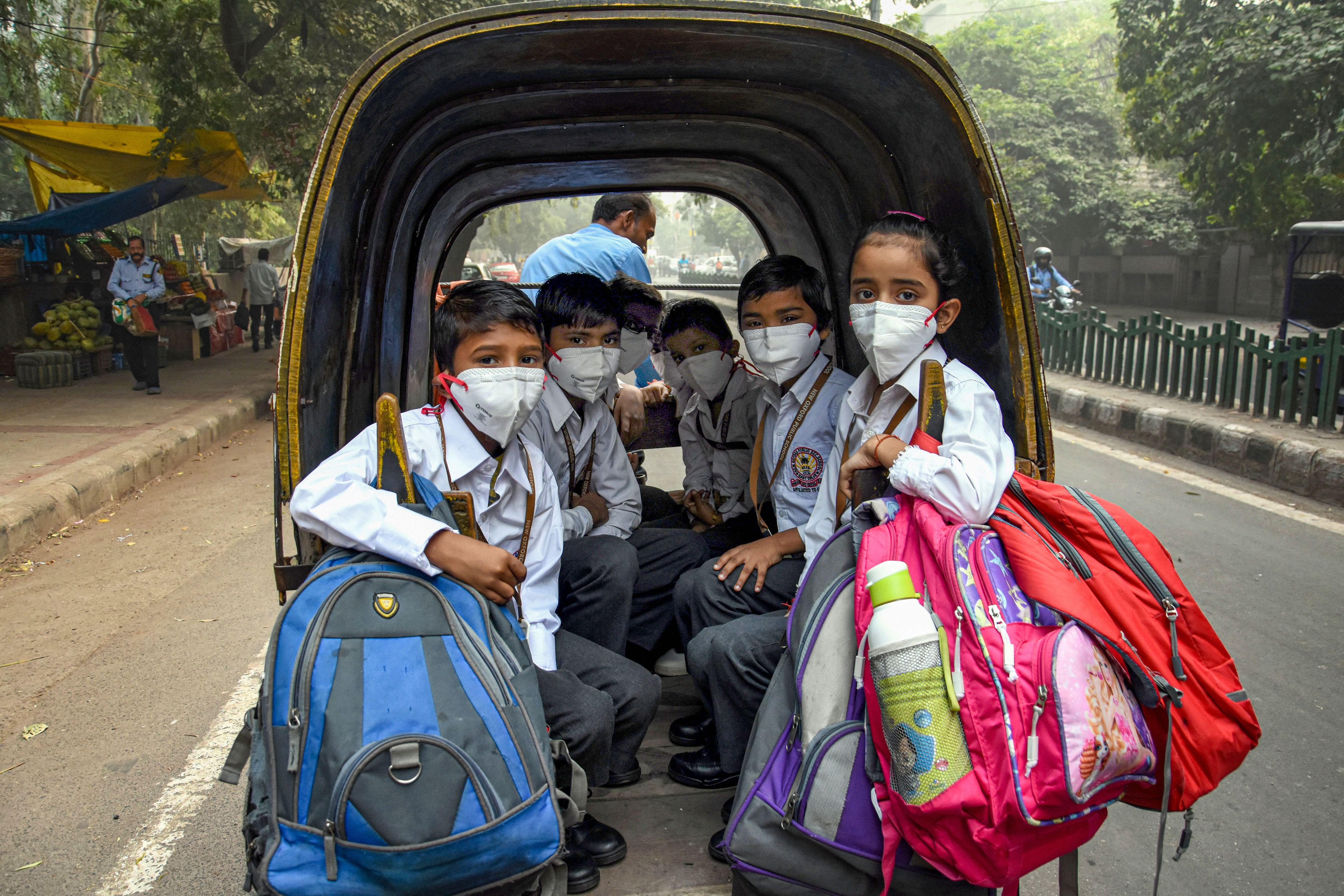
The air feels like shards. Not shards of goodwill, but that of cut glass, hurting each time one breathes or swallows. In many ways, Diwali in North India is a predicted tragedy—it is a haze clouding collective consciousness as much as the air. The soft autumn notes at this time of the year bring a twin challenge. One is a class conflict—Punjab and Haryana farmers' right to sow and reap on one end, and a snooty National Capital Region asking for farmers to stop burning stubble on the other. The second issue is even more complex: that of culture confronting nature.

If air and water are the two treasures any city should cherish, this is the time when both air and water are compromised. One wouldn't think culture and nature would easily clash—because logically, old cultures couldn't have been environmentally unsustainable.
Ecologically, Diwali is the time for a season change no one can miss.
The first migrating bird lands in a city. Bulbs are visited by little black insects, rejoicing in the increased humidity post-monsoon. Mysterious trees perfume the air--- not in the sunny days, but in the nights. The night-blooming harsingar opens its white petals on orange stalks and covers the air in a redolent perfume. The Saptaparni tree blossoms once a year—and at night it flings its unsubtle, spellbinding fragrance on to the city. Some people find the intoxicating smell too strong, while others liken it to jasmine—either way, if a season had a smell, then Saptaparni is the winter-is-coming smell.

The scent of a flower or the sight of a foreign bird may be lost on a citizenship which believes air and water pollution are small prices to pay for rituals. Like many previous years, India celebrated Diwali in 2019 with a never-say-die attitude and polluting crackers. Tens of thousands of crackers tore the air, rendering a severe tag for the air quality. And each year, the waters of Ganga and Yamuna rivers are parted by tens of thousands of Durga idols (a fortnight before Diwali) and Kali idols (usually on or just before Diwali day). This year though, there were small differences, and we should pay attention.
Instead of immersing idols in the river, small ponds were dug in open areas, where the goddess was laid to rest.

It was more of a burial than the fluvial, hurrying quality of a wild river—a river that is meant to take an idol to the sea. There is a simple idea of a river's flow—it flows in one direction, drastically different from the rocking ebb and flow of a sea. But this is not a simple idea anymore. The National Waterways Act has dredged portions of the Ganga for creating navigation channels for ships, also planned for 100 more rivers. River-interlinking projects, proposed in 30 rivers, will force rivers to turn around and join each other. For people who navigate their lives and faiths by rivers, this would mean a completely different landscape; rendering old riparian ways of life to dust.
But despite the fact that the Ganga and Yamuna can take no more pollution, idols went into the waters each year. Religious groups—and citizens—often claim, not unfairly—that their practices are targeted while other causes of pollution are not. This is not entirely untrue; it is easier to police annual events as compared to say, continuous, year-round crackdowns for coal emissions. While generous deadline extensions are handed over to coal-fired power plants for cutting down emissions, a family which wants to light Phuljhadis (sparkling crackers) or immerse a goddess once a year feels its contribution to pollution is minimal.
Reforming cultural practices to make them environmentally sustainable is a thorny issue, and addressing this can mean a loss of vote-banks.

Usually, courts intervene. The National Green Tribunal's Monitoring Committee on the Yamuna advised the Delhi government to dig ponds for idol immersion earlier this year. On the issue of reducing crackers, the Delhi government is trying to go the soft way – through putting up free laser shows meant to replace rockets, phuljadis and anars; and the Delhi police arrested those violated cracker-burning timings set by Supreme Court. The difference is perhaps too little, too late – while air quality was better than previous years in Delhi, it is still severe this year. More significantly, there is a rift in common purpose, and a great deal of whataboutery for issues that ultimately involve each person.
It's the crop fires that cause pollution, say ritualistic culture defenders. This year, pictures of children wearing masks while bursting crackers have emerged; a sort of modern sang froid. It's the end of the world anyway with climate change, and a bit more pollution makes no difference, say others. Individual action or consciousness is still to translate to collective action – the air belongs to everyone, and thus to no one.
Perhaps five years down the line, laser shows will be as exciting as a riotous, gaseous cracker once was. And perhaps the river Yamuna, which looks visually better this year, will be spared immersions for all years hence.

We need to study the impacts of these interventions and be in tune with providing solutions to people, especially if they are festive things to do with joy and family; things not easily snatched from anyone.
But as winter comes—as do the pollution masks—we must also remember there are a host of other actions that need urgent attention. Thermal power prices have crashed; and India has amongst the most polluting thermal plants in the world. Even as we ramp up solar capacity, we are still pursuing coal despite its powerfully negative impact on air and global warming. We need a fuller shift to renewable and clean energy, not a more plus more approach that has both coal and solar power running. We also need immediate actions to control construction dust, which becomes suspended particulate matter.
As I write this, the shards in my neck make their presence felt; the air is unbearable. The smell of saptaparni rises though, making everything a bit more tolerable; filtering the pollution like a trendy, floral mask. I don't know how long the tree will stand; or whether newly found traditions will continue. In the great metropolis, both environmental bounty and tragedy are quickly forgotten.
But I hope by next year we have a laser rocket in the sky, a solar powered grid powering the city, and a clean resting spot for a goddess.
Neha Sinha works with the Bombay Natural History Society. Views expressed are personal.
The views expressed here are those of the author and do not necessarily represent the views of BloombergQuint or its editorial team.

-
The Curious Case of Equitas Small Finance Bank And A CEO Who Quit For Stock

PN Vasudevan believes persistent investor concerns over a perceived conflict of interest had become a governance overhang on Equitas Small Finance Bank's stock, even as the lender improved profitability and asset quality.
-
Talking Points This Week: AI Cash Burn, A Tiger Comeback And An India That Still Finds Its Own Path
India is not immune to higher oil or tighter global liquidity, yet its earnings base is broader, its domestic policy levers are still available.
-
Foreign Investors Own Half Of HDFC Bank and ICICI Bank. An LTCG Cut Could Matter Most Here
Foreign portfolio investors have US$115 billion parked in HDFC Bank, ICICI Bank. If the government cuts long-term capital gains tax, Jefferies says returning foreign money could land here first.
-
'Never Seen This Level Of Negativity': Sandeep Tandon Says The Next Rally May Be Closer Than You Think
Veteran investor Sandeep Tandon says foreign selling is easing, large-caps are due a comeback and mid-caps are crowded, while he turns positive on gold, power and pharma this Diwali.
-
Indians Stay With Family, Not In Hotels | The Reason Why
India still lacks enough clean, reliable and affordable hotels for budget-conscious travellers.
-
The Economic Imperative: Analysing The Material Driving Force Behind India-Canada Strategic Reset
This economic complementarity is further reinforced by deep institutional investment ties and talent mobility, which form the bedrock of the bilateral framework.
-
Medicine Pricing: Where Must Profit Stop?
India must confront excessive margins, hidden incentives and regulatory gaps that threaten the integrity of medicine.
-
Why Amazon And Flipkart Are Struggling To Beat Meesho In India's Smaller Cities
With 274 million users and lowest-cost logistics, Meesho is defending its value commerce crown against giants like Amazon and Flipkart.
-
High US Salaries, No Green Card Certainty: The Financial Calculation Facing Indian H-1B Families
The suspension of PERM processing at eight technology employers does not cancel existing H-1B visas. What it does is force a question many Indian families have been avoiding: is the US salary worth tying your career and family plans to one employer?
-
Swiggy vs Eternal: Food Delivery's Two Rivals Are No Longer In The Same Race
Eternal is building a private AI assistant, dark.ai. Swiggy is still working out how to make Instamart pay, with an operating loss of Rs 895 crore in the July-September quarter while Blinkit stayed profitable.










