Delegalising Notes Will have Positive Implications: D Subbarao
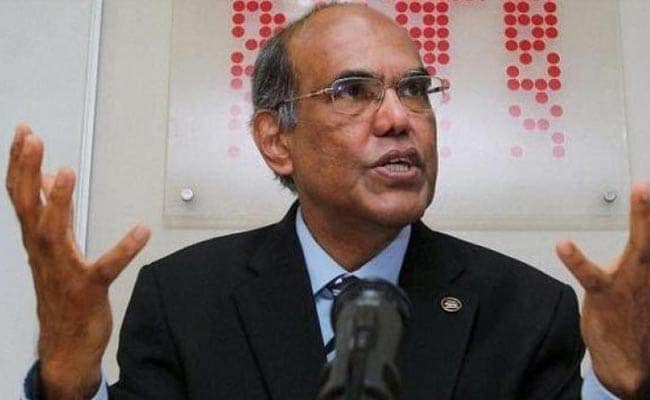
Singapore: The Indian government's decision to delegalise high denomination currency notes may hurt growth in short-term, but in the medium- to long-term it will have positive macroeconomic implications, former RBI Governor D Subbarao has said.
"What is important, however, is the medium- to long-term macroeconomic implications, which are decidedly positive," he wrote in a paper published by the Institute of South Asian Studies, a think-tank at the National University of Singapore. In the very short-term, delegalisation may hurt growth. The squeeze in cash will constrain consumption, he noted.
"(But) Arguably, delegalisation will also be disinflationary in as much as it cuts into non-discretionary consumption of items that go into the Consumer Price Index basket," said Subbarao, who described the Rs 500 and Rs 1,000 notes replacement as delegalised and not demonetization. "The faster and more effectively the Government and the RBI are able to handle the transition, the less will be the adverse impact," he said.
As delegalised currency is deposited in banks and as new currency comes into circulation, some very positive dynamics will kick in, said Subbarao, who was the RBI Governor from 2008 to 2013.
"By far the most important outcome will be that as the shadow economy merges with the formal economy, it will spur economic activity into a virtuous cycle. This will be further buttressed by the 'windfall' deposits that banks will get," he said.
Banks will see their cost of funds declining even in the absence of any further policy easing by the RBI, and this should encourage them to reduce lending rates and pump credit into the economy, he said.
"Delegalization should also be disinflationary. At an aggregate level, the supply side response will raise production capacity and prevent overheating of the economy," he wrote in the paper Demonetisation - Is this time different?'
Moreover, real estate, which has been a safe haven for black money, will experience a squeeze, said Subbarao.
Although property values do not enter the Consumer Price Index (CPI) consumption basket, its benign impact will come through decline in rental values and transmission of that into the general price level, he said.
He said that the government finances will improve as tax is levied and collected on the disclosed wealth which is reckoned as unaccounted.
He said that a conservative estimate is that the government will be able to mobilize additional tax of the order of 0.5 per cent of GDP (Rs. 650 billion). This will help fiscal consolidation, investment in infrastructure and in "crowding in" private investment.
The "cleansing of the system" will be positive for both savings and investment. It will improve the ease of doing business, inspire investor confidence and raise productive capacity of the economy, he said.
Households, who have traditionally parked a bulk of their savings in physical assets like gold and dwellings, will now be positively biased towards financial savings which will have a significant multiplier impact on the economy, according to Subbarao, a financial veteran from India's public sector, Subbarao said.
Finally, the shift to electronic modes of transactions, engendered by the temporary squeeze in cash, may actually persist even after the cash position normalizes as people experience its safety, convenience and efficiency. That will be a big positive for growth and curbing corruption, he added.
(This story has not been edited by NDTV staff and is auto-generated from a syndicated feed.)

-
We May Need Another Tukaram Mundhe To Fight Air Pollution | The Reason Why

Developers may install basic measures such as sprinklers and green nets, resume work, and continue violating rules when this equipment stops working.
-
Extracting Value From Battery Scrap Could Be Challenging For India | The Reason Why
A discarded lithium-ion battery still contains valuable materials such as lithium, nickel and cobalt. These can be recovered and reused. When such batteries are crushed and shredded, they produce a dark powder called black mass.
-
One El Nino, India Can Handle. Two Could Break The Granary
India's grain stocks can absorb one bad year, but a second El Nino could drain the buffer in two to three years, economists say.
-
India's Troika Of Good Luck | Joining The Dots
As Jensen Huang's exit drags Nvidia down, a cooling AI trade and resilient earnings have revived investor interest in India. A likely RBI rate hike looms.
-
Talking Points This Week: Leadership Shock At Nvidia, Earnings Strength, And The Fog Over Hormuz
The Anthropic IPO pricing and first trading day, Nvidia's upcoming earnings, and any fresh signals from Iran will set the tone for the following week.
-
Signature Play: The Classic Cocktail Is Dead. Or Is It?
Classic cocktails are disappearing from India's cocktail menus. But they're still being ordered, taught to bartenders and borrowed from. So, who's really having the last drink?
-
A New Samvat Wishlist: Inclusive Prosperity And Human Development
India has strengthened its economic foundations through infrastructure, digital access and enterprise. Its next growth chapter must deepen productivity, create better livelihoods and widen participation in prosperity.
-
Love, Sex Aur Dhokha: The Audacious Plot To Spy On Jensen Huang
A Taipei dinner, a Singapore chip buyer and a suspected Chinese asset: inside the alleged spy operation that got close to NVIDIA's Jensen Huang.
-
Ten Things I Learnt This Samvat
Patience can be a trap. Cheap stocks can stay cheap. Leverage can wipe you out. What did Samvat 2082 teach us? Niraj Shah writes on 10 lessons from the year gone by.
-
Talking Points This Week: Tech Nerves, FII Buying, And A Faraway Banking Shock
The global markets are not shining this Diwali. The exception in the large markets is, India.









