Defaulting Promoters Must Be Barred From Bidding: Shikha Sharma
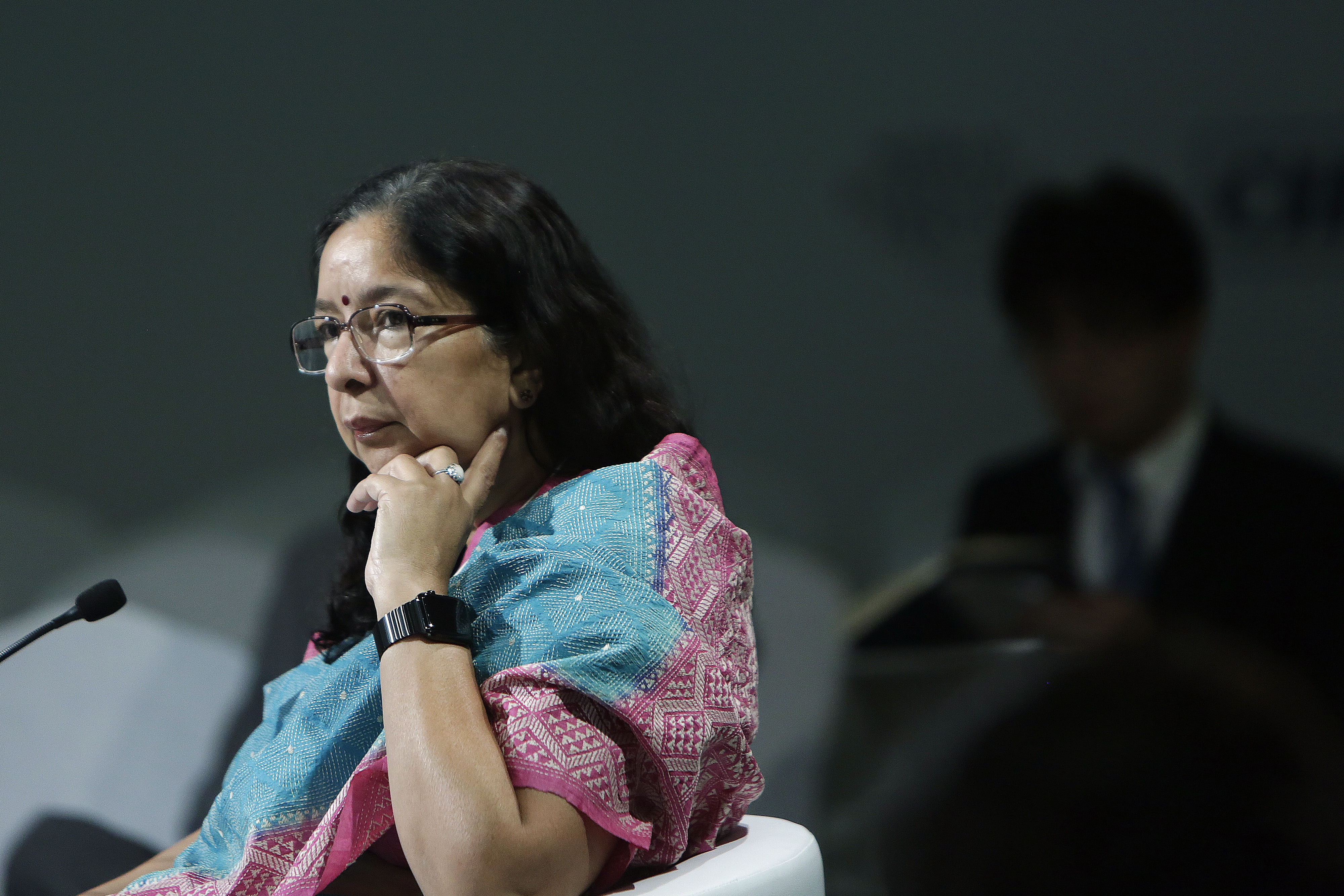
Axis Bank's Managing Director and Chief Executive Officer Shikha Sharma has called for a better credit culture for long-term benefits and opined that one way to achieve that is to debar defaulting promoters from bidding for their assets during insolvency proceedings.
With the Reserve Bank doing away with all the past dispensations to resolve the bad loan problem, and voting for initiation of insolvency proceedings against erring borrowers, there is a need to strengthen the National Company Law Tribunals (NCLTs), she said.
Certainly a lot more cases are going to go to the NCLT; so it is important that their capacity is expanded so that they can deal with all cases.Shikha Sharma, MD & CEO Of Axis Bank To PTI
Sharma said there is "some conversation" on this aspect already and added the RBI would have kept such a requirement in mind already.
She said promoters of companies against whom banks have initiated insolvency proceedings should be kept out of the bidding process for the same assets for the long-term benefit of improving credit culture.
A short-term goal for banks would be to look at maximising the value from the assets which are being put up for bidding and that can happen by allowing the promoters to bid for the assets, while from a longer-term perspective getting the right credit culture where every borrower repays is more important, she said. "I believe in the long-term as opposed to the short-term. You can take some pains in the short-term as long as the right things are happening in the long-term," Sharma said.
She said the NCLT-based resolution mechanism is aimed at “doing the right things for the medium- to long-term”. Axis Bank's strategy is also aligned with the same thought of ensuring gains in the long-term, she added.
The comments even as the promoters of Essar Steel, one of the earliest and the largest accounts mandated by the RBI to be resolved through the NCLT, has teamed up with the Russian lender VTB to wrest back the company through the bidding.
Essar Steel has a debt of over Rs 45,000 crore and a joint venture of ArcelorMittal and Japanese alloy major Nippon Steel is the lone competitor for the Ruias' bid being done through a firm called Neumetal in which a Ruia family member owns 25 percent through a Mauritius-based trust.
When asked if promoters are getting a backdoor entry by teaming up with other investors and where does that leave the concerns on credit culture, Sharma said, "I think we are jumping the gun."
Sharma also welcomed the NCLT process as a very strong and responsive mechanism which has shown a willingness to change if there is a need. "One should recognise NCLTs for the fact that it is seldom that you see that a legislation gets written and implemented as quickly as NCLT...In the next three-four months we'll have a better idea of exactly how the whole NCLT process has worked," she said.
When asked about the loss of credit culture through farm loan waivers across various states, Sharma acknowledged about the difficulties but declined to elaborate. "Every time there is a talk of farm loan waiver, there is an increase in defaults on agricultural loans because people feel they don't need to pay up. We live in a complex economy," she said. "There is a big debate out there on growth versus inclusion. I don't know whether anybody has the right answers. You have had Communism, Socialism, capitalism...I don't think if we have a clear winner yet."

-
The Economic Imperative: Analysing The Material Driving Force Behind India-Canada Strategic Reset

This economic complementarity is further reinforced by deep institutional investment ties and talent mobility, which form the bedrock of the bilateral framework.
-
Medicine Pricing: Where Must Profit Stop?
India must confront excessive margins, hidden incentives and regulatory gaps that threaten the integrity of medicine.
-
Why Amazon And Flipkart Are Struggling To Beat Meesho In India's Smaller Cities
With 274 million users and lowest-cost logistics, Meesho is defending its value commerce crown against giants like Amazon and Flipkart.
-
High US Salaries, No Green Card Certainty: The Financial Calculation Facing Indian H-1B Families
The suspension of PERM processing at eight technology employers does not cancel existing H-1B visas. What it does is force a question many Indian families have been avoiding: is the US salary worth tying your career and family plans to one employer?
-
Swiggy vs Eternal: Food Delivery's Two Rivals Are No Longer In The Same Race
Eternal is building a private AI assistant, dark.ai. Swiggy is still working out how to make Instamart pay, with an operating loss of Rs 895 crore in the July-September quarter while Blinkit stayed profitable.
-
Where You Live Shapes How You Get To Work | The Reason Why
Two-wheelers are the most popular way to get to work in India, accounting for nearly 43% of workplace commutes.
-
Unhedged Position: Can India See An Indonesia-Style Time Correction?
The Nifty is trading below levels it first clocked in 2024. Is there, then, as I have suggested in the headline, potential that the current time correction drags on painfully for the next three-five, even ten years?
-
Navigating Friction And Energy Realities: An Analysis Of Marco Rubio's October Visit To India
Occurring at a critical juncture marked by stalled trade negotiations and escalating geopolitical pressures over global energy supplies, the visit offers a profound window into modern US-India relations.
-
India Exports Capital. Why Not Export Trusteeship?
The big question, then, is whether India can build an institution that global borrowers, investors, banks, and lawyers can trust, even without an Indian connection.
-
France's Economy & Politics Are In Crisis | The Reason Why
Let's look at how the French economy and politics evolved under Nicolas Sarkozy, Franois Hollande and Emmanuel Macron.










