Debut of 50-Year India Bond Lures Insurers Hungry for Yields

(Bloomberg) --
Insurers in India are lining up to grab a share of the nation's debut 50-year bond offering, highlighting the growing heft of long-term investors in the nation's $1 trillion debt market.
The government plans to sell 100 billion rupees ($1.2 billion) of a 2073 bond on Friday, according to the Reserve Bank of India. Bajaj Allianz Life Insurance Co. Ltd. and HDFC Life Insurance Co. Ltd. anticipate demand for the paper will be strong as insurers try to lock in higher yields to take care of long-term commitments.
“All of us would want to buy some of those 50-year bonds to cover the asset-liability mismatch,” said Sampath Reddy, chief investment officer at Bajaj Allianz. The long bond “will help us manage interest rate risks better for our portfolios.”
The nation's thriving life insurance and pension fund industries, driven by an expanding middle class, are changing the landscape for India's sovereign debt market. India's yield curve has been nearly flat even amid record borrowing by the government as insurers stepped up purchases of long-term bonds.
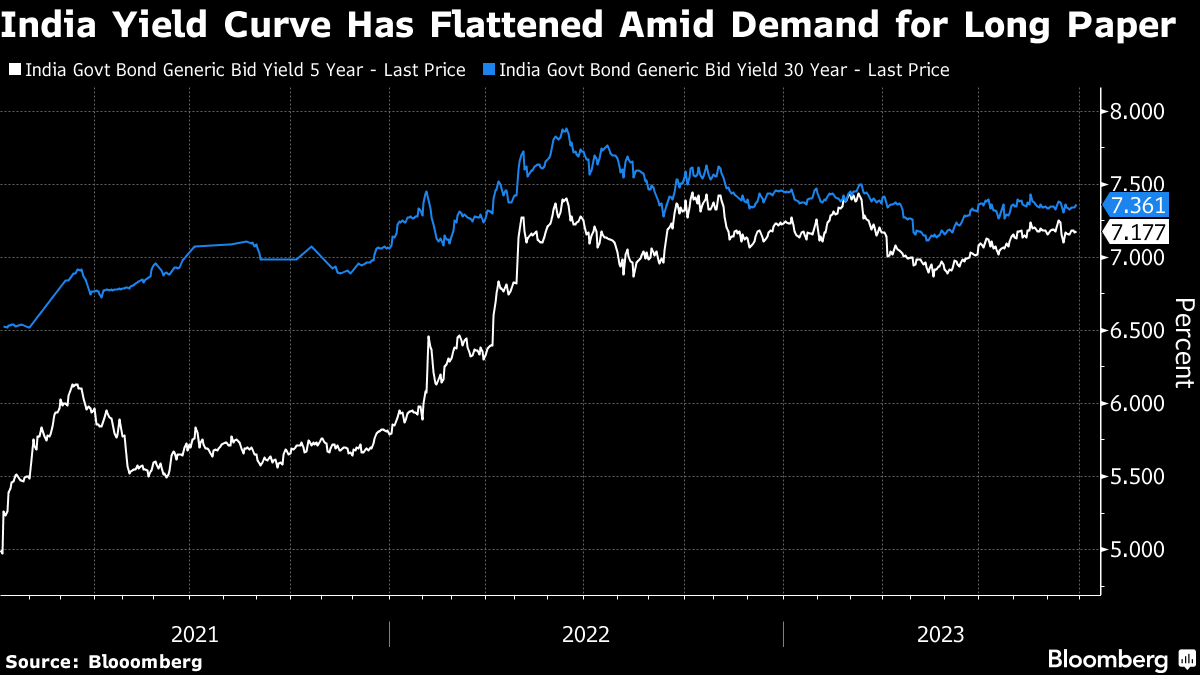
The yield on the 50-year note is likely to be close to its 40-year counterpart, which was sold at about 7.54% last week, according to HDFC Life and and Kotak Mahindra Life Insurance Ltd. Indian authorities may be trying to increase the tenure of debt sold and expect yields to decline once India's sovereign bonds get included to JPMorgan Chase & Co.'s emerging market index next year.
Over one-third of the government's fiscal second-half bond supply is in papers maturing in 30-50 years. The Reserve Bank of India said last month it plans to add the 50-year bond in response to market demand for ultra-long papers, extending the nation's yield curve.
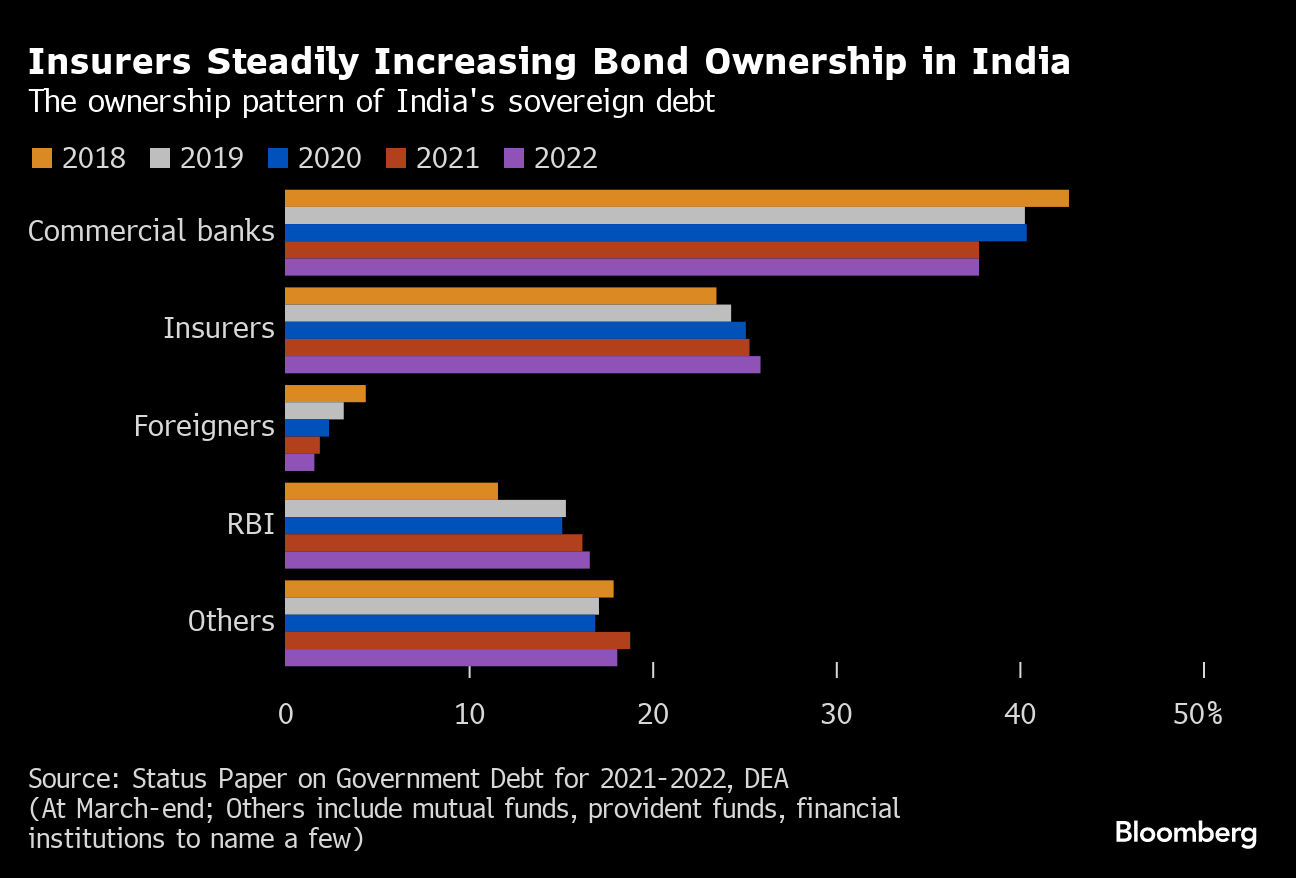
Insurers' holdings of government bonds rose to 26% at the end of March 2022, up from over 23% in 2018, according to the latest finance ministry data, reflecting their growing heft in the local debt market. Bank's ownership fell to 38% from 43% in the period.
“We have seen the assets of financial product providers like insurance companies growing substantially,” said Aditya Bagree, head of trading for India and South Asia at Citigroup Inc. in Mumbai. With that “there also comes a requirement for hedging solutions. These products provide an effective hedge to insurers and non-banking finance companies.”
Even as the government is borrowing a record 15.43 trillion rupees of bonds in the current fiscal year, bonds in India have been relatively less volatile compared to their US counterparts, partly due to higher demand from insurers and pension companies.
The yield on a benchmark 10-year bond has risen just four basis points this year, while that on a similar-maturity US note has climbed nearly 100 basis points.
The longer-dated bonds, like 30- and 40-year papers, have been the most well-received segment in the whole yield curve in the auctions so far, said Badrish Kulhalli, head of fixed-income at HDFC Life.
“The key buyers over here definitely are insurance companies because the way we look to buy government securities is to try and match tenure of our liabilities with tenure of assets,” he said.
(Updates with trader comment in the eight paragraph)
More stories like this are available on bloomberg.com
©2023 Bloomberg L.P.

-
Talking Points This Week: Leadership Shock At Nvidia, Earnings Strength, And The Fog Over Hormuz

The Anthropic IPO pricing and first trading day, Nvidia's upcoming earnings, and any fresh signals from Iran will set the tone for the following week.
-
Signature Play: The Classic Cocktail Is Dead. Or Is It?
Classic cocktails are disappearing from India's cocktail menus. But they're still being ordered, taught to bartenders and borrowed from. So, who's really having the last drink?
-
A New Samvat Wishlist: Inclusive Prosperity And Human Development
India has strengthened its economic foundations through infrastructure, digital access and enterprise. Its next growth chapter must deepen productivity, create better livelihoods and widen participation in prosperity.
-
Love, Sex Aur Dhokha: The Audacious Plot To Spy On Jensen Huang
A Taipei dinner, a Singapore chip buyer and a suspected Chinese asset: inside the alleged spy operation that got close to NVIDIA's Jensen Huang.
-
Ten Things I Learnt This Samvat
Patience can be a trap. Cheap stocks can stay cheap. Leverage can wipe you out. What did Samvat 2082 teach us? Niraj Shah writes on 10 lessons from the year gone by.
-
Talking Points This Week: Tech Nerves, FII Buying, And A Faraway Banking Shock
The global markets are not shining this Diwali. The exception in the large markets is, India.
-
Midterm Rally Lasted A Day. The Hard Reality Of A Divided US May Last Two Years | Opinion
Between a contested AI boom, a debt ceiling that arrives in 2027 and a president with every incentive to act alone, the next two years may prove more volatile than the first day's rally suggests.
-
Blue Wave Will Derail the AI Trade but Won't Dismantle the AI Era | Unhedged Position
The Democrats' sweep of the US Congress will see politics collide with economic forces both over the long and short term.
-
It's Time To Take The GST Council's Bet On Trust Global
Payment records can prove India's services exports, and clear, proportionate rules can bring foreign digital sellers into the tax net.
-
Opinion | India at 38: From Innovation Overperformer to Innovation Powerhouse
India now has 453 VC-backed deep science startups, 18 of them late-stage, after 117 percent growth since 2020. Laurus Labs, at USD 9.3 billion, is the most valuable deep science company in any middle-income economy outside China.









