Deals Worth $100 Billion In India's Biggest Merger And Acquisition Boom
The biggest mergers-and-acquisitions boom in Indian history has investment bankers preparing for even more dealmaking to come. Transactions involving domestic companies have reached $104.5 billion in 2018, trouncing the previous annual record with almost four months left in the year, according to data compiled by Bloomberg. The tally may surpass $100 billion again in 2019, said Sanjeev Krishan, a Gurgaon-based partner at PwC India who focuses on private equity and deals.
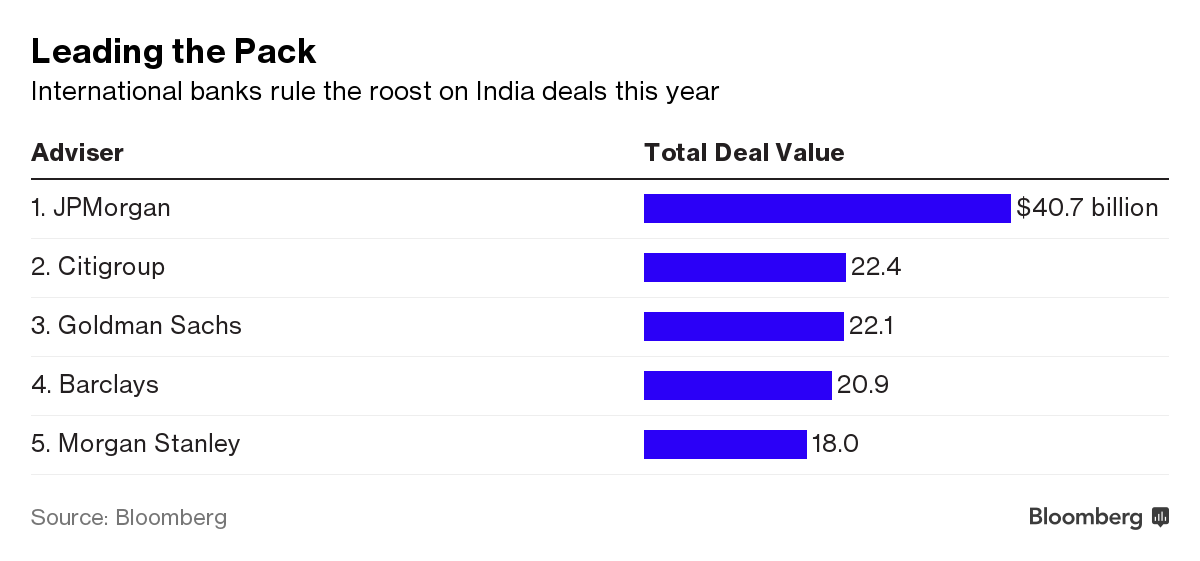
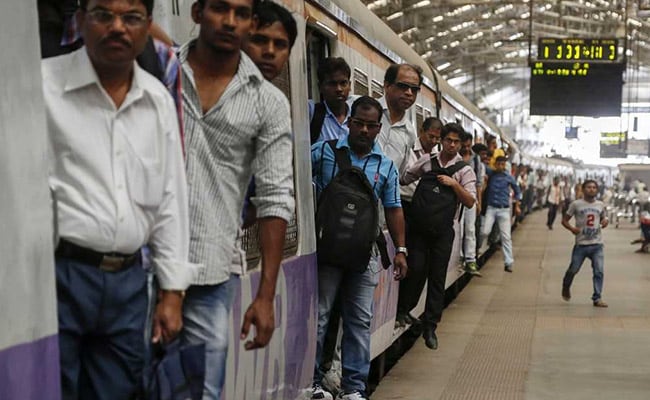
(Investment bankers are preparing for even more dealmaking to come.)
The combination of a new bankruptcy law, a race for dominance in the e-commerce industry and a record war chest at Asia-focused private equity funds has created what some are calling an unprecedented opportunity for dealmaking in the world's fastest-growing major economy. The burst of activity is not only good news for investment bankers, it's also helping to rid the financial system of bad debt and modernize a retail sector that serves 1.3 billion people.
"It's a once-in-a-lifetime opportunity," said Atul Mehra, co-chief executive officer of investment banking at JM Financial Ltd. in Mumbai.
The new bankruptcy code has put dozens of delinquent borrowers on the block, spanning industries from steel to power and infrastructure. The more than $5 billion purchase of bankrupt Bhushan Steel Ltd. by Tata Steel Ltd. in May was this year's second-biggest deal between two domestic companies.
"The new Indian bankruptcy code has led to consolidation" in industries like steel, said Utpal Oza, head of India investment banking at Nomura Holdings Inc.
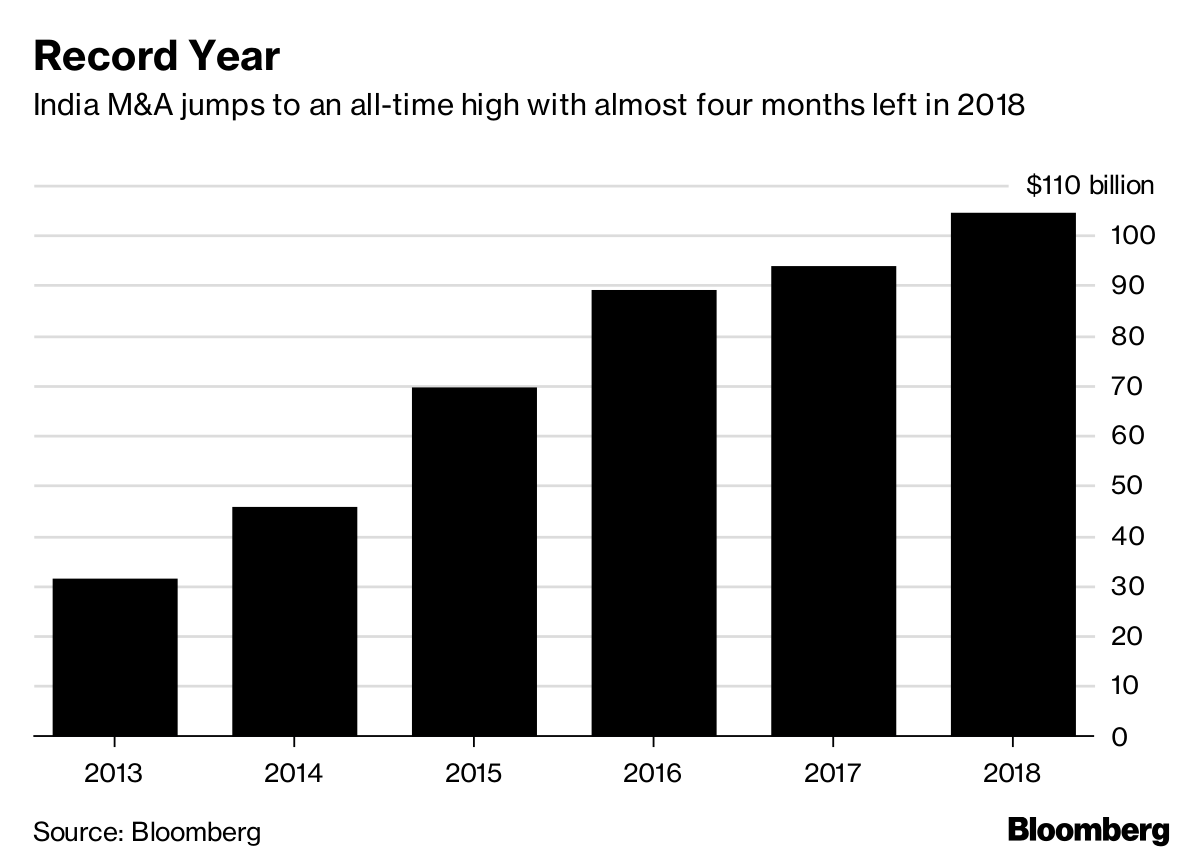
(The burst of activity is also helping to rid the financial system of bad debt.)
The consumer sector is another M&A hot spot. Walmart Inc.'s $16 billion acquisition of e-commerce giant Flipkart Online Services Pvt this year was the biggest-ever takeover by a foreign buyer in India. Amazon.com Inc., Alibaba Group Holding Ltd. and Tencent Holdings Ltd. are also acquiring stakes in local companies to increase their India presence, while Warren Buffett's Berkshire Hathaway Inc. agreed in August to invest in the company behind digital payments leader Paytm.
Annual spending by local online shoppers may jump more than sixfold to $200 billion in about a decade amid a proliferation of smartphones and cheap data plans, according to Morgan Stanley. The consumer market is "the next big battlefield, and strategics recognize that," said Gaurav Mehta, the Mumbai-based country head at Raine Group LLC, a boutique advisory firm focused on the technology, media and telecom industries.
A sustained dealmaking boom is far from guaranteed. The rupee has slumped to an all-time low amid an investor exodus from emerging markets, threatening to dent business confidence and prompt foreign acquirers to wait for even more currency weakness before stepping in. Some buyers may also pause until they see the outcome of national elections next year.
For now though, the pipeline for local deals looks strong. UK pharmaceutical giant GlaxoSmithKline Plc has requested bids by mid-September for a controlling stake in its $4.2 billion Indian consumer-health unit, people with knowledge of the matter said last month. Kraft Heinz Co. has narrowed the list of bidders for a portfolio of Indian businesses it's trying to sell for about $1 billion, while bankrupt Essar Steel India Ltd. has attracted bids from groups backed by ArcelorMittal and VTB Capital.
Meanwhile, Asian private-equity funds are flush with cash and looking for opportunities. They had a record $225 billion available to deploy at the end of 2017, according to Bain & Co. Private equity and venture capital funds boosted their investments in the country by 46 per cent to $15.2 billion in the first half, data compiled by EY show.
"We expect 2018 to be a blockbuster year for M&A," said PwC's Krishan. "Many of the deal drivers visible currently are expected to continue next year."

-
India's Troika Of Good Luck | Joining The Dots

A weaker Trump, a cooling AI trade and resilient earnings have put Indian markets back in favour. Rising inflation could spoil the party.
-
Talking Points This Week: Leadership Shock At Nvidia, Earnings Strength, And The Fog Over Hormuz
The Anthropic IPO pricing and first trading day, Nvidia's upcoming earnings, and any fresh signals from Iran will set the tone for the following week.
-
Signature Play: The Classic Cocktail Is Dead. Or Is It?
Classic cocktails are disappearing from India's cocktail menus. But they're still being ordered, taught to bartenders and borrowed from. So, who's really having the last drink?
-
A New Samvat Wishlist: Inclusive Prosperity And Human Development
India has strengthened its economic foundations through infrastructure, digital access and enterprise. Its next growth chapter must deepen productivity, create better livelihoods and widen participation in prosperity.
-
Love, Sex Aur Dhokha: The Audacious Plot To Spy On Jensen Huang
A Taipei dinner, a Singapore chip buyer and a suspected Chinese asset: inside the alleged spy operation that got close to NVIDIA's Jensen Huang.
-
Ten Things I Learnt This Samvat
Patience can be a trap. Cheap stocks can stay cheap. Leverage can wipe you out. What did Samvat 2082 teach us? Niraj Shah writes on 10 lessons from the year gone by.
-
Talking Points This Week: Tech Nerves, FII Buying, And A Faraway Banking Shock
The global markets are not shining this Diwali. The exception in the large markets is, India.
-
Midterm Rally Lasted A Day. The Hard Reality Of A Divided US May Last Two Years | Opinion
Between a contested AI boom, a debt ceiling that arrives in 2027 and a president with every incentive to act alone, the next two years may prove more volatile than the first day's rally suggests.
-
Blue Wave Will Derail the AI Trade but Won't Dismantle the AI Era | Unhedged Position
The Democrats' sweep of the US Congress will see politics collide with economic forces both over the long and short term.
-
It's Time To Take The GST Council's Bet On Trust Global
Payment records can prove India's services exports, and clear, proportionate rules can bring foreign digital sellers into the tax net.