Davos WEF 2022 | Mahindra's Anish Shah Says There Will Be A Cost To Reconfiguring Supply Chains
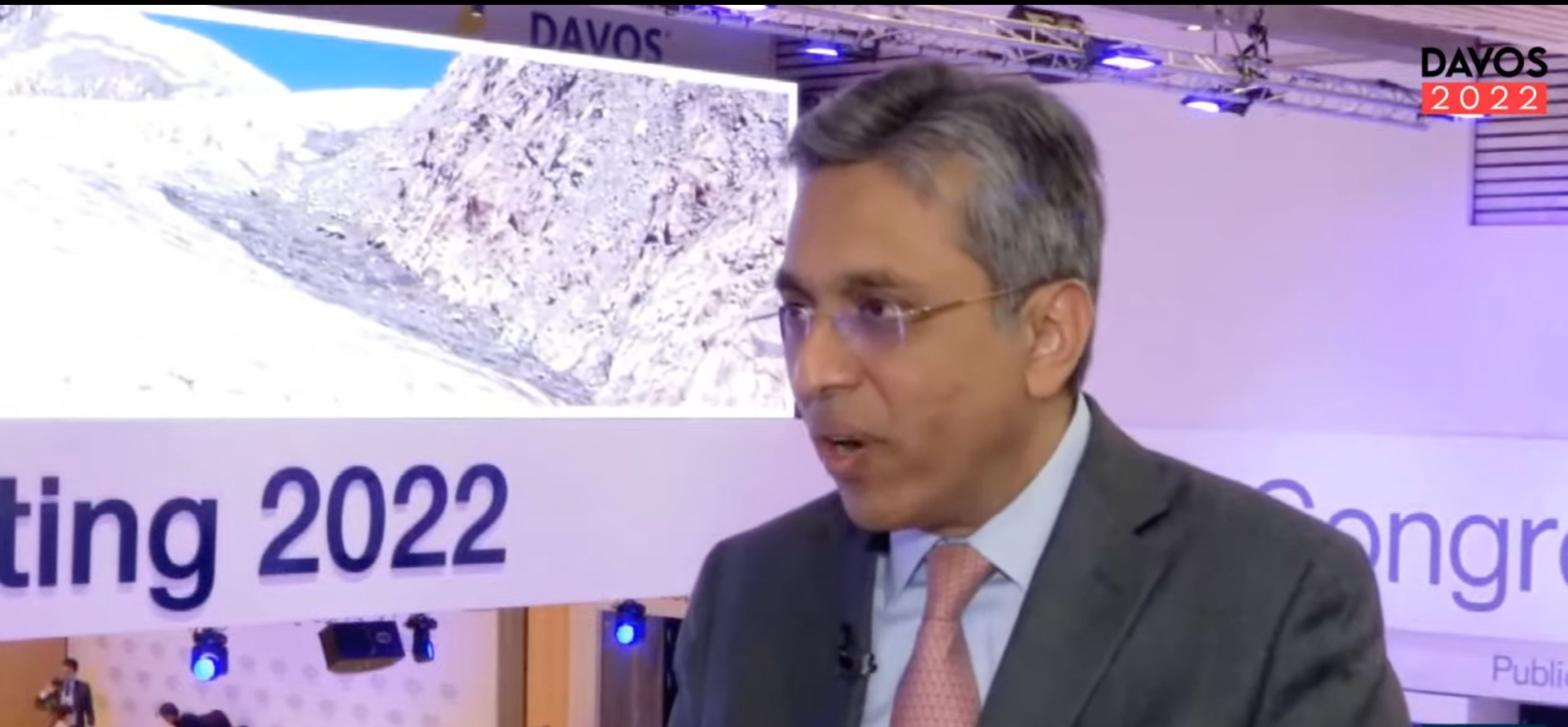
The chip shortage will continue to impact the auto industry but will make Mahindra & Mahindra Ltd.'s supply chain resilient, according to Anish Shah. That, however, will come at a cost.
The automobile industry does tend to be worst-hit because it takes time to recreate an unavailable part, the managing director of Mahindra Group told BQ Prime's Menaka Doshi on the sidelines of the World Economic Forum summit at Davos.
“This has made us a lot more resilient, because our supply-chain teams are now planning for various scenarios. The challenges have eased significantly since Covid, but we continue to expect shocks.”
The company, he said, is now looking at solving it. “[But] There's a higher cost to it. We've been in a mode of just-in-time inventory, moving from single source to lower cost and planning for eventualities.”
Having back-ups, Shah said, would have an impact on the company's costs. Which is why, the company is opting to go for an “optionality play”. “We're looking at how much can we put in to buy an option which may be low-cost, but if a scenario comes in, we can put in more money to exercise that option.”
Demand Intact
The automaker, Shah said, has not felt a lack in demand. “In fact, we're seeing a lot more demand than we expected actually.”
That's evident from the bookings for its sport utility vehicle—XUV700. “We had 11,000 bookings for XUV700 [only in April]. We're trying to find a way to ramp up capacity because wait times have gone higher. For the XUV, it's about 18 months.”
On potential price hikes, Shah said the company has done what it needs to for the time being, but it will have to “continue monitoring, based on where commodity prices are going.” “It's difficult to commit on upcoming price hikes right now.”
Electrifying Its Fleet
M&M's plans, Shah said, give him confidence that it will “take back leadership in the electric vehicle space for SUVs”.
“We have a good range of products in the space that will come out. They are born electric and therefore will likely see the kind of demand we've seen for our other models.”
The company plans on doing a big reveal in July-August.
Shah also said the company is forecasting see a 20-30% contribution by EVs to its top line by 2030. “The uptake will depend on three factors—cost of ownership, addressing range anxiety and infrastructure.”
Growth Agenda
The group's pruning of businesses, which Shah announced last year while taking over as its MD, is mostly complete.
The company had listed out three classifications of its entities—category A were businesses with a path to 18% return-on-investment, category B were businesses where return ratios needed to be improved, and C were businesses where there was no rationale for the group to be invested in.
That agenda, Shah said, is over. “We have announced all exits from C already. Over the last three-four quarters, A businesses have been showing good profitability as well. Our agenda now is growth.”
Would growth and valuation be easier to come by if M&M was to become a pure play auto company with holdings in other group companies, from tech to real estate, held by a separate entity?
According to Shah, that is not under consideration as Mahindra Group is a federation, not a conglomerate. “The difference is about the freedom given to the companies and the ability of the companies to start leveraging the parent brand to scale up faster. The businesses we have today are well positioned in their industries. What we have to do is find a way to scale them at a much more rapid pace.”
Watch the full interview here:
Related Coverage:
Apollo Tyres' Neeraj Kanwar Says Supply-Chain Logjam, Coal Shortage Major Problems
ReNew Power's Sumant Sinha On Financial Viability Of Renewable Power
Manpower Group CEO On Whether The Great Resignation Is Over
Amitabh Chaudhry On What Happened At Axis Mutual Fund
Unilever CEO Says The Idea That Sustainability Is Costly Needs To Go
Interest Rates May Reach Pre-Pandemic Levels By August, Axis Bank CEO Says

-
Signature Play: The Classic Cocktail Is Dead. Or Is It?

Classic cocktails are disappearing from India's cocktail menus. But they're still being ordered, taught to bartenders and borrowed from. So, who's really having the last drink?
-
A New Samvat Wishlist: Inclusive Prosperity And Human Development
India has strengthened its economic foundations through infrastructure, digital access and enterprise. Its next growth chapter must deepen productivity, create better livelihoods and widen participation in prosperity.
-
Love, Sex Aur Dhokha: The Audacious Plot To Spy On Jensen Huang
A Taipei dinner, a Singapore chip buyer and a suspected Chinese asset: inside the alleged spy operation that got close to NVIDIA's Jensen Huang.
-
Ten Things I Learnt This Samvat
Patience can be a trap. Cheap stocks can stay cheap. Leverage can wipe you out. What did Samvat 2082 teach us? Niraj Shah writes on 10 lessons from the year gone by.
-
Talking Points This Week: Tech Nerves, FII Buying, And A Faraway Banking Shock
The global markets are not shining this Diwali. The exception in the large markets is, India.
-
Midterm Rally Lasted A Day. The Hard Reality Of A Divided US May Last Two Years | Opinion
Between a contested AI boom, a debt ceiling that arrives in 2027 and a president with every incentive to act alone, the next two years may prove more volatile than the first day's rally suggests.
-
Blue Wave Will Derail the AI Trade but Won't Dismantle the AI Era | Unhedged Position
The Democrats' sweep of the US Congress will see politics collide with economic forces both over the long and short term.
-
It's Time To Take The GST Council's Bet On Trust Global
Payment records can prove India's services exports, and clear, proportionate rules can bring foreign digital sellers into the tax net.
-
Opinion | India at 38: From Innovation Overperformer to Innovation Powerhouse
India now has 453 VC-backed deep science startups, 18 of them late-stage, after 117 percent growth since 2020. Laurus Labs, at USD 9.3 billion, is the most valuable deep science company in any middle-income economy outside China.









