Davos CEOs 'Go Local' On Supply Chain In Trump Era
Business leaders in Davos, traditionally the high priests of globalisation, are talking up the benefits of local production this week to shield themselves from criticism from incoming US President Donald Trump.
Elected on a jobs-focused "America First" platform, Mr Trump has taken to Twitter to rebuke major companies like General Motors, Lockheed Martin and United Technologies, either for making goods in Mexico or for the price of their products.
At this week's World Economic Forum (WEF), a gathering of business and political elites in the Swiss Alps synonymous with free markets, company bosses said they were now preparing to adjust to the Trump era.
"The basic message is to be more national, don't just be global," Richard Edelman, CEO of communications marketing firm Edelman, told Reuters. "Let's try and pre-empt that tweet by having a long-term discussion about the supply chain."
General Motors on Tuesday highlighted moves it said would add nearly 2,000 US manufacturing jobs, including a decision to shift some production of axles to an American factory, rather than have them supplied from Mexico. The auto maker said it wanted to "build where we sell".
"There is no doubt we need to adapt," Carlos Ghosn, chief executive of Renault-Nissan, told Reuters. "All carmakers have to revise their strategy as a function of what is coming."
At the same time, companies are reviewing potential mergers and rethinking job cuts, fearing the stigma of being labelled "anti-American".
What companies have yet to spell out is the economic cost of such shifts or the extent of localisation that will be needed to keep the peace with the new White House administration.
Tax reform
Adding to the incentive to increase US manufacturing is the promise of lower corporate taxes under the Trump administration.
"It could mean increased investment in the US," Novartis CEO Joe Jimenez told Reuters.
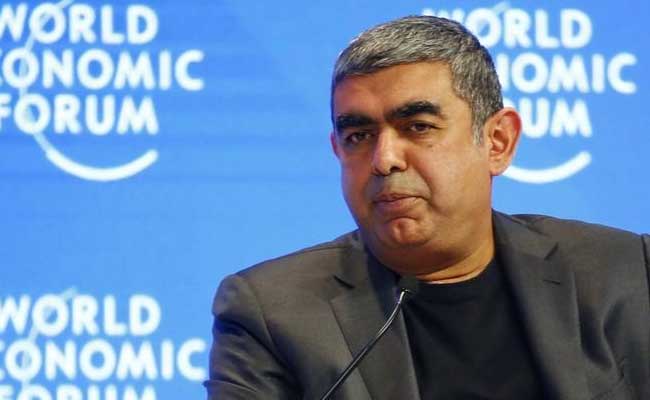
Vishal Sikka, chief executive of Infosys, which provides IT services to large companies including banks, said his company expected more business from helping companies localise.
"The irony is that when more walls show up it is a good opportunity for services companies to help do business across those walls," he said.
The move to go local in response to Mr Trump looks set to fuel a trend already evident in some industries, including food and fashion, which are trying to tap into consumer demand for homegrown materials and production.
Other businesses are also thinking locally to mitigate currency risks in certain markets. Food companies in Britain, for example, which have seen their costs soar after sterling plummeted in the wake of the Brexit vote, have started moving towards local suppliers where possible to keep costs down.
In some cases, technological advances are helping by making it easier for companies to shorten their supply lines.
"With 3D printing, for example, some of the supply chain will reshore and come back to the local economies," said Frans van Houten, CEO of Dutch healthcare technology group Philips. "I think we will see supply chains becoming more regional."
Such tech-fuelled localisation may be a competitive advantage for multinational companies in a world of increasing geopolitical uncertainty, but it brings fresh challenges for developing economies which could lose out as jobs return to richer countries like the US.
Martin Sorrell, chief executive of WPP, the world's largest advertising agency, said US growth could come at the cost of nations elsewhere.
"The issue on Trump is what you win on the US swings, you may lose on the international roundabouts," he said.

-
Signature Play: The Classic Cocktail Is Dead. Or Is It?

Classic cocktails are disappearing from India's cocktail menus. But they're still being ordered, taught to bartenders and borrowed from. So, who's really having the last drink?
-
A New Samvat Wishlist: Inclusive Prosperity And Human Development
India has strengthened its economic foundations through infrastructure, digital access and enterprise. Its next growth chapter must deepen productivity, create better livelihoods and widen participation in prosperity.
-
Love, Sex Aur Dhokha: The Audacious Plot To Spy On Jensen Huang
A Taipei dinner, a Singapore chip buyer and a suspected Chinese asset: inside the alleged spy operation that got close to NVIDIA's Jensen Huang.
-
Ten Things I Learnt This Samvat
Patience can be a trap. Cheap stocks can stay cheap. Leverage can wipe you out. What did Samvat 2082 teach us? Niraj Shah writes on 10 lessons from the year gone by.
-
Talking Points This Week: Tech Nerves, FII Buying, And A Faraway Banking Shock
The global markets are not shining this Diwali. The exception in the large markets is, India.
-
Midterm Rally Lasted A Day. The Hard Reality Of A Divided US May Last Two Years | Opinion
Between a contested AI boom, a debt ceiling that arrives in 2027 and a president with every incentive to act alone, the next two years may prove more volatile than the first day's rally suggests.
-
Blue Wave Will Derail the AI Trade but Won't Dismantle the AI Era | Unhedged Position
The Democrats' sweep of the US Congress will see politics collide with economic forces both over the long and short term.
-
It's Time To Take The GST Council's Bet On Trust Global
Payment records can prove India's services exports, and clear, proportionate rules can bring foreign digital sellers into the tax net.
-
Opinion | India at 38: From Innovation Overperformer to Innovation Powerhouse
India now has 453 VC-backed deep science startups, 18 of them late-stage, after 117 percent growth since 2020. Laurus Labs, at USD 9.3 billion, is the most valuable deep science company in any middle-income economy outside China.









