Dancing With the Startups
Since at least Sarah Bernhardt's time, celebrities have looked for ways to parlay their name recognition into extra cash. Back in the 19th century, Bernhardt - the most celebrated actress of her day - endorsed a popular brand of soap. "I have used Pears' Soap and find there is nothing so satisfying in the world," she enthused in one ad.
Today, celebrity endorsements are everywhere. It's no surprise to see people like Matthew McConaughey, Jennifer Aniston and Halle Berry lending their star power to ads for cars, bottled water, makeup and a host of other products.
Now some celebrities - both established and up-and-coming - are lavishing their promotional love on startups rather than big brands. Often, those deals involve equity. In exchange for a small percentage of a company, a celebrity investor agrees to provide publicity, feedback and valuable connections. Celebrities who have taken this route include Ashton Kutcher, Tyra Banks, Bono and Drew Barrymore.
With equity, of course, there is a risk of losing money. But if a celebrity picks a company that turns out to be a hit, it's a gift that keeps on giving, unlike most endorsement deals. And investing in a startup generally requires less legwork than, say, starting a clothing line or opening a restaurant - other celebrity pet projects.
The new trend could also be a matter of celebrities seeing startups stealing the California spotlight.
"When you look at Hollywood stars, they make a certain amount of millions, and they're used to being the 'it' kids," said Anjula Acharia-Bath, who helps stars make startup investments. "Now you see that the 'it' kids are these people who are building these startups and walking away with billions of dollars."
Timothy Karunaratne, who pairs emerging companies with influential investors, put it this way: "I think it's a fair statement to say most people would rather be Mark Zuckerberg than Will Smith. I think that's a fair statement, and that's pretty fascinating."
Acharia-Bath and Karunaratne are part of an informal network that has sprung up to bridge the financing gap between Hollywood and Silicon Valley.
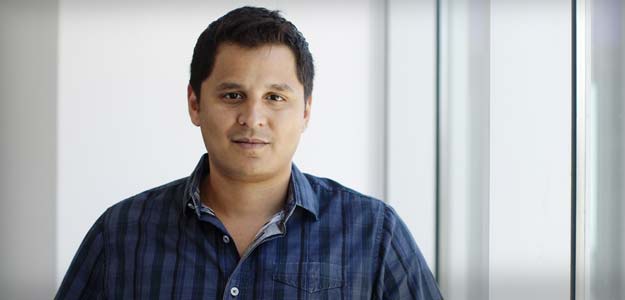
Karunaratne, in addition to serving as the CEO of Parkt, an urban parking startup, is a founder of the Startup Agency. Housed in a business incubator and accelerator in a 10th-floor penthouse on Sunset Boulevard, the agency's open office is divided up by what appears to be the side of an airplane that's been dipped in chrome. In an earlier era, Hugh Hefner crashed here after late nights downstairs at his Playboy Club.
Karunaratne and his co-founder, Jonathan Gonen, recently united Gyft, a gift card management platform, with Kutcher, the actor. A-Grade Investments, Kutcher's 4-year-old venture capital fund, invested in Gyft.
"The network that A-Grade has is very, very powerful," said CJ MacDonald, a founder of Gyft. "They're very well connected and they can open up doors that other people can't."
If "Ashton picks up the phone and calls someone, that person calls back," MacDonald added.
For people like Acharia-Bath and Karunaratne, star value means little without strategic action, which might mean making introductions to potential business partners. Celebrities might also provide feedback on a product, or discuss it on a talk show. Social media also plays a part, with stars singing their products' praises on sites and services like Facebook, Instagram, YouTube and Twitter.
But building this bridge involves artful negotiation and deep knowledge of two very different spheres. Egos abound in both.
Karunaratne cut his teeth in the investment banking division of Goldman Sachs. He was always interested in the entertainment industry, particularly in making Hollywood more diverse. At 26, he left his finance job to work in the mailroom of the talent agency William Morris, now William Morris Endeavor. He left his job as an agent trainee in 2012 with the intention of starting his own company, which crystallized into the Startup Agency after he met Gonen.
"A lot of people think that you can just connect" a celebrity and a company, Karunaratne said. "And, yes, connecting is great, but there is still a lot of other stuff that has to be done."
The network of connectors extends beyond Los Angeles. In San Francisco, for example, there's Shervin Pishevar, a founder of the venture capital fund SherpaVentures and a strategic adviser for Uber, the ride-sharing service. In New York, there's Nathan Coyle, a former talent agent for Creative Artists Agency who now leads business development for the lifestyle and e-commerce website Refinery29. (He helped bring Barrymore on board as the website's editor at large earlier this year.)
Janina Gavankar, an actress who stars alongside Debra Messing in "The Mysteries of Laura," a new TV series, invested in the Hunt in 2012 on Karunaratne's advice. Gavankar called herself an "honest, savvy user" of the Hunt site, which helps people track down and buy items they see online or on the street. She said she shared her Internet-scouring methods with Tim Weingarten, the Hunt's CEO.
"I'm a hunter," Gavankar said. "Somebody posts something and I say: 'Ha! I'm going to find it.' I go down the rabbit hole."
Weingarten says he takes Gavankar's input into consideration, adding that his No. 1 goal when looking for celebrity investors is to "find somebody who is influential and will use the product organically and have passion about it, so their usage doesn't become about just having equity in the company." His investors include Banks and Christina Milian, the singer and actress.
Milian said her personal affinities guided her equity investments in the Hunt and in French Girls, an iPhone app for drawing portraits. "You can go with your gut feeling," she said. "As a consumer, what do I want to download? What do I want to spend money on?"
The trend may seem to offer yet another way for the rich to get richer. Then there's the question of whether fans ought to know if a star has a financial stake in the product du jour, or if her exclamation point and emoji-laden tweet about it was typed without any dollar signs in mind.
"It's a little bit murkier" than the traditional endorsement model, said David Bell, a marketing professor at the Wharton School of the University of Pennsylvania. But with social-media-skilled consumers and news-hungry blogs ready to call out stars for doing anything seemingly untoward, it's in a celebrity's best interest to promote products and services they genuinely support, he said.
© 2014, The New York Times News Service

-
Signature Play: The Classic Cocktail Is Dead. Or Is It?

Classic cocktails are disappearing from India's cocktail menus. But they're still being ordered, taught to bartenders and borrowed from. So, who's really having the last drink?
-
A New Samvat Wishlist: Inclusive Prosperity And Human Development
India has strengthened its economic foundations through infrastructure, digital access and enterprise. Its next growth chapter must deepen productivity, create better livelihoods and widen participation in prosperity.
-
Love, Sex Aur Dhokha: The Audacious Plot To Spy On Jensen Huang
A Taipei dinner, a Singapore chip buyer and a suspected Chinese asset: inside the alleged spy operation that got close to NVIDIA's Jensen Huang.
-
Ten Things I Learnt This Samvat
Patience can be a trap. Cheap stocks can stay cheap. Leverage can wipe you out. What did Samvat 2082 teach us? Niraj Shah writes on 10 lessons from the year gone by.
-
Talking Points This Week: Tech Nerves, FII Buying, And A Faraway Banking Shock
The global markets are not shining this Diwali. The exception in the large markets is, India.
-
Midterm Rally Lasted A Day. The Hard Reality Of A Divided US May Last Two Years | Opinion
Between a contested AI boom, a debt ceiling that arrives in 2027 and a president with every incentive to act alone, the next two years may prove more volatile than the first day's rally suggests.
-
Blue Wave Will Derail the AI Trade but Won't Dismantle the AI Era | Unhedged Position
The Democrats' sweep of the US Congress will see politics collide with economic forces both over the long and short term.
-
It's Time To Take The GST Council's Bet On Trust Global
Payment records can prove India's services exports, and clear, proportionate rules can bring foreign digital sellers into the tax net.
-
Opinion | India at 38: From Innovation Overperformer to Innovation Powerhouse
India now has 453 VC-backed deep science startups, 18 of them late-stage, after 117 percent growth since 2020. Laurus Labs, at USD 9.3 billion, is the most valuable deep science company in any middle-income economy outside China.









