Dalal Street Heads for Worst Ride in 4 Years; FPIs Spoil Party
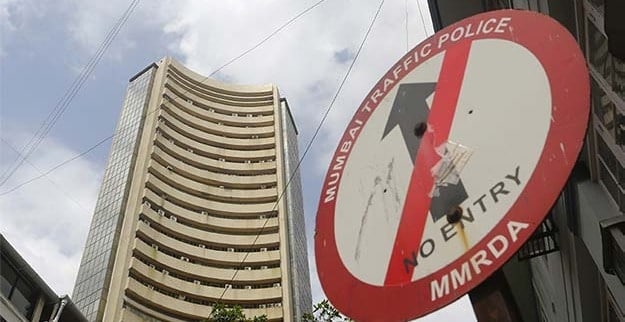
Mumbai: After a roller-coaster ride, Dalal Street is headed for its worst performance in four years in 2015 - when foreign investors pushed the benchmark Sensex to a life-time high before puncturing the rally by pulling out billions of dollars from their "favourite" market.
With just four days of trading to go, the Sensex has lost 1,660 points or over six per cent in 2015, after gaining nearly 30 per cent in the previous year. The index had last registered an yearly loss in 2011 when it fell 24 per cent.
The index, which currently stands at 25838.71 points, is also sharply down from its life-time peak of 30,024 points it scaled in March this year on a rate-cut boost from RBI.
On the other hand, the year also marked the worst single- day loss on August 24 when the Sensex took a sharp plunge of 1,624.51 points (5.94 per cent) following a steep devaluation of Chinese currency yuan in the beginning of August.
However, listing of new companies in the stock market helped the total investor wealth, measured in terms of market capitalisation of all listed shares, retain its level close Rs 100 lakh-crore - albeit a shade below the mark.
There has not been much change on this front from the 2014-end level of Rs 98.4 lakh crore, although it mostly remained above Rs 100 lakh-crore mark till July in 2015.
The NSE's Nifty is also down nearly 6 per cent for 2015.
The major losers this year include metal, banking, realty and PSU stocks. The BSE metal index is down more than 32 per cent, realty about 15 per cent, banks by over 10 per cent and the PSUs by over 18 per cent.
However, healthcare and consumer durables have done better with smart gains in their indices.
It has been the heavy sell-off by foreign portfolio investors (FPIs), who have long regarded Indian markets as their favourite emerging market play that turned the tables for the Indian stock markets in the second half of the year.
The net FPI inflows this year has fallen to just about $3 billion, as against an average of $20 billion invested by such investors in each of the last three years. On top of it, the FPIs have been net sellers in the secondary market and it is the investment made in IPOs that has helped the overall inflows remain in positive territory.
However, similar was the case for most other markets as global headwinds including from China had their impact almost everywhere.
Summing up the year, Alka Banerjee, Managing Director, Global Equity and Strategy Indices, S&P Dow Jones Indices, said the Indian equity markets actually benefitted from low global commodity prices and the volatility was less in comparison to the other emerging markets and 2016 promises to be an exciting year.
In terms of positives, it was RBI which kept on providing some boost with its policy actions and the year's biggest single-day rally - gain of 728.73 points (2.66 per cent) in Sensex to 28,075.55 on January 15 - also followed a surprise rate cut by the central bank.
The market was all pumped up in the first quarter and vaulted past the 30,000-psychological mark on March 5, 2015, on the back of heavy foreign inflows. During this period, FPIs, as a mark of their determination, poured in some Rs 79,000 crore (nearly $12.5 billion) in equity and debt.
While positive momentum continued somewhat till the second quarter, it turned lacklustre thereafter with FPIs resorting to huge sell-off especially in equity markets.
The political setback to the BJP in Delhi and Bihar assembly polls and delay in key reforms including GST, coupled with global headwinds especially in China and uncertainty about an interest rate hike in the US, also kept the markets on the edge.
Finally when the US Federal Reserve hiked its rate on December 17, there was not much of impact as the markets had already factored in the long-awaited move.
The rupee has also been on a sticky wicket with a fall of over five per cent against the US dollar this year on account of heavy FII outflows.
The world's second-largest economy, China, continued to be a spot of bother as a slowing economy renewed concerns of a possible hard-landing, which sent ripples across global financial markets.
The worries about Chinese macro parameters still persist, which mostly stem from high volatility in stocks, commodity and currency markets after a surprise move by Beijing to devalue its currency yuan amid alarming debt levels.
In contrast, India finds itself in a sweet spot, thanks to its improving macro indicators and stable forex reserves. But absence of big-bang reforms and a fledgling recovery are making investors a little sceptical, said Nemish Shah, director, Vinemi Share and Stock, a broking firm.
A low inflation helped RBI announce a cumulative rate reduction of 125 basis points for 2015 despite back-to-back monsoon failures.
Transmission of policy rate cuts is under way, but at a slower pace, Shah said, adding that it will take a while before consumption picks up. While the policy rate is down by 1.25 per cent, banks have lowered their base lending rates only by around 0.56 per cent on an average.

-
A New Samvat Wishlist: Inclusive Prosperity And Human Development

India has strengthened its economic foundations through infrastructure, digital access and enterprise. Its next growth chapter must deepen productivity, create better livelihoods and widen participation in prosperity.
-
Love, Sex Aur Dhokha: The Audacious Plot To Spy On Jensen Huang
A Taipei dinner, a Singapore chip buyer and a suspected Chinese asset: inside the alleged spy operation that got close to NVIDIA's Jensen Huang.
-
Ten Things I Learnt This Samvat
Patience can be a trap. Cheap stocks can stay cheap. Leverage can wipe you out. What did Samvat 2082 teach us? Niraj Shah writes on 10 lessons from the year gone by.
-
Talking Points This Week: Tech Nerves, FII Buying, And A Faraway Banking Shock
The global markets are not shining this Diwali. The exception in the large markets is, India.
-
Midterm Rally Lasted A Day. The Hard Reality Of A Divided US May Last Two Years | Opinion
Between a contested AI boom, a debt ceiling that arrives in 2027 and a president with every incentive to act alone, the next two years may prove more volatile than the first day's rally suggests.
-
Blue Wave Will Derail the AI Trade but Won't Dismantle the AI Era | Unhedged Position
The Democrats' sweep of the US Congress will see politics collide with economic forces both over the long and short term.
-
It's Time To Take The GST Council's Bet On Trust Global
Payment records can prove India's services exports, and clear, proportionate rules can bring foreign digital sellers into the tax net.
-
Opinion | India at 38: From Innovation Overperformer to Innovation Powerhouse
India now has 453 VC-backed deep science startups, 18 of them late-stage, after 117 percent growth since 2020. Laurus Labs, at USD 9.3 billion, is the most valuable deep science company in any middle-income economy outside China.
-
Navigating Energy Crossroads: S Jaishankar's Call For Diversified Supply Chains At G20 Ministerial Meeting
As geopolitical fault lines continue to test maritime trade routes and commodity flows, Jaishankar's message remains pertinent: true economic resilience requires open markets, protected transit lines, and a genuine commitment to multilateral cooperation rather than coercion.









