Daan Utsav: Five Reasons To End Animal Abuse
This #DaanUtsav, BloombergQuint brings you a series of first-person accounts of how different organisations across India are making interventions at scale, or in depth, and bringing about significant transformation.
The greatness of a nation and its moral progress can be judged by the way its animals are treated.Mahatma Gandhi
I have decided to dedicate my life and half of my family's net worth to animal justice. Here are five reasons why.
1. Science And Spirituality Have Begun To Converge On This Topic
Compassion makes us better human beings. True compassion is not selective but universal and extends to all life forms. Ancient Hindu texts propose ahimsa towards all life as a necessity for salvation or enlightenment.
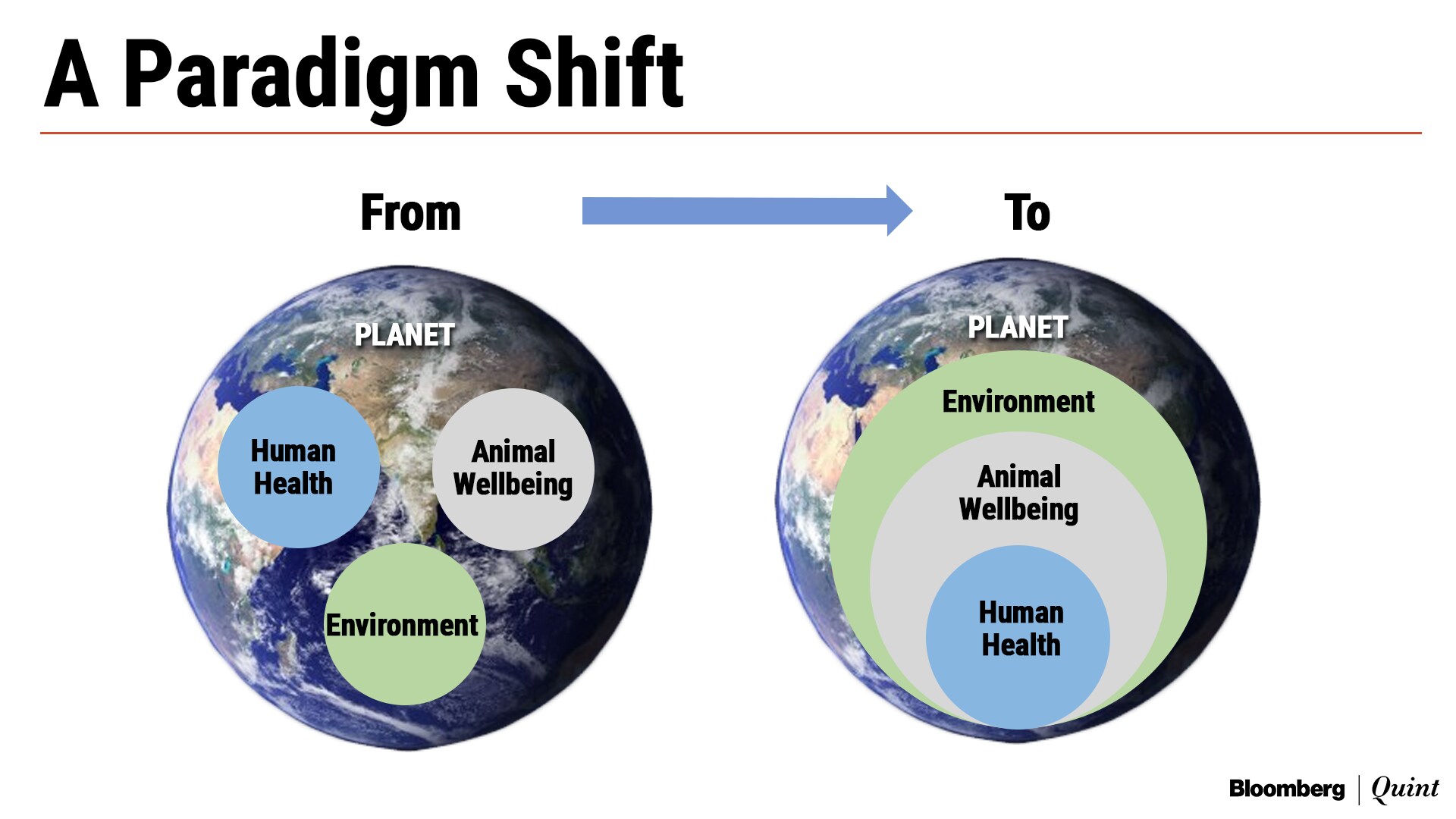
Science has also recognised the interconnection between the planet and all living organisms. The American Society for Microbiology uses the term “One Health” to explain the microbial connection between the health of animals, humans, and the planet. Albert Einstein said that a human being is a part of the whole Universe. However, he experiences himself as something separated from the rest. This delusion is “a kind of prison” for us, restricting us to our personal desires and to affection for a few persons nearest to us. Our task, he said, must be to free ourselves from this prison by widening our circle of compassion to embrace all living creatures and the whole of nature in its beauty.
2. Human Health Is Adversely Impacted By Animal Consumption
If we disturb one part of the human-environment-animal interconnection, we cause chaos. The current pandemic is a case in point. Animal farms have proven to be breeding grounds for dangerous pathogens. 70% of new infectious diseases are zoonotic in origin. We all know that livestock is injected with toxic chemicals for faster growth. Long-term red meat consumption is associated with a heightened risk of cardiovascular disease, colorectal cancer, and type-2 diabetes.
3. Ending Animal Cruelty Is The Best Way To Create A Sustainable Planet
Equally startling facts connect meat production with environmental degradation. Livestock sector has been reported as a major stressor on the planet. Globally it is the largest source of greenhouse gases. In 2017, 15,364 world scientists signed a “Warning to Humanity” which, amongst other things, called for a drastic reduction of per capita consumption of meat.
4. Most Of The Animal Abuse Is Kept Hidden From Us – There Is A Need To Educate
None of us want to be deliberately cruel. Unfortunately, we unknowingly cause immense suffering to animals in our daily lives. Animals are put through unspeakable torture and lifelong pain, mutilated, and castrated without anaesthesia and forced to lead miserable lives just so we can have a tasty meal or wear leather and makeup. Farm animal abuse is particularly rated as the highest form of abuse by Australian moral philosopher Peter Singer whose book ‘Animal Liberation' led to an explosion in the animal movement in the United States. “When we suffer, we suffer as equals. And in their capacity to suffer, a dog is a pig, is a bear … is a boy.”
5. There Are Enough Alternatives – If We Open Our Eyes To It
Abusing animals is not necessary to human existence. The amount of grain, land and water wasted on breeding and raising livestock is more than enough to meet the needs of the entire human population twice over. There is plant-based meat, milk and several other alternative products that can reduce and ultimately eliminate animal suffering. It is truly possible to create a humane and sustainable planet if we want to.
Ahimsa Trust's Call To Action
The question, is, are we going to act on the lessons the current pandemic has taught us?
A group of corporate executives has decided to act by forming Ahimsa Trust as a philanthropic fund. It will act as a catalyst to create long term impact in the sector for the animals of today and the animals of tomorrow. We will seek to make the animal protection movement in India mainstream by making the following interventions:
Education and advocacy (demand-side intervention): Initiatives in various stages of implementation include a digital campaign about the benefits of plant-based diets, introducing animal welfare as an elective in universities and outreach to increase the involvement of the Corporate sector in this important sustainability pillar.
Plant-based entrepreneurship (supply-side intervention): A fund is being set up to invest in vegan startups and to encourage more entrepreneurs to join this space – to make more alternatives available to the consumers.
Capacity building: A fellowship program on the lines of Teach for India / Gandhi Fellowship is currently under design to build leaders in the sector. E-learning courses to train animal activists are being designed.
I invite you to join this movement. Write to me at parag@tapindia.org.
Parag Agarwal is a co-founder of Ahimsa Trust, an organisation seeking to be a catalyst in the animal rights/welfare sector in India; and the founder of TapIndia Foundation, a charity focused on out-of-school children.
The views expressed here are those of the author and do not necessarily represent the views of BloombergQuint or its editorial team.

-
'Never Seen This Level Of Negativity': Sandeep Tandon Says The Next Rally May Be Closer Than You Think

Veteran investor Sandeep Tandon says foreign selling is easing, large-caps are due a comeback and mid-caps are crowded, while he turns positive on gold, power and pharma this Diwali.
-
Indians Stay With Family, Not In Hotels | The Reason Why
India still lacks enough clean, reliable and affordable hotels for budget-conscious travellers.
-
The Economic Imperative: Analysing The Material Driving Force Behind India-Canada Strategic Reset
This economic complementarity is further reinforced by deep institutional investment ties and talent mobility, which form the bedrock of the bilateral framework.
-
Medicine Pricing: Where Must Profit Stop?
India must confront excessive margins, hidden incentives and regulatory gaps that threaten the integrity of medicine.
-
Why Amazon And Flipkart Are Struggling To Beat Meesho In India's Smaller Cities
With 274 million users and lowest-cost logistics, Meesho is defending its value commerce crown against giants like Amazon and Flipkart.
-
High US Salaries, No Green Card Certainty: The Financial Calculation Facing Indian H-1B Families
The suspension of PERM processing at eight technology employers does not cancel existing H-1B visas. What it does is force a question many Indian families have been avoiding: is the US salary worth tying your career and family plans to one employer?
-
Swiggy vs Eternal: Food Delivery's Two Rivals Are No Longer In The Same Race
Eternal is building a private AI assistant, dark.ai. Swiggy is still working out how to make Instamart pay, with an operating loss of Rs 895 crore in the July-September quarter while Blinkit stayed profitable.
-
Where You Live Shapes How You Get To Work | The Reason Why
Two-wheelers are the most popular way to get to work in India, accounting for nearly 43% of workplace commutes.
-
Unhedged Position: Can India See An Indonesia-Style Time Correction?
The Nifty is trading below levels it first clocked in 2024. Is there, then, as I have suggested in the headline, potential that the current time correction drags on painfully for the next three-five, even ten years?
-
Navigating Friction And Energy Realities: An Analysis Of Marco Rubio's October Visit To India
Occurring at a critical juncture marked by stalled trade negotiations and escalating geopolitical pressures over global energy supplies, the visit offers a profound window into modern US-India relations.










