Daan Utsav: Fighting Childhood Cancer With Food And Nutrition
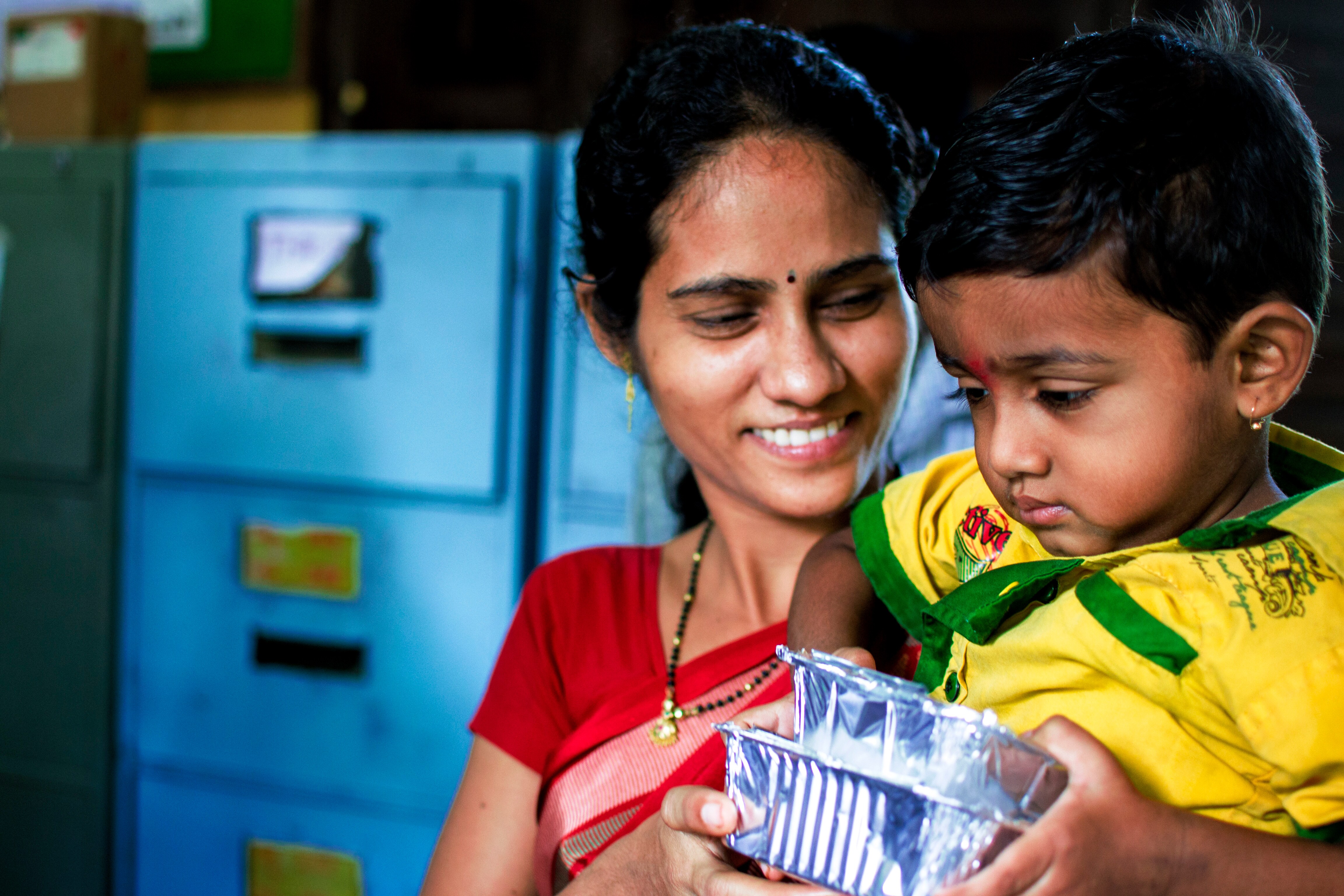
Daan Utsav celebrates acts of giving, from October 2 to October 8. BloombergQuint brings you on-ground stories of change, from social sector leaders shaping them.
Last week, we had a big win. We received a text message from one of our nutritionists. It was regarding an eight-year-old child, Mujahid, who walked into one of our partner hospitals in Mumbai a few months ago, with Pre-Acute Lymphoblastic Leukemia – a malignant cancer of the bone that spreads rather quickly. He was given immediate treatment. But just when he won this battle, the little boy was diagnosed with Guillain-Barré Syndrome, a rare but serious autoimmune disorder in which the immune system attacks healthy cells in the nervous system. Mujahid was cured but paralysed, malnourished and put on life support. Our nutritionists swung into action – planning his feeding, counseling his parents, working with the doctors, monitoring his status, and providing the nutritional support he needs. It's been three months since, and where most children deteriorate after being put on life support, Mujahid is showing signs of good health. We may just have saved him. In the text message, his oncologist was congratulating us for the nutrition we planned and provided, and for our work and care.
Childhood cancer is potent. But it can be cured. In developed countries, the success rate for treatment is 80 percent. In India, unfortunately, 40 percent do not survive, mainly because the children are under-nourished or severely malnourished.
Their bodies, weak as they are, cannot handle chemotherapy.
Although government hospitals In India provide free treatment to people below the poverty line, there is no provision for food and nutrition at these hospitals. Most of these children have been brought in from villages, and they live on the street during their treatment, with little access to two basic meals a day. Unable to cope with the expenses of providing nutrition to their child, and frightened by the side effects of the treatment, parents drop out of treatment mid-way.
This is where we come in. Our nutritionists assess each child in the hospitals we work with. Diet plans are created, hot meals, ration, and nutritional supplements provided. Parents and caregivers are counseled.
There is no other non-governmental organisation or body in India working on pediatric cancer nutrition. All the protocols we follow have been set with guidance from senior oncologists from Tata Memorial, the All India Institute of Medical Sciences (AIIMS), UNICEF and various other hospitals and organisations.
The solutions we drew up five years ago have since evolved, as new challenges came up. When we noticed that the nutritional status of some children at Tata Memorial was not improving despite the hot meals provided during treatment, we investigated. We found out that the children were getting nothing to eat once they left the hospital after the chemotherapy treatment was completed. So, we started a monthly ration programme that provides for a family of three, for at least one month post-treatment.
Treatment abandonment rates at Tata Memorial have gone down from 20 percent to 3.7 percent. Nutrition was one of the key reasons.
That's a big win for all of us. Another win was when we introduced tube-feeding for infants fighting cancer at our partner hospital in Kolkata.

Never Say No To A Child
If there's a choice between saving money and saving a child, we've chosen the child. Mind you, that's not an easy choice, quite often, for a non-profit. We recently needed a feeding tube for a severely malnourished child in our partner hospital, NRS Medical College, Kolkata. The tubes available locally were hard and of a different size, and not helping the kid. We had to procure one from China at double the cost. You can't negotiate with life.
Our amazing team of nutritionists – our foot soldiers – are in 19 of the biggest government and charity cancer hospitals in 10 cities across the country. They have to be trained in pediatric cancer nutrition – so we run a course teaching them our protocols, give them hands-on training at Tata Memorial with senior oncologists who know the disease. The ‘khane-wali didi' – our nutritionists – know all the children, track their progress, support their parents, counsel them on what to feed their kids, and flag off improvements or problems to their doctors.
A big part of what we do is the food itself – ration groceries, hot meals, meal supplements and nutritional supplements. And food is expensive!

The future is bright but the road ahead is hard.
Real impact is not easy. You have to be at it constantly. We have been fighting cancer with food and nutrition for the last five years. By next year, we want to save kids in 35 hospitals across the country. We are building a system that can be replicated in any hospital fighting childhood cancer in any country. We are working with partners to create traditional food supplements that are palatable for children and solve their specific problems. We have been fortunate to have rock solid donors who haven't stopped helping us, but as impact grows the needs grow too.
This Daan Utsav, we're banking on the generosity of people and corporates to raise funds for providing ghee and dry fruits for our kids at all our hospitals. Diwali is around the corner and mithai is a big part of that. One kilo per child works out to Rs 2,000 and gives him or her the required nutrition to fight cancer. One kilo of your love can save that life!
Purnota Dutta Bahl is Founder and CEO at Cuddles Foundation.
The views expressed here are those of the author's and do not necessarily represent the views of BloombergQuint or its editorial team.

-
The Economic Imperative: Analysing The Material Driving Force Behind India-Canada Strategic Reset

This economic complementarity is further reinforced by deep institutional investment ties and talent mobility, which form the bedrock of the bilateral framework.
-
Medicine Pricing: Where Must Profit Stop?
India must confront excessive margins, hidden incentives and regulatory gaps that threaten the integrity of medicine.
-
Why Amazon And Flipkart Are Struggling To Beat Meesho In India's Smaller Cities
With 274 million users and lowest-cost logistics, Meesho is defending its value commerce crown against giants like Amazon and Flipkart.
-
High US Salaries, No Green Card Certainty: The Financial Calculation Facing Indian H-1B Families
The suspension of PERM processing at eight technology employers does not cancel existing H-1B visas. What it does is force a question many Indian families have been avoiding: is the US salary worth tying your career and family plans to one employer?
-
Swiggy vs Eternal: Food Delivery's Two Rivals Are No Longer In The Same Race
Eternal is building a private AI assistant, dark.ai. Swiggy is still working out how to make Instamart pay, with an operating loss of Rs 895 crore in the July-September quarter while Blinkit stayed profitable.
-
Where You Live Shapes How You Get To Work | The Reason Why
Two-wheelers are the most popular way to get to work in India, accounting for nearly 43% of workplace commutes.
-
Unhedged Position: Can India See An Indonesia-Style Time Correction?
The Nifty is trading below levels it first clocked in 2024. Is there, then, as I have suggested in the headline, potential that the current time correction drags on painfully for the next three-five, even ten years?
-
Navigating Friction And Energy Realities: An Analysis Of Marco Rubio's October Visit To India
Occurring at a critical juncture marked by stalled trade negotiations and escalating geopolitical pressures over global energy supplies, the visit offers a profound window into modern US-India relations.
-
India Exports Capital. Why Not Export Trusteeship?
The big question, then, is whether India can build an institution that global borrowers, investors, banks, and lawyers can trust, even without an Indian connection.
-
France's Economy & Politics Are In Crisis | The Reason Why
Let's look at how the French economy and politics evolved under Nicolas Sarkozy, Franois Hollande and Emmanuel Macron.










