Cyrus Mistry: A Scion Who Fought For Honour After Tatas Voted Him Out
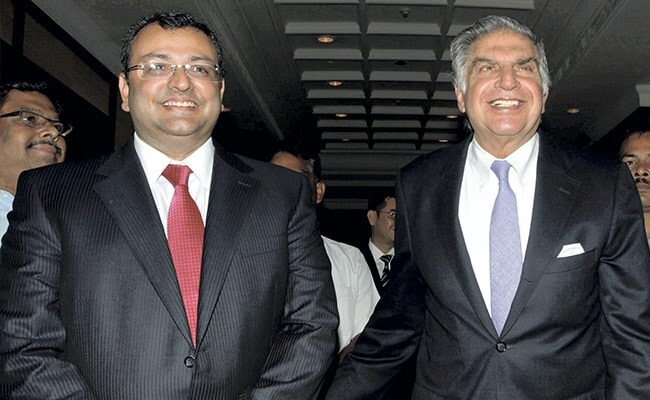
Until his appointment as the chairman to lead Tata Sons, not many knew of Cyrus Mistry, who was then associated only with his family business.
A south Mumbai low-profile boy, 44-year-old Mistry family scion was already heading companies in the Shapoorji Pallonji Group when he was appointed to succeed Ratan Tata as the head of the over $100 billion, salt-to-software Tata group.
According to reports, he was reluctant to take up the job but some persuasion, including by Ratan Tata himself, led him to accept the offer.
After four years at the helm, he was replaced in a boardroom coup in October 2016, which saw Ratan Tata coming back to helm the group before the reigns were passed on to N Chandrasekhar.
The might of his father Pallonji Shapoorji Mistry who was called as the 'Phantom of Bombay House' for the influence he wielded at the Tata Group headquarters, did not come in handy to help Mistry, who had begun on a wide-ranging drive to improve governance practices at the group.
It turned bitter, with Mistry dragging the storied corporate grouping to courts to get the reasons for his exit. Mistry claimed his work was appreciated a few months before and wanted to know the reasons that led to the sudden removal from the chairman's post.
Since the exit, the Mistry family, which is the single-largest shareholder of Tata Sons with over 18 per cent holding, has often been at loggerheads and has also offered to offload its entire stake leading to speculations over the valuation.
During his time at the helm of Tata Group, Mistry depended on a specially created group executive council (GEC) consisting of handpicked executives from within Tata Group, industry executives and also academia to drive operations. He was termed as a studious backroom executive who had a sharp mind.
A naturally reclusive nature and a conviction for the work to do the talking meant there was very little known about Mistry even during his time at the helm. He did not do a single media interview from Bombay House but opened up to speak in the days following his ouster.
Besides Bombay Dyeing's Nusli Wadia and childhood friend and NCP chief Sharad Pawar's daughter Supriya Sule, no big name from the corporate world stood by him during the stormy days following his exit.
The GEC members shifted to work from the SP Group headquarters in Colaba and slowly dispersed off across the globe in new jobs.
Mistry withdrew back to his reclusive self in the years after a high decibel campaign in the immediate aftermath of his exit.
The battle for narratives mounted by Mistry in the days following the removal saw some sharp attacks, including statements like “one man's ego” leading to bad business decisions at the group and also one which blamed Tata for not speaking the truth.
On the legal front, Mistry first went to the National Company Law Tribunal, which dismissed his petition challenging the manner in which he was ousted and ruled that the board and majority shareholders had lost confidence in him.
He, however, successfully appealed in the National Company Appellate Tribunal, but the Supreme Court sided with the Tatas who had gone in appeal.
The only reprieve he got from the top court was to delete some adverse remarks made in the original judgement.
Even in Mistry's death, clarity on what exactly led the conscientious Tata Group to expel Mistry so shortly into his tenure remains elusive.
(Except for the headline, this story has not been edited by NDTV staff and is published from a syndicated feed.)

-
One El Nino, India Can Handle. Two Could Break The Granary

India's grain stocks can absorb one bad year, but a second El Nino could drain the buffer in two to three years, economists say.
-
India's Troika Of Good Luck | Joining The Dots
As Jensen Huang's exit drags Nvidia down, a cooling AI trade and resilient earnings have revived investor interest in India. A likely RBI rate hike looms.
-
Talking Points This Week: Leadership Shock At Nvidia, Earnings Strength, And The Fog Over Hormuz
The Anthropic IPO pricing and first trading day, Nvidia's upcoming earnings, and any fresh signals from Iran will set the tone for the following week.
-
Signature Play: The Classic Cocktail Is Dead. Or Is It?
Classic cocktails are disappearing from India's cocktail menus. But they're still being ordered, taught to bartenders and borrowed from. So, who's really having the last drink?
-
A New Samvat Wishlist: Inclusive Prosperity And Human Development
India has strengthened its economic foundations through infrastructure, digital access and enterprise. Its next growth chapter must deepen productivity, create better livelihoods and widen participation in prosperity.
-
Love, Sex Aur Dhokha: The Audacious Plot To Spy On Jensen Huang
A Taipei dinner, a Singapore chip buyer and a suspected Chinese asset: inside the alleged spy operation that got close to NVIDIA's Jensen Huang.
-
Ten Things I Learnt This Samvat
Patience can be a trap. Cheap stocks can stay cheap. Leverage can wipe you out. What did Samvat 2082 teach us? Niraj Shah writes on 10 lessons from the year gone by.
-
Talking Points This Week: Tech Nerves, FII Buying, And A Faraway Banking Shock
The global markets are not shining this Diwali. The exception in the large markets is, India.
-
Midterm Rally Lasted A Day. The Hard Reality Of A Divided US May Last Two Years | Opinion
Between a contested AI boom, a debt ceiling that arrives in 2027 and a president with every incentive to act alone, the next two years may prove more volatile than the first day's rally suggests.
-
Blue Wave Will Derail the AI Trade but Won't Dismantle the AI Era | Unhedged Position
The Democrats' sweep of the US Congress will see politics collide with economic forces both over the long and short term.









