Current Position Of Rupee Pretty Reasonable: Raghuram Rajan
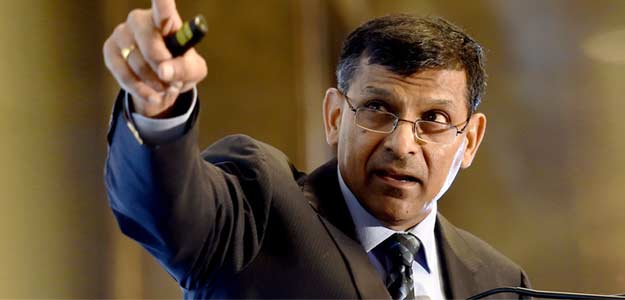
Hyderabad: Reserve Bank of India Governor Raghuram Rajan on Monday said the current level of the rupee is "pretty reasonable" and any attempt to devalue it may lead to a surge in inflationary pressures and "offset any benefits".
He also said that India has to go a long way to reach the per capita GDP level of China and needs many more years of sustainable strong growth.
Mr Rajan was speaking here during an interactive session at the National Institute of Rural Development and Panchayati Raj.
"The issue of value of the rupee is a complicated one. Some people think that to increase exports, the answer is devaluing rupee. There are, strictly, ways of doing it (devaluation), but lot of them require significant actions on the financial system that some of our neighbouring countries used for long time," Mr Rajan replied to query on the devaluation of rupee to deal with the global slowdown.
"It has lot of side effects including...the inflation will pick up in this country if you have to pay significantly more for your imports. You have to pay significantly more for your oil, it will have inflationary impacts."
"It (devaluation of rupee) may offset any benefits you get from the devaluation. My belief is that today's value of the rupee is pretty reasonable and I don't think we should emphasise moving one way or the other as the answer to any problem," Mr Rajan said.
On growth, he said India's growth rate has to be stronger and sustainable to reach Chinese levels.
"China's per capita GDP is about four times of India today. So yes, we have a long way to catch with the level of per capita GDP and that means many years of strong sustainable growth."
"I want to emphasise here, because a few years of growth will not help. After those few years, we have very slow growth. We need sustainable growth which is why we need systems in place, we need macro-stability in addition to the growth," the RBI chief said.
He said India's credit to GDP is 50 per cent, which is significantly below when compared to some of the emerging markets such as China, where the value is 150 per cent.
Mr Rajan said growth should not happen at the cost of environmental sustainability.
"Now whether just the GDP numbers are not enough to say that we have developed...absolutely not. It is good we reach their level of per capita GDP without the environmental damage that has occurred in some parts of China, that is also occurring in some parts of India."
"We have to have an environmental sustainable development path and also we have to have equitable development path," he added.
To a query on banks joining hands with money lenders for better financial inclusion, Mr Rajan said that though he was not averse to the idea, many issues such as methods used for recovery should be considered.
On the status of cooperative banking system in the country, he said the system lost its spirit and moved away.
"Cooperative banking system is cornerstone of the financial system in this country. I want to emphasise that it is extremely important it reaches parts of the country that their financial institutions don't and it has to be nurtured."
"What we need to do in some case is understand why the cooperatives have departed from the spirit of cooperative system. Why cooperatives are no longer cooperative in that sense and try and find ways to bring them back to the very important and very worthwhile goals of cooperative movement," Mr Rajan said.

-
'Never Seen This Level Of Negativity': Sandeep Tandon Says The Next Rally May Be Closer Than You Think

Veteran investor Sandeep Tandon says foreign selling is easing, large-caps are due a comeback and mid-caps are crowded, while he turns positive on gold, power and pharma this Diwali.
-
Indians Stay With Family, Not In Hotels | The Reason Why
India still lacks enough clean, reliable and affordable hotels for budget-conscious travellers.
-
The Economic Imperative: Analysing The Material Driving Force Behind India-Canada Strategic Reset
This economic complementarity is further reinforced by deep institutional investment ties and talent mobility, which form the bedrock of the bilateral framework.
-
Medicine Pricing: Where Must Profit Stop?
India must confront excessive margins, hidden incentives and regulatory gaps that threaten the integrity of medicine.
-
Why Amazon And Flipkart Are Struggling To Beat Meesho In India's Smaller Cities
With 274 million users and lowest-cost logistics, Meesho is defending its value commerce crown against giants like Amazon and Flipkart.
-
High US Salaries, No Green Card Certainty: The Financial Calculation Facing Indian H-1B Families
The suspension of PERM processing at eight technology employers does not cancel existing H-1B visas. What it does is force a question many Indian families have been avoiding: is the US salary worth tying your career and family plans to one employer?
-
Swiggy vs Eternal: Food Delivery's Two Rivals Are No Longer In The Same Race
Eternal is building a private AI assistant, dark.ai. Swiggy is still working out how to make Instamart pay, with an operating loss of Rs 895 crore in the July-September quarter while Blinkit stayed profitable.
-
Where You Live Shapes How You Get To Work | The Reason Why
Two-wheelers are the most popular way to get to work in India, accounting for nearly 43% of workplace commutes.
-
Unhedged Position: Can India See An Indonesia-Style Time Correction?
The Nifty is trading below levels it first clocked in 2024. Is there, then, as I have suggested in the headline, potential that the current time correction drags on painfully for the next three-five, even ten years?
-
Navigating Friction And Energy Realities: An Analysis Of Marco Rubio's October Visit To India
Occurring at a critical juncture marked by stalled trade negotiations and escalating geopolitical pressures over global energy supplies, the visit offers a profound window into modern US-India relations.










