Current Account Deficit Expected To Decline In 2022-23 On Costlier Import
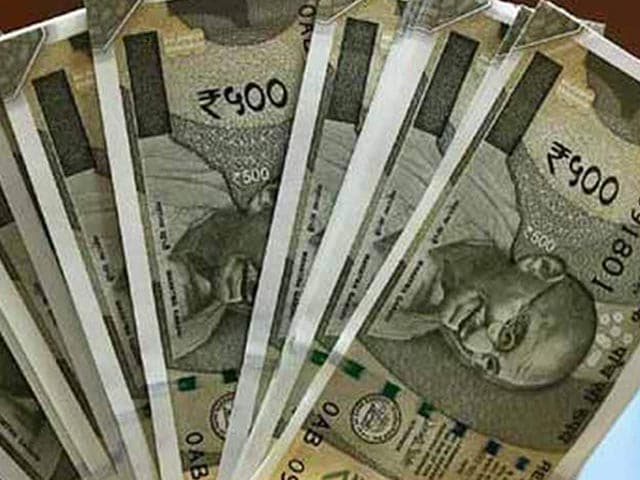
India's current account deficit is expected to deteriorate in the current fiscal on account of costlier imports and tepid merchandise exports, according to the Finance Ministry's monthly economic review.
The review released on Thursday by the ministry also said that global headwinds would continue to pose a downside risk to growth as crude oil and edibles, which have driven inflation in India, remain major imported components in the consumption basket.
For the present, it said, "their global prices have softened, as fears of recession have dampened prices somewhat. This would weaken inflationary pressures in India and rein in inflation."
If recession concerns do not lead to a sustained and meaningful reduction in the prices of food and energy commodities, "then India's CAD (current account deficit) will deteriorate in 2022-23 on account of costlier imports and tepid exports on the merchandise account."
Primarily driven by an increase in trade deficit, the CAD stood at 1.2 per cent of GDP in 2021-22. Analysts expects CAD may expand to 3 per cent of the GDP in the current financial year.
The deterioration of CAD could, however, moderate with an increase in service exports in which India is more globally competitive as compared to merchandise exports, the report said, adding that the widening of CAD, has depreciated the Indian rupee against the US dollar by 6 per cent since January of 2022.
The rupee, however, has performed well in 2022 compared to other major economies unlike in 2013, where it depreciated against other major economies, thus, reflecting strong fundamentals of the Indian economy.
The depreciation of rupee, in addition to elevated global commodity prices, has also made price-inelastic imports costlier, thereby making it further difficult to reduce the CAD, it said.
To meet the financing needs of a widening CAD and rising FPI outflows, forex reserves, in the six months since January 2022, have declined by USD 34 billion, it said.
In order to further diversify and expand the sources of forex funding so as to mitigate volatility and dampen global spill overs, measures have been taken by the RBI to enhance forex inflows while ensuring overall macroeconomic and financial stability, it said.
These measures include exemption from Cash Reserve Ratio (CRR) and Statutory Liquidity Ratio (SLR) on Incremental Foreign Currency Non-Resident (Bank) FCNR(B) and Non-Resident (External) Rupee (NRE) Term Deposits, lifting interest rate cap on these deposits, easing norms for FPI in debt market, increasing the external commercial borrowings limit under the automatic route.
On the commodity prices, the report said, global headwinds continue to pose a downside risk to growth as crude oil and edible oils, which have driven inflation in India, remain the major imported components in the consumption basket.
For the present, their global prices have softened, as fears of recession have dampened prices somewhat. This would weaken inflationary pressures in India and rein in inflation.
In addition, it said, various measures taken by the government to temper inflationary pressures may also contribute to capping inflation. The government has hiked the customs duty on gold from present 10.75 per cent to 15.0 per cent in order to alleviate the impact.
However, as long as retail inflation in India continues to be higher than RBI's tolerance level of 6 per cent, as it still is at 7 per cent in June 2022, stabilization policy measures will need to continue walking the tightrope of balancing inflation and growth concerns.
On the positive side, the report said, agriculture is picking up momentum with the revival in monsoon and Kharif sowing. The geographical distribution of the rainfall too has improved considerably. It is far less skewed.
Elevated international agricultural prices have enhanced the real purchasing power in the rural areas with terms of trade for agricultural commodities remaining positive since March 2022, it said.
This has triggered a recovery in rural demand, although some indicators are yet to recover to pre-pandemic levels, it added.
With regard to corporate sector, the report said, it has begun to show signs of revival with robust growth in net sales in the quarter ending March 2022, assisted by a general recovery in demand.
Improved fundamentals of the corporate sector and a well-capitalized financial system have instilled confidence in investors, it said, adding, private equity and venture capital investments in the first two months of Q1 of 2022-23 have risen above their levels in the corresponding period of the previous year.
The government's sustained focus on expanding capital expenditure has resulted in its year-on-year growth of 70.1 per cent in May 2022.
To further facilitate capex, it said, the government has also announced rules for disbursing Rs 1 trillion in interest-free capex loans to states.

-
Signature Play: The Classic Cocktail Is Dead. Or Is It?

Classic cocktails are disappearing from India's cocktail menus. But they're still being ordered, taught to bartenders and borrowed from. So, who's really having the last drink?
-
A New Samvat Wishlist: Inclusive Prosperity And Human Development
India has strengthened its economic foundations through infrastructure, digital access and enterprise. Its next growth chapter must deepen productivity, create better livelihoods and widen participation in prosperity.
-
Love, Sex Aur Dhokha: The Audacious Plot To Spy On Jensen Huang
A Taipei dinner, a Singapore chip buyer and a suspected Chinese asset: inside the alleged spy operation that got close to NVIDIA's Jensen Huang.
-
Ten Things I Learnt This Samvat
Patience can be a trap. Cheap stocks can stay cheap. Leverage can wipe you out. What did Samvat 2082 teach us? Niraj Shah writes on 10 lessons from the year gone by.
-
Talking Points This Week: Tech Nerves, FII Buying, And A Faraway Banking Shock
The global markets are not shining this Diwali. The exception in the large markets is, India.
-
Midterm Rally Lasted A Day. The Hard Reality Of A Divided US May Last Two Years | Opinion
Between a contested AI boom, a debt ceiling that arrives in 2027 and a president with every incentive to act alone, the next two years may prove more volatile than the first day's rally suggests.
-
Blue Wave Will Derail the AI Trade but Won't Dismantle the AI Era | Unhedged Position
The Democrats' sweep of the US Congress will see politics collide with economic forces both over the long and short term.
-
It's Time To Take The GST Council's Bet On Trust Global
Payment records can prove India's services exports, and clear, proportionate rules can bring foreign digital sellers into the tax net.
-
Opinion | India at 38: From Innovation Overperformer to Innovation Powerhouse
India now has 453 VC-backed deep science startups, 18 of them late-stage, after 117 percent growth since 2020. Laurus Labs, at USD 9.3 billion, is the most valuable deep science company in any middle-income economy outside China.









