Electric Ether Leaps On The Verge Of Merge To Mega-Upgrade
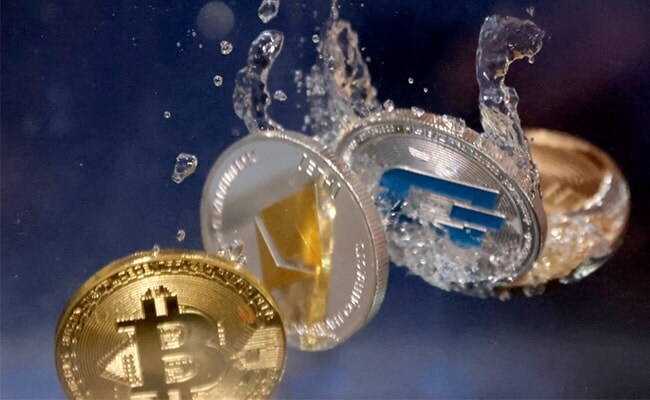
It looks like ethereum's mega-upgrade is happening. Finally.
After years of delays, the "Merge" seems all but certain to take place in September, with the cryptography underlying the blockchain undergoing a radical shift to a system where the creation of new ether tokens becomes far less energy-intensive.
"It's an exciting time for the ethereum ecosystem," said Omar Syed, co-founder of smart contract platform Shardeum. "I think there will be drama surrounding the Merge, but I don't think there will be any technical hiccups."
Investors seem to agree, with ether outstripping big brother bitcoin.
Ether has seen six consecutive weeks of gains, pushing it up from a 1-1/2-year low of $880 in mid-June to levels closing in on $2,000, even though it's way off its November 2021 peak of $4,868.79.
Bitcoin has paled in comparison, rebounding 37% from its June low to $24,116.
Ether is gnawing away at behemoth bitcoin's market share: it now accounts for nearly a fifth - 19.7% - of the total crypto market capitalization of $1.14 trillion, up from less than 14.9% two months ago, according to CoinMarketCap. Bitcoin's share has dropped to 40.2% from 44.9% in the same period.
"Crypto is still very tightly coupled, I think when the Merge successfully completes it could drive up the price of bitcoin as well," said Alex Miller, CEO of Hiro, which builds developer tools to create applications for bitcoin.
If ethereum's creators succeed, as is largely expected, it could be a game-changer for the blockchain, making it cheaper to mine and easy to adopt for fintech and other crypto apps.
Of course little is assured about the elusive transition, which has been delayed several times, with developers most recently axing plans to push the button in June, unnerving investors who began to fear it might never see the light of day.
The Merge is also is fraught with risk, and the fortunes of the roughly 122 million ether in circulation, worth about $232 billion, could be at stake should it fail.
If the upgrade doesn't go well, it would "set the entire crypto world back five or 10 years," Hiro's Miller said.
'DIFFICULTY BOMB'
The ethereum blockchain currently uses the energy-intensive proof-of work (PoW) method of validating blocks, wherein miners use massive amounts of power to quickly solve complex computational problems to win newly minted coins.
On a parallel chain, ethereum has been testing a proof-of-stake (PoS) system that only requires miners to "stake" their coins to validate transactions and create new blocks. It promises 99.95% reduction in the blockhain's energy consumption and prepares it for faster transactions.
Not everyone's happy about the imminent merger of the two systems - notably ether miners, whose expensive mining rigs will be rendered obsolete, and can't be used for mining bitcoin either.
Ether mining has hitherto been more profitable than bitcoin mining. Ether miners made $18 billion in 2021 versus $17 billion for bitcoin miners, according to Arcane Research.
Some miners have decided to shift to mining the next best option, such as the tokens ethereum classic or ravencoin.
At least one miner has declared plans to resist and continue mining ethereum, raising the spectre of some people keeping the PoW chain running in its current form even after the merge, likely competing with the upgraded blockchain.
However, that option has perils.
Ethereum creators have designed a "difficulty bomb" to exponentially increase mining difficulty in order to discourage the PoW parallel chain after the Merge.
Moreover, both Tether and USDC - the largest stablecoins - have thrown their weight behind the Merge, reducing the likelihood of a wider adoption of the parallel PoW chain.
FROTHY FUTURES
"The likelihood of a long-lasting chain split of Ethereum following the Merge remains slim," said Alex Thorn, head of firmwide research at Galaxy Digital.
Nonetheless, at least some investors are preparing for a hard fork, or a parallel PoW chain, positioning in the derivatives market indicates.
Ether futures were also trading at premium at $1,905 on the CME exchange, "reflecting expectations around a proof of work fork," said Matthew Sigel, head of digital assets research at fund manager VanEck.
"But that gap is not so huge so as to think there is extreme froth," he added.
(This story has not been edited by NDTV staff and is auto-generated from a syndicated feed.)

-
Gold Is Rs 22,000 Cheaper Than A Month Ago. Should You Buy Amid The Wedding Season?

Gold's potential slide to $3,500 could save around Rs 4,700 per 10 grams, but a soft inflation print could just as easily push prices back up. One way to split the risk is to buy in parts, some now and the rest after the Fed's Dec. 9 decision.
-
AI Agents Are Gaining Power. Who Governs Them?
Artificial intelligence agents promise to transform productivity by moving machines from assisting decisions to executing them. But as organisations delegate greater authority to these AI-agents, they must first establish who controls that authority and who remains accountable when things go wrong.
-
Why Swapping Your Old Gold Can Trigger A Rs 5 Lakh Tax Bill, And How You Can Avoid It Legally
Swapping old gold for new is taxed as a sale and a fresh purchase. Getting your own gold remade can cut most of that bill, though it has its own costs.
-
The AI Trade is Done. The Real Opportunity for Investors Starts in 2027 | Unhedged Position
As pureplay AI stocks plunge and circular, capex-led financing unwinds, 2027 is set to be a year of reckoning for AI companies. Yet the bust clears the way for a better opportunity for investors in 2027 -- shifting the spotlight from AI builders to the companies using AI.
-
Leadership As Mission: Why The Age Of AI Demands More Human Leadership
Debjani Ghosh examines how AI is changing leadership, arguing that its success must be measured by its impact on people and the accountability of those guiding its use.
-
We May Need Another Tukaram Mundhe To Fight Air Pollution | The Reason Why
Developers may install basic measures such as sprinklers and green nets, resume work, and continue violating rules when this equipment stops working.
-
Extracting Value From Battery Scrap Could Be Challenging For India | The Reason Why
A discarded lithium-ion battery still contains valuable materials such as lithium, nickel and cobalt. These can be recovered and reused. When such batteries are crushed and shredded, they produce a dark powder called black mass.
-
One El Nino, India Can Handle. Two Could Break The Granary
India's grain stocks can absorb one bad year, but a second El Nino could drain the buffer in two to three years, economists say.
-
India's Troika Of Good Luck | Joining The Dots
As Jensen Huang's exit drags Nvidia down, a cooling AI trade and resilient earnings have revived investor interest in India. A likely RBI rate hike looms.
-
Talking Points This Week: Leadership Shock At Nvidia, Earnings Strength, And The Fog Over Hormuz
The Anthropic IPO pricing and first trading day, Nvidia's upcoming earnings, and any fresh signals from Iran will set the tone for the following week.









