US Becomes World's Largest Bitcoin Miner Following China Ban
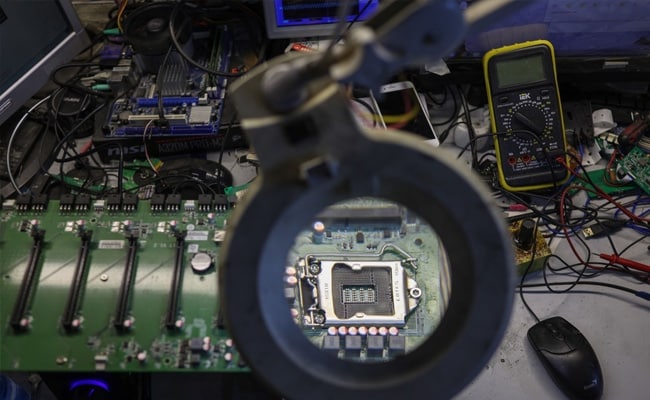
The U.S. has become the world's epicenter for Bitcoin mining after a crackdown in China effectively eliminated the practice in the former cradle of the industry.
At the end of August, America accounted for 35.4 per cent of the global hash rate, a measure of computing power used to extract the digital currency, according to a Cambridge Centre for Alternative Finance study published on Wednesday. That's more than double the activity seen in April.
The surge in the country's relative share has been driven by China's move to whittle down the industry to control financial risk. In the early days of Bitcoin's 2009 inception, the Asian nation was the base for the biggest miners tapping into cheap electricity from coal and hydro plants.
Now, Beijing's intensifying efforts to curb the cryptocurrency market, announced in May, is paying off. China's observed share of Bitcoin mining has effectively hit zero, the Cambridge researchers found. That's down from as high as a 75 per cent in September 2019 when Cambridge started collecting data. It's also a marked decrease from the 46 per cent level notched in April just this year.
There's a strong possibility that covert mining is still happening in China, but routed through virtual private networks that make it appear the computers are operating in another country. Recent increases in the hash rate in Ireland and Germany are likely the result of miners using VPNs or proxy servers, according to the Cambridge research.
Miners are seeking cheap electricity and welcoming governments to fuel the boom in the virtual currency that's approaching record highs again. The token is up more than 370 per cent in the past year to trade around $54,650 with a total market value of about $1 trillion.
In Kazakhstan, the share of the hash rate hit 18.1 per cent in August, up from 8.2 per cent in April, while the Russian share grew to 11 per cent, from 6.8 per cent over the same period.
The researchers at the institute, which is part of the Cambridge Judge Business School at University of Cambridge, collect data on the IP addresses of mining operators from mining pools BTC.com, Poolin, ViaBTC, and Foundry.
(Except for the headline, this story has not been edited by NDTV staff and is published from a syndicated feed.)

-
AI Bias In Investing Cannot Be Eliminated, But It Can Be Governed

Framing is a particularly important example as identical financial information presented in terms of gains rather than losses can lead an LLM to reach a different assessment.
-
Joining The Dots | Dark Skies, Steady Diya: Why Hope Holds This Diwali
With war, a weak rupee and foreign outflows weighing on sentiment, policymakers at the NDTV World Summit and market veterans at NDTV Profit Ignite: Diwali Edition offered the same advice: stay invested and filter out the noise.
-
The Curious Case of Equitas Small Finance Bank And A CEO Who Quit For Stock
PN Vasudevan believes persistent investor concerns over a perceived conflict of interest had become a governance overhang on Equitas Small Finance Bank's stock, even as the lender improved profitability and asset quality.
-
Talking Points This Week: AI Cash Burn, A Tiger Comeback And An India That Still Finds Its Own Path
India is not immune to higher oil or tighter global liquidity, yet its earnings base is broader, its domestic policy levers are still available.
-
Foreign Investors Own Half Of HDFC Bank and ICICI Bank. An LTCG Cut Could Matter Most Here
Foreign portfolio investors have US$115 billion parked in HDFC Bank, ICICI Bank. If the government cuts long-term capital gains tax, Jefferies says returning foreign money could land here first.
-
'Never Seen This Level Of Negativity': Sandeep Tandon Says The Next Rally May Be Closer Than You Think
Veteran investor Sandeep Tandon says foreign selling is easing, large-caps are due a comeback and mid-caps are crowded, while he turns positive on gold, power and pharma this Diwali.
-
Indians Stay With Family, Not In Hotels | The Reason Why
India still lacks enough clean, reliable and affordable hotels for budget-conscious travellers.
-
The Economic Imperative: Analysing The Material Driving Force Behind India-Canada Strategic Reset
This economic complementarity is further reinforced by deep institutional investment ties and talent mobility, which form the bedrock of the bilateral framework.
-
Medicine Pricing: Where Must Profit Stop?
India must confront excessive margins, hidden incentives and regulatory gaps that threaten the integrity of medicine.
-
Why Amazon And Flipkart Are Struggling To Beat Meesho In India's Smaller Cities
With 274 million users and lowest-cost logistics, Meesho is defending its value commerce crown against giants like Amazon and Flipkart.










