What Decoupling Of Bitcoin And Stocks Means For Crypto
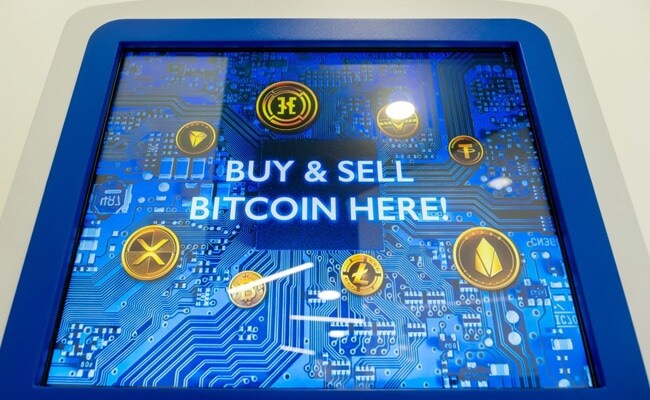
Whenever traditionally minded investors think they finally have their heads wrapped around cryptocurrencies' role in financial markets, the digital asset class always seems to prove them wrong.
The ink had barely dried on analysis pointing out that Bitcoin and stocks were moving in the same direction (downward) in September when that positive correlation quickly reversed this month. As it stands now, the S&P 500 is down about five per cent from its last record on Sept. 2, while the biggest cryptocurrency is up 10 per cent.

Photo Credit: Bloomberg
The decoupling of Bitcoin and stocks could revive one of the longstanding promises of cryptocurrencies heralded by their proponents -- that they can serve as a hedge to protect investment portfolios when equities sell off during times or turmoil.
That's a function that is highly in demand now, with many worrying that Treasuries can't be relied upon to perform that role during a period of ultra-low yields and accelerating inflation.
Still, the highly speculative nature and often-unexplainable volatility of crypto leave many reluctant to attempt to pigeonhole it into reliable relationships with traditional assets.
For Stephane Ouellette, chief executive officer of the crypto-focused platform FRNT Financial Inc., it's a matter of recognizing what type of "trading window" is dominating sentiment. These can be swiftly moving targets.
"Sometimes you may say it's correlated with more speculative equities like tech, other times a store-of-value-type mentality takes over and it's correlated with gold; in major liquidations the space tends to correlate with risk assets generally," he said. "While for periods these relationships are relatively consistent, they tend to change at a moment's notice. And that appears to have happened here."
Now that it's unlinked from equities, he said, "we appear back in some kind of inflation-hedge, hard-asset-correlated window."
That jibes with the thinking of JPMorgan Chase & Co. strategists including Nikolaos Panigirtzoglou, who speculated in a note Wednesday that institutional investors could be returning to Bitcoin, perhaps seeing it as a better inflation hedge than gold.
Over the last 10 trading sessions platinum -- a traditional inflation hedge -- has been the most tightly linked macro asset to Bitcoin among those tracked by Bloomberg, with a correlation coefficient of 0.76. (A coefficient of 1 means the assets are moving in lockstep, while minus-1 would show they're moving in opposite directions.)

Photo Credit: Bloomberg
However, the mercurial nature of crypto, and the shifting narratives employed to explain its performance, raise the risk that investors could be fooled by randomness.
It's probably too early to get comfortable connecting dots between crypto and traditional asset classes, according to Brian Mosoff, CEO of Toronto-based investment company Ether Capital Corp. He sees crypto as still very much a risk-on asset like stocks because investors who have bought over the past year or so "don't yet have full conviction that the asset class is here to stay."
Eventually, though, Mosoff sees the promise of crypto playing out as an uncorrelated asset and, as such, a useful hedge. It's plausible that is part of what's driving Bitcoin's latest leg higher, as uncertainty builds surrounding the ramifications of the U.S. debt ceiling brinkmanship and Federal Reserve policy.
While politicians can drive the government to the brink of default on its debt, and central bankers can grow or shrink the amount of money, the supply of Bitcoin is limited and predictible because it's all been written into its software code.
"This is a moment when the new world steps in and says there's a reason why these are core functions and core value propositions to the design of this asset class," he said. "Investors are slowly saying maybe it's not such a crazy idea and that's why capital is trickling into this space," he said.
Of course, there are potential reasons for crypto's recent bust and boom that have nothing to do with its theoretical or real role in investment portfolios.
China's latest crackdown on cryptocurrency transactions that caused a selloff last month has been overshadowed by more bullish news: A Bank of America deep-dive research report calling the asset class too big for investors to ignore, U.S. Bancorp's launch of custody services to institutional investors, and reports that Brazil is considering legislation making Bitcoin legal tender (the reality is that there is a proposal to regulate cryptocurrencies).
On top of that, there have been some favorable comments on crypto from U.S. lawmakers, and signs of big-money investors, or "whales," making large purchases, as CoinDesk reported.
There's also another obvious reason that Bitcoin may have decoupled from equities this month: It's getting pumped liked mad. The phrase "Uptober" has spread quickly among true believers on social media as a rallying cry for gains in October.

Photo Credit: Bloomberg
To Steve Sosnick, chief strategist at Interactive Brokers, the latest boom is reminiscent of the speculative frenzy surrounding meme stocks such as GameStop Corp. and AMC Entertainment Holdings Inc. that was fueled by aggressive social-media campaigns.
“I think they draw from a similar pool of investors, if not the same pool, he said. “And I think that the mentality behind the trading can be similar.”
(Except for the headline, this story has not been edited by NDTV staff and is published from a syndicated feed.)

-
We May Need Another Tukaram Mundhe To Fight Air Pollution | The Reason Why

Developers may install basic measures such as sprinklers and green nets, resume work, and continue violating rules when this equipment stops working.
-
Extracting Value From Battery Scrap Could Be Challenging For India | The Reason Why
A discarded lithium-ion battery still contains valuable materials such as lithium, nickel and cobalt. These can be recovered and reused. When such batteries are crushed and shredded, they produce a dark powder called black mass.
-
One El Nino, India Can Handle. Two Could Break The Granary
India's grain stocks can absorb one bad year, but a second El Nino could drain the buffer in two to three years, economists say.
-
India's Troika Of Good Luck | Joining The Dots
As Jensen Huang's exit drags Nvidia down, a cooling AI trade and resilient earnings have revived investor interest in India. A likely RBI rate hike looms.
-
Talking Points This Week: Leadership Shock At Nvidia, Earnings Strength, And The Fog Over Hormuz
The Anthropic IPO pricing and first trading day, Nvidia's upcoming earnings, and any fresh signals from Iran will set the tone for the following week.
-
Signature Play: The Classic Cocktail Is Dead. Or Is It?
Classic cocktails are disappearing from India's cocktail menus. But they're still being ordered, taught to bartenders and borrowed from. So, who's really having the last drink?
-
A New Samvat Wishlist: Inclusive Prosperity And Human Development
India has strengthened its economic foundations through infrastructure, digital access and enterprise. Its next growth chapter must deepen productivity, create better livelihoods and widen participation in prosperity.
-
Love, Sex Aur Dhokha: The Audacious Plot To Spy On Jensen Huang
A Taipei dinner, a Singapore chip buyer and a suspected Chinese asset: inside the alleged spy operation that got close to NVIDIA's Jensen Huang.
-
Ten Things I Learnt This Samvat
Patience can be a trap. Cheap stocks can stay cheap. Leverage can wipe you out. What did Samvat 2082 teach us? Niraj Shah writes on 10 lessons from the year gone by.
-
Talking Points This Week: Tech Nerves, FII Buying, And A Faraway Banking Shock
The global markets are not shining this Diwali. The exception in the large markets is, India.









