Bitcoin Is Up But The Future Of Money Lies Elsewhere
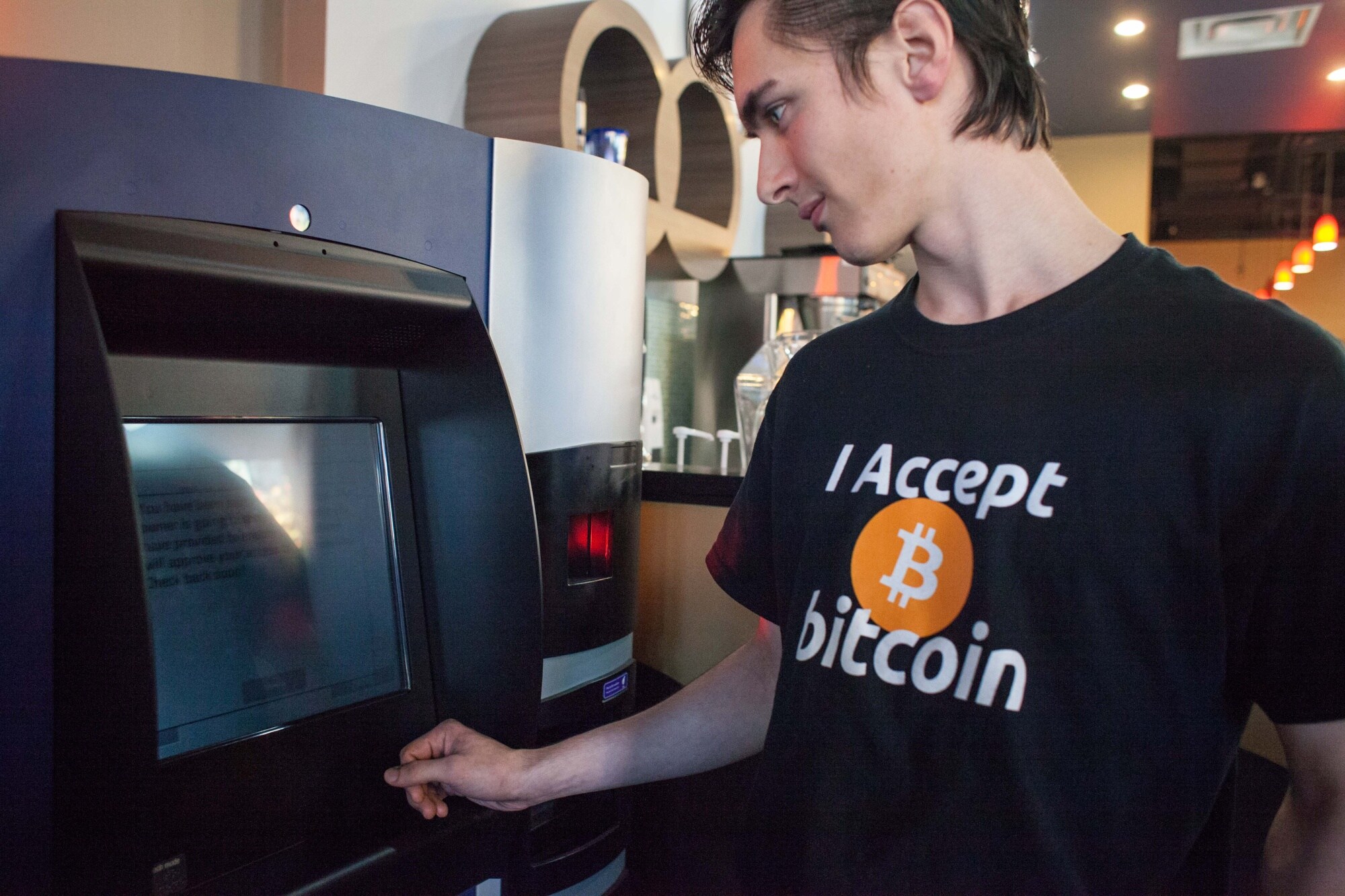
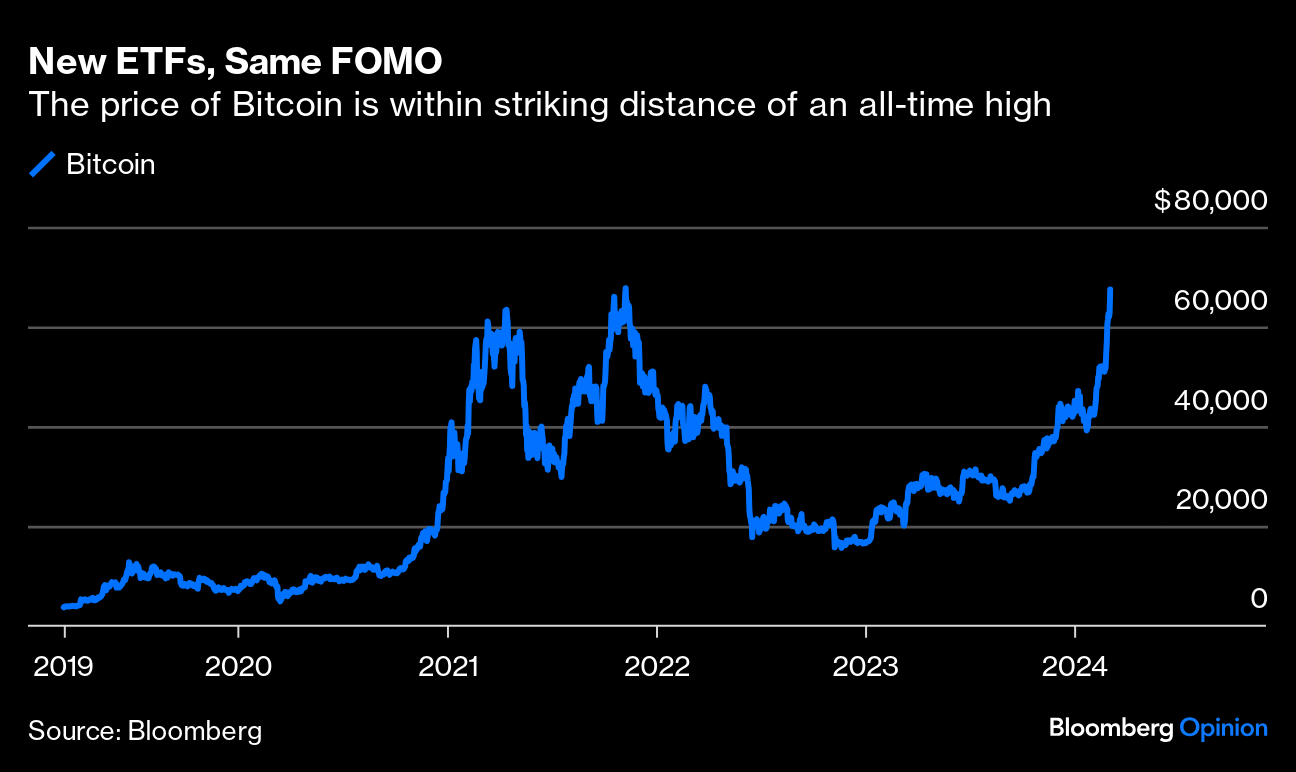
(Bloomberg Opinion) -- A new form of digital money is going viral, capturing tens of millions of users, billions of transactions and the attention of global central banks. No, not Bitcoin, which is trading at around $68,000 and closing in on a fresh all-time high. Instead, I'm talking about Brazil's cheap instant-payment system Pix. And the latter just might have a better claim to signposting the future than the cryptocurrency.
Launched in 2020, the initial idea behind Pix — as with all good fintech solutions — was to boost financial inclusion, loosen the grip of a concentrated banking system and make payments quicker and more efficient. It's succeeded at remarkable speed: It's been used by 160 million people, or 80% of Brazil's adult population, as well as 13 million firms, and now beats credit and debit cards as the country's preferred payment method. The plan is to take it global at a time when central banks are experimenting with payment overhauls and digital currencies to keep a grip on tech disruption.

Think of this as the flip side to Bitcoin's “fear of missing out,” which is back with a vengeance after the approval of spot exchange-traded funds — essentially a shiny and more accessible wrapper for a token that's still much more suited to hoarding and speculation than paying bills or generating predictable returns. Whereas the crowd-driven populism of Bitcoin is all about sticking two fingers at family, friends and financiers who caution against buying what Warren Buffett dubbed “rat poison squared,” Pix is shamelessly institutional: It's a fiat payment system run by the central bank; you need a bank account to use it and participation by commercial banks is mandatory. And there isn't a blockchain in sight.
Yet Pix is still futuristic in its own way, and doubtless healthier for the economy than the current buying of volatile tokens or memecoins like Dogecoin or Pepe in the hope that a greater fool will eventually come along and buy them back at a higher price. An International Monetary Fund study notes Pix transactions settle near-instantaneously and at a cheaper rate than other alternatives: It's free for individuals and costs around 0.33% for merchants, which is lower than fees of around 1.13% for debit cards or 2.34% for credit cards — and lower than the 3.99% levy proposed by Meta Platforms Inc.'s WhatsApp payments system.
There are, of course, risks here too, whether it's the geyser of personal transaction data exposed to central-bank snooping, the risk of scams or the fact that the system has yet to be tested by a major financial crisis.
But you'd have to be truly blinded by digital gold to ignore the benefits of Pix. One study cited by The Banker found that the gains of this quick and convenient payment system have filtered down to small banks and local businesses away from big cities, resulting in more lending to entrepreneurs and households and more capital investment. Brazil's central bank has also boosted digital literacy to ensure people don't get left behind. In a world where transaction fees are still around 1% in many countries and weighing on growth, Pix seems like a genuine good-news story.
All of which takes us back to the less encouraging news of Bitcoin's latest surge. Despite the sensationalism around ETFs, the irony is that there's little new here: It's the same old speculation, with the same old listed vehicles like MicroStrategy Inc. ready to do more buying (though there may be revenue threats for the likes of Coinbase Global Inc.). The risks that have bedeviled the crypto markets, though, are also still present, including worsening capital flight in emerging markets: Nigeria estimated $26 billion in untraceable crypto payments had passed through Binance's local entity last year.
Let's hope Pix can prove over the long term that FOMO is no match for real utility — before the next crypto bubble pops.
More From Bloomberg Opinion:
India's Central Bank Doesn't Get Payments: Andy Mukherjee
Crypto Goes Mainstream, Which Means It's Over: Allison Schrager
Bitcoin ETF Hype Is More Memestock Than Gold 2.0: Lionel Laurent
This column does not necessarily reflect the opinion of the editorial board or Bloomberg LP and its owners.
Lionel Laurent is a Bloomberg Opinion columnist writing about the future of money and the future of Europe. Previously, he was a reporter for Reuters and Forbes.
More stories like this are available on bloomberg.com/opinion
©2024 Bloomberg L.P.

-
Signature Play: The Classic Cocktail Is Dead. Or Is It?

Classic cocktails are disappearing from India's cocktail menus. But they're still being ordered, taught to bartenders and borrowed from. So, who's really having the last drink?
-
A New Samvat Wishlist: Inclusive Prosperity And Human Development
India has strengthened its economic foundations through infrastructure, digital access and enterprise. Its next growth chapter must deepen productivity, create better livelihoods and widen participation in prosperity.
-
Love, Sex Aur Dhokha: The Audacious Plot To Spy On Jensen Huang
A Taipei dinner, a Singapore chip buyer and a suspected Chinese asset: inside the alleged spy operation that got close to NVIDIA's Jensen Huang.
-
Ten Things I Learnt This Samvat
Patience can be a trap. Cheap stocks can stay cheap. Leverage can wipe you out. What did Samvat 2082 teach us? Niraj Shah writes on 10 lessons from the year gone by.
-
Talking Points This Week: Tech Nerves, FII Buying, And A Faraway Banking Shock
The global markets are not shining this Diwali. The exception in the large markets is, India.
-
Midterm Rally Lasted A Day. The Hard Reality Of A Divided US May Last Two Years | Opinion
Between a contested AI boom, a debt ceiling that arrives in 2027 and a president with every incentive to act alone, the next two years may prove more volatile than the first day's rally suggests.
-
Blue Wave Will Derail the AI Trade but Won't Dismantle the AI Era | Unhedged Position
The Democrats' sweep of the US Congress will see politics collide with economic forces both over the long and short term.
-
It's Time To Take The GST Council's Bet On Trust Global
Payment records can prove India's services exports, and clear, proportionate rules can bring foreign digital sellers into the tax net.
-
Opinion | India at 38: From Innovation Overperformer to Innovation Powerhouse
India now has 453 VC-backed deep science startups, 18 of them late-stage, after 117 percent growth since 2020. Laurus Labs, at USD 9.3 billion, is the most valuable deep science company in any middle-income economy outside China.









