Crypto Concepts And Jargons Demystified By A 'Curious Beginner'
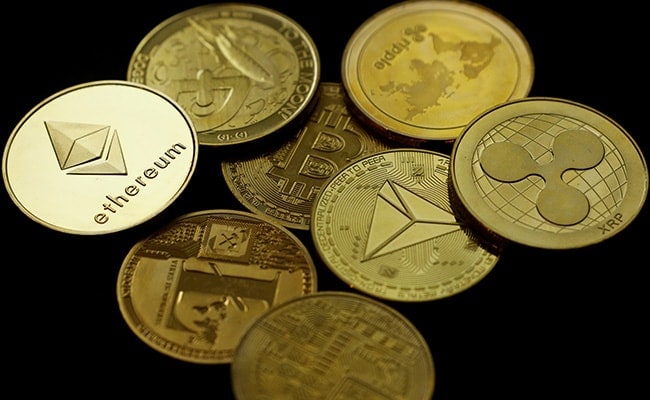
Crypto or digital currencies' exponential growth stories are very common among the young investors these days, though a few actually understand how the cryptocurrency world functions. Today, there's a very strong aspiration in youngsters around the world to know the crypto process quickly so that they can start minting -- or in this case 'mining' -- money as soon as they can. Consequently, they turn to the internet for answers.
But, searching on the web doesn't always help to get the basics right about crypto functioning. Also, watching expert videos and taking cues from analysts may not be helpful sometimes.
So, what could be the possible way out? Reddit Product Lead Peter Yang, in his blogpost 'The Curious Beginner's Guide to Crypto', gave a simple answer: "It's often easier to learn from a curious beginner than an expert who speaks in jargon." His blog goes by the name, "Creator Economy".
New to web 3 and want someone to "explain like I'm five" how crypto works?
September 29, 2021
I've written a single post that breaks down:
1. Web 3
2. Blockchain (wallets and keys, proof of work vs. stake)
3. Tokens
4. Bitcoin
5. Ethereum
6. NFTs
7. DAOs
Let's dive in...https://t.co/BzyKGUbbMyIn his post, Mr Yang -- who calls himself a "curious beginner" - said, "My goal is to 'explain like I'm five' the following (crypto concepts): Web 3; Blockchain; Fungible and non-fungible tokens; Bitcoin and Ethereum; NFTs; and DAOs."
To start with, he quoted American businessman and investor Ben Horowitz: "Crypto has one feature that has never existed before - trust."
"If trust can be set by code, then creators don't have to rely on middlemen. They: Don't have to trust banks to get paid; Don't have to trust lawyers to draft a contract; Don't have to trust social networks to make a living."
To validate the above statement, Mr Yang elaborated, "With trust comes ownership. By reducing the middleman tax, creators and fans can finally own the upside from their work."
Web 3
While explaining the concept of 'Web 3', Mr Yang said: "The best way to explain Web 3 is to compare it with Web 2. Web 2 is the internet today, dominated by tech giants. It's built off client-server architecture, where users are the client and companies control the servers. These companies extract value from creators and users by sitting in the middle."
He added, "Web 3 is the internet that's been pioneered by crypto. It's built off peer-to-peer networks of computers that talk to each other without middlemen using blockchain tech."
Blockchain
On blockchain, Mr Yang said, "A blockchain is a linked list of transactions stored on a network of computers. Blockchains are 'Decentralized: Transactions are stored on a network of computers (nodes); 'Immutable: Transactions cannot be changed once committed to the block'; and 'Open: Transactions can be viewed by anyone'. Each block has 'A list of transactions'; 'A hash (a long string of random characters) for the block'; and 'The previous block's hash (this is how the blocks are linked)'."
Citing an example, he wrote, "Suppose Bob wants to send Mary 1 bitcoin. Both Bob and Mary need crypto wallets. These wallets are either software (e.g., Coinbase, Metamask, Rainbow) or hardware (e.g., Ledger). First, Bob tells his wallet: 'I want to send 1 bitcoin from my public address to Mary's public address.' Second, Bob's wallet produces a digital signature for this transaction based on his private key. And third, this signature proves that Bob actually owns 1 bitcoin. Bob's wallet sends the transaction to nodes on the blockchain network. These nodes then verify the transaction using Bob's signature and public key. A node groups Bob's transaction with other transactions into a block. It then works with other nodes to add the block to the blockchain. Mary will see 1 bitcoin in her wallet only after all three steps are complete."
He further said that, "The most important takeaway when it comes to wallets and keys is: You can share your public key with others to send and receive transactions. But, you must never share your private key or seed phrase. If someone has access to these artifacts, they'll be able to make transactions on your behalf."
"A block can be added to the blockchain only if other nodes agree," he added.
Fungible Tokens
To elucidate on 'Fungible vs. Non-fungible tokens', he said: "Fungible tokens are interchangeable (e.g., Bitcoin, Ether). Non-fungible tokens (NFTs) are unique (e.g., a piece of art). As an example, let's look at a game like Fortnite or Roblox: Fungible tokens are the game's virtual currency (e.g., VBucks, Robux). Non-fungible tokens (NFTs) are the game's character skins, emotes, and more."
To differentiate between Bitcoin and Ethereum (fungible tokens or cryptocurrencies), he said, "Bitcoin uses blockchain and therefore is decentralized, immutable, and open. There will only ever be 21 million bitcoin." Bitcoin was created by Satoshi Nakamoto (a pseudonym) in 2009.
While Ethereum, created in 2013 by Vitalik Buterin, he said, is a digital token. "Ether is a store of value like Bitcoin, but its main purpose is to reward nodes on the ethereum blockchain for processing transactions. Gas is the amount of Ether that's paid to a node to process a transaction," he added.
Non-Fungible Tokens
Explaining non-fungible tokens or NFTs, he said, "An NFT is a record of ownership of a unique asset. This record lives on the blockchain and is: 'Decentralized: Stored on a network of computers'; 'Immutable: Cannot be changed once committed'; and Open: Anyone can see the transaction history."
DAOs
On DAOs, Mr Yang said, "A DAO is a community with a treasury owned by its contributing members. The simplest way to describe how a DAO works is to compare it to a company."
Traditional Vs Crypto Economy
In conclusion, Mr Yang compared traditional economy with crypto and referred money (US Dollar) as fungible tokens (Bitcoin and Ethereum). He compared factories, machines and software (productive assets) to 'smart contract'; food, clothing & TV (goods) to NFTs; e-commerce, retail stores and stock market (exchange mechanisms) to decentralized exchanges, auctions, order books run by smart contracts; and government, central bank corporations (institutions) to DAOs respectively, in the crypto economy.

-
Talking Points This Week: Leadership Shock At Nvidia, Earnings Strength, And The Fog Over Hormuz

The Anthropic IPO pricing and first trading day, Nvidia's upcoming earnings, and any fresh signals from Iran will set the tone for the following week.
-
Signature Play: The Classic Cocktail Is Dead. Or Is It?
Classic cocktails are disappearing from India's cocktail menus. But they're still being ordered, taught to bartenders and borrowed from. So, who's really having the last drink?
-
A New Samvat Wishlist: Inclusive Prosperity And Human Development
India has strengthened its economic foundations through infrastructure, digital access and enterprise. Its next growth chapter must deepen productivity, create better livelihoods and widen participation in prosperity.
-
Love, Sex Aur Dhokha: The Audacious Plot To Spy On Jensen Huang
A Taipei dinner, a Singapore chip buyer and a suspected Chinese asset: inside the alleged spy operation that got close to NVIDIA's Jensen Huang.
-
Ten Things I Learnt This Samvat
Patience can be a trap. Cheap stocks can stay cheap. Leverage can wipe you out. What did Samvat 2082 teach us? Niraj Shah writes on 10 lessons from the year gone by.
-
Talking Points This Week: Tech Nerves, FII Buying, And A Faraway Banking Shock
The global markets are not shining this Diwali. The exception in the large markets is, India.
-
Midterm Rally Lasted A Day. The Hard Reality Of A Divided US May Last Two Years | Opinion
Between a contested AI boom, a debt ceiling that arrives in 2027 and a president with every incentive to act alone, the next two years may prove more volatile than the first day's rally suggests.
-
Blue Wave Will Derail the AI Trade but Won't Dismantle the AI Era | Unhedged Position
The Democrats' sweep of the US Congress will see politics collide with economic forces both over the long and short term.
-
It's Time To Take The GST Council's Bet On Trust Global
Payment records can prove India's services exports, and clear, proportionate rules can bring foreign digital sellers into the tax net.
-
Opinion | India at 38: From Innovation Overperformer to Innovation Powerhouse
India now has 453 VC-backed deep science startups, 18 of them late-stage, after 117 percent growth since 2020. Laurus Labs, at USD 9.3 billion, is the most valuable deep science company in any middle-income economy outside China.









