Credit Suisse Chairman ‘Truly Sorry’ For Failure To Stem Crisis
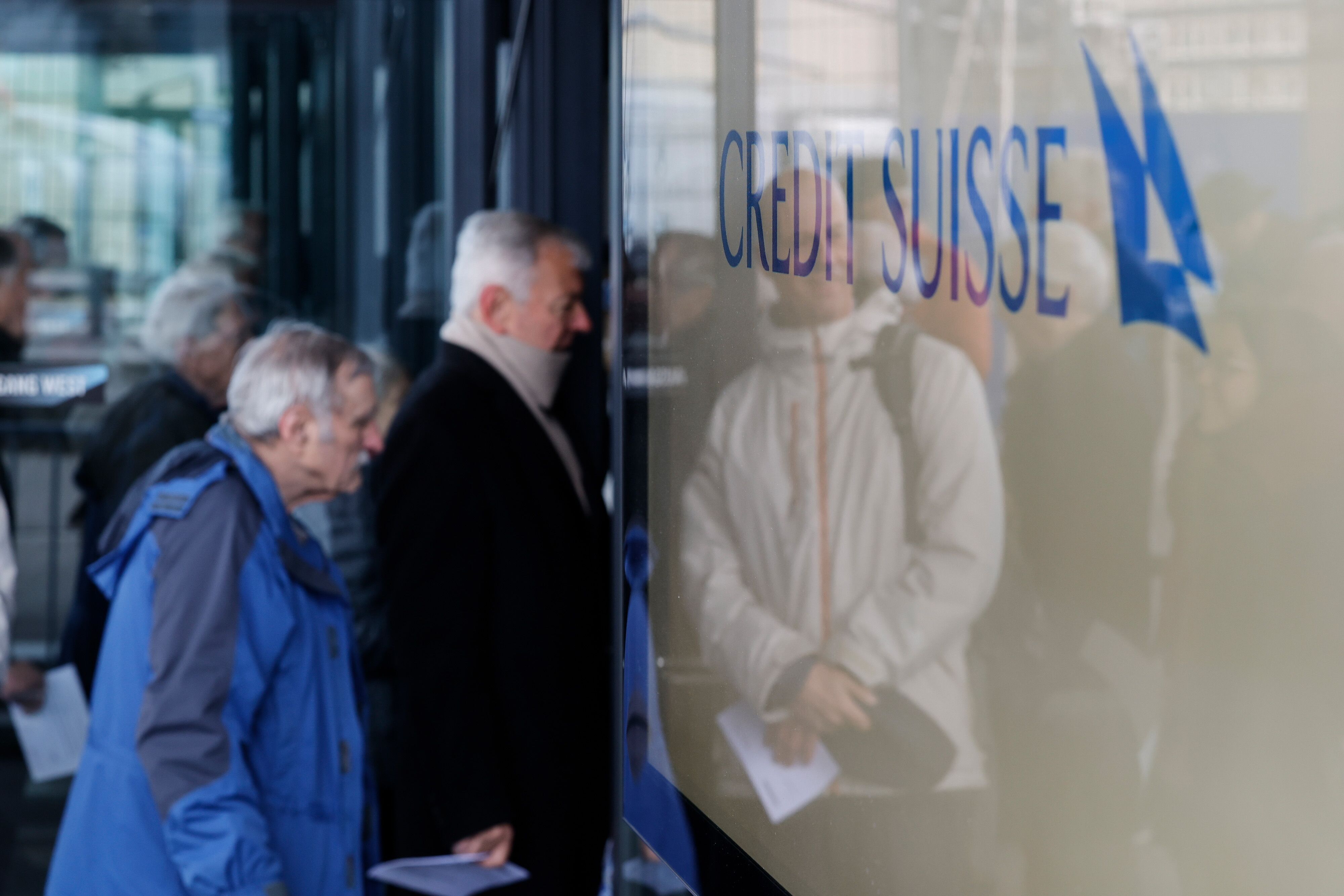
(Bloomberg) -- Credit Suisse Group AG Chairman Axel Lehmann apologized to shareholders for failing to stem a loss of trust in the bank that he said had built up well before he took over.
“We failed to stem the impact of legacy scandals, and counter negative headlines with positive facts,” Lehmann said in remarks prepared for the bank's annual shareholder meeting in Zurich. In the end, “the bank could not be saved.”

The public mea culpa comes as shareholders confront leadership over the historic takeover by larger rival UBS Group AG that marks the end of Credit Suisse after 167 years. The 3 billion-franc ($3.3 billion) deal was sealed last month to put an end to a crisis of confidence after years or scandals, losses and failures in risk management. Fragile investor sentiment around banking was further hurt by the failure of Silicon Valley Bank.
Credit Suisse's Fate Sealed by Regulators Days Before UBS Deal
The deal was agreed without the approval of either Credit Suisse or UBS's shareholders, underscoring the urgency for the Swiss government to orchestrate a solution. In announcing the acquisition, it cited an article of the constitution that allows it to issue temporary ordinances “to counter existing or imminent threats of serious disruption to public order or internal or external security.” In this case, this included overriding merger laws on shareholder votes.
“We wanted to put all our energy and our efforts into turning the situation around and putting the bank back on track,” Lehmann said. “It pains me that we didn't have the time to do so, and that in that fateful week in March our plans were disrupted. For that I am truly sorry.”
The shareholder meeting, held in Zurich's hockey stadium, is the first occasion in years where investors will be able to confront management face-to-face. Previous meetings were held virtually due to the Covid-19 pandemic.

Shareholders and proxy advisors indicated prior to the meeting their intention to vote against the reelection of several board members including Lehmann and expressed discontent with the board of directors and management's leadership of the bank. It's still unclear which of the failed bank's top executives will survive the takeover, with Lehmann and Chief Executive Officer Ulrich Koerner seen exiting.
More stories like this are available on bloomberg.com
©2023 Bloomberg L.P.

-
The Economic Imperative: Analysing The Material Driving Force Behind India-Canada Strategic Reset

This economic complementarity is further reinforced by deep institutional investment ties and talent mobility, which form the bedrock of the bilateral framework.
-
Medicine Pricing: Where Must Profit Stop?
India must confront excessive margins, hidden incentives and regulatory gaps that threaten the integrity of medicine.
-
Why Amazon And Flipkart Are Struggling To Beat Meesho In India's Smaller Cities
With 274 million users and lowest-cost logistics, Meesho is defending its value commerce crown against giants like Amazon and Flipkart.
-
High US Salaries, No Green Card Certainty: The Financial Calculation Facing Indian H-1B Families
The suspension of PERM processing at eight technology employers does not cancel existing H-1B visas. What it does is force a question many Indian families have been avoiding: is the US salary worth tying your career and family plans to one employer?
-
Swiggy vs Eternal: Food Delivery's Two Rivals Are No Longer In The Same Race
Eternal is building a private AI assistant, dark.ai. Swiggy is still working out how to make Instamart pay, with an operating loss of Rs 895 crore in the July-September quarter while Blinkit stayed profitable.
-
Where You Live Shapes How You Get To Work | The Reason Why
Two-wheelers are the most popular way to get to work in India, accounting for nearly 43% of workplace commutes.
-
Unhedged Position: Can India See An Indonesia-Style Time Correction?
The Nifty is trading below levels it first clocked in 2024. Is there, then, as I have suggested in the headline, potential that the current time correction drags on painfully for the next three-five, even ten years?
-
Navigating Friction And Energy Realities: An Analysis Of Marco Rubio's October Visit To India
Occurring at a critical juncture marked by stalled trade negotiations and escalating geopolitical pressures over global energy supplies, the visit offers a profound window into modern US-India relations.
-
India Exports Capital. Why Not Export Trusteeship?
The big question, then, is whether India can build an institution that global borrowers, investors, banks, and lawyers can trust, even without an Indian connection.
-
France's Economy & Politics Are In Crisis | The Reason Why
Let's look at how the French economy and politics evolved under Nicolas Sarkozy, Franois Hollande and Emmanuel Macron.










