Oil And Gas Companies Face An Era Of Credit Downgrades, Fitch Warns
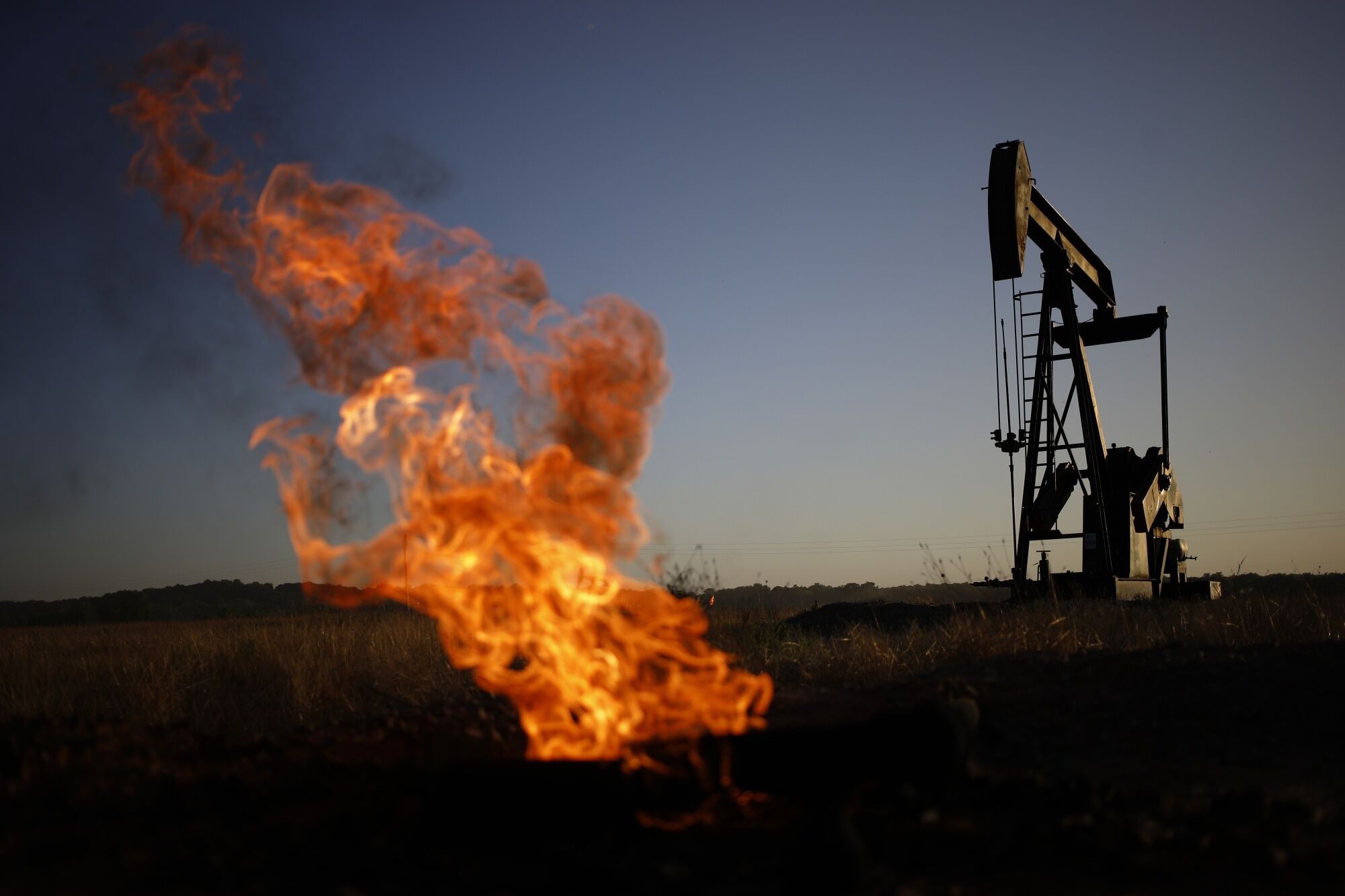
(Bloomberg) -- Much of the fossil fuel industry may be facing an era of credit downgrades if producers prove too slow to adapt to a low-carbon future, according to Fitch Ratings.
Oil and gas companies stand out as the most vulnerable issuers in an analysis by Fitch, which sought to gauge how businesses will cope with climate risks such as increasingly stringent emissions regulations.
Fitch's models show that more than a fifth of global corporates across regions and sectors face a material risk of a ratings downgrade due to an “elevated” level of climate vulnerability over the coming decade. Half of those issuers are in the oil and gas industry, while coal and utilities also stand out as being particularly exposed to the risk of downgrades, the analysis shows.
What's more, over half the global issuers potentially facing downgrades due to climate risk are currently investment grade, according to FItch, which based its report on a sample of 715 companies.

The International Energy Agency estimates that global demand for oil will peak this decade. But other researchers warn that the tide may turn even sooner. According to Inevitable Policy Response, a forecasting group whose data was used in the Fitch analysis, peak oil may come in 2025, after which demand will sink more than 60% over the next two-and-a-half decades.
The scale of the demand slump ahead “is a very big number,” Sophie Coutaux, head of ESG for corporate ratings at Fitch, said in an interview. There's now a “big question mark” as to whether producers will “be able to adapt,” she said.
The warning comes as much of the oil industry doubles down on its core business, after the war in Ukraine spurred an energy crisis that fanned fossil fuel prices. Oil majors have used cash flows inflated by temporarily higher prices to enrich shareholders with buybacks, and expand within their sectors through acquisitions.
But outsize fossil fuel profits are showing signs of waning. This week, BP Plc saw its share price slide after posting results that fell short of analyst estimates, due to weak gas earnings. And oil at $100, which some analysts had predicted just a few months ago, is now looking more remote.
BP's interim chief executive officer, Murray Auchincloss, said on Tuesday that the company expects to “grow earnings through this decade.” He also said more of that growth now needs to come from clean energy, and “not the oil and gas side.”

A number of the world's biggest oil and gas companies are hoping they'll be able to achieve future emissions reductions by using carbon-capture technology that's yet to be fully developed. However, Fitch warns that time may be running out for some in the industry to produce feasible emissions-reductions plans.
Some investment-grade issuers “have started to invest in low carbon,” but “the pace needs to be accelerated,” Coutax said.
The credit ratings industry has so far struggled to figure out how best to incorporate climate risk in its models, leaving fixed-income investors to largely navigate their own way through the new landscape. But according to the Institute for Energy Economics and Financial Analysis, there's an ongoing debate inside the biggest ratings firms.
“Alarm bells have been sounding for months,” Hazel Ilango, an energy finance analyst focused on debt markets at IEEFA, said in a recent interview.
Amid criticism about the rating companies' perceived foot-dragging, there are signs that climate risk has already been affecting credit scores.
Researchers at the European Central Bank have found that since the Paris agreement, companies most exposed to climate transition risk experienced a greater deterioration in their ratings compared with peers who were adapting at a faster pace. The ratings impact was greater in Europe than in the US, as Brussels pushes ahead with more aggressive climate regulations.
Separately, a report published by the Bank of Canada in July showed that investors pay a substantial premium when buying credit protection for companies facing a high level of credit transition risk. The premium ranges from 12 basis points to 20 basis points, with longer maturities resulting in a bigger extra cost.
“Firms that are better prepared for the transition to a low-carbon economy have a lower cost of capital and are more sheltered from the effects of transition policies,” the authors of the Bank of Canada study wrote.
Other ratings firms are also increasingly incorporating climate risk into their models. S&P Ratings says it currently considers “regulatory and policy risk as the most relevant to a company's credit profile,” according to an Oct. 25 statement. Technology and consumer behavior “may take longer to evolve at a scale that disrupts a whole sector, whereas regulation can quickly change the landscape.”
Meanwhile, international alliances are forming to demand drastic cuts in fossil fuel production, with the issue set to become a central debate at this year's COP28 climate summit in Dubai.
The High Ambition Coalition — which counts the Marshall Islands, Austria and France among its members — is the latest to make such calls in the name of fighting climate change.
“Fossil fuels are at the root of this crisis,” the High Ambition Coalition said in a statement. “We must phase out all international public finance for fossil fuel development and power generation.”
(Adds S&P comment in fourth-to-last paragraph.)
More stories like this are available on bloomberg.com
©2023 Bloomberg L.P.

-
Talking Points This Week: Leadership Shock At Nvidia, Earnings Strength, And The Fog Over Hormuz

The Anthropic IPO pricing and first trading day, Nvidia's upcoming earnings, and any fresh signals from Iran will set the tone for the following week.
-
Signature Play: The Classic Cocktail Is Dead. Or Is It?
Classic cocktails are disappearing from India's cocktail menus. But they're still being ordered, taught to bartenders and borrowed from. So, who's really having the last drink?
-
A New Samvat Wishlist: Inclusive Prosperity And Human Development
India has strengthened its economic foundations through infrastructure, digital access and enterprise. Its next growth chapter must deepen productivity, create better livelihoods and widen participation in prosperity.
-
Love, Sex Aur Dhokha: The Audacious Plot To Spy On Jensen Huang
A Taipei dinner, a Singapore chip buyer and a suspected Chinese asset: inside the alleged spy operation that got close to NVIDIA's Jensen Huang.
-
Ten Things I Learnt This Samvat
Patience can be a trap. Cheap stocks can stay cheap. Leverage can wipe you out. What did Samvat 2082 teach us? Niraj Shah writes on 10 lessons from the year gone by.
-
Talking Points This Week: Tech Nerves, FII Buying, And A Faraway Banking Shock
The global markets are not shining this Diwali. The exception in the large markets is, India.
-
Midterm Rally Lasted A Day. The Hard Reality Of A Divided US May Last Two Years | Opinion
Between a contested AI boom, a debt ceiling that arrives in 2027 and a president with every incentive to act alone, the next two years may prove more volatile than the first day's rally suggests.
-
Blue Wave Will Derail the AI Trade but Won't Dismantle the AI Era | Unhedged Position
The Democrats' sweep of the US Congress will see politics collide with economic forces both over the long and short term.
-
It's Time To Take The GST Council's Bet On Trust Global
Payment records can prove India's services exports, and clear, proportionate rules can bring foreign digital sellers into the tax net.
-
Opinion | India at 38: From Innovation Overperformer to Innovation Powerhouse
India now has 453 VC-backed deep science startups, 18 of them late-stage, after 117 percent growth since 2020. Laurus Labs, at USD 9.3 billion, is the most valuable deep science company in any middle-income economy outside China.









