Credit Cards: 4 Mistakes You Must Avoid
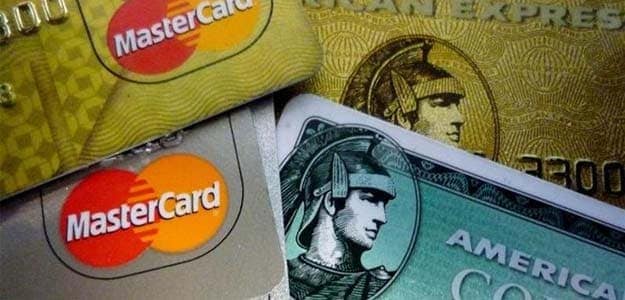
There are around 350 million debit cards in circulation in India as compared to only 19 million credit cards. ICICI, HDFC, SBI, Citibank and American Express are the top five issuers of credit cards in India - each offering a range of rewards and benefits to their respective card holders. Credit cards offer the easiest ways to borrow money and usually individuals are lured into the reward programs and benefits these financial institutions offer.
The problem is that credit cards are only good for one thing: short term borrowing. If you cannot afford to pay your balances in full before the due date, you are shooting yourself in the foot by borrowing on the card.
Janice Gnomes and Rakesh Wahal are both graduates and have joined a call centre recently. Both own credit cards but have very different ways of using them. Rakesh likes to splurge on impulse purchases, while Janice uses it only to pay for her flight tickets when she travels to her hometown in the south. As a result, Rakesh often ends up paying the minimum amount due and is perilously close to his credit limit. Janice, on the other hand uses her card sporadically, pays her bills before the due date, and is well within her credit limit. Who then would you say is a better customer for a credit card issuer? You would think it is Janice, but in fact it is Rakesh who is an ideal customer from the point of view of a card issuer.
No credit card company would ever admit this, but a card user like Rakesh is a cash cow for them for he is not a defaulter and pays a higher rate of interest on revolving balances. Here are four mistakes your credit card issuer will be glad you if made.
Missed payments: Rakesh did not have the money to pay off his dues when his credit card statement came in the last week of February. He paid when his salary arrived in the first week of March. He thought he was being charged a late payment fee and 3 per cent interest. What he ignored was that the monthly interest rates along with the late payments are mounting up to a high annual rate of interest of 36 per cent plus.
Exceeding credit limits: You card issuer will urge you to increase your credit limit from time to time. Once you exceed your credit limit, your card issuer will charge you Rs 500 every instance or 2.5 per cent of the over limit amount. While your card issuer earns money, your credit score is negatively impacted. A bad credit score can mar your possibility of getting all future loans.
Your card is not really free: Credit card companies make a fortune of wooing gullible spenders like Rakesh and offering them "zero charge" credit cards. Such cards may be free for the first year but there are annual renewal charges. The other hidden charges such as 2.5 per cent fuel surcharge, processing fee for an EMI (equated monthly instalment), a late payment charge or cash withdrawal charge are rarely explained to customers.
Applying for more credit with poor credit: Rakesh thinks it's a style statement to carry two or three credit cards, but the card issuers are making merry at his expense. Even if your credit history is poor, another credit card company may issue a second credit card to you. However, you will not get the average rate of interest which is 13-15 per cent but will be charged more than 20 per cent, because of your poor credit record. This is all the better for your new card issuer who now stands to earn more from you.
A credit card has seemingly simplified life as you can now get anything on credit, but making cardinal mistakes and untamed use of your credit card will lead you on to the path of a financial disaster.
Disclaimer: All information in this article has been provided by Creditvidya.com and NDTV Profit is not responsible for the accuracy and completeness of the same.

-
We May Need Another Tukaram Mundhe To Fight Air Pollution | The Reason Why

Developers may install basic measures such as sprinklers and green nets, resume work, and continue violating rules when this equipment stops working.
-
Extracting Value From Battery Scrap Could Be Challenging For India | The Reason Why
A discarded lithium-ion battery still contains valuable materials such as lithium, nickel and cobalt. These can be recovered and reused. When such batteries are crushed and shredded, they produce a dark powder called black mass.
-
One El Nino, India Can Handle. Two Could Break The Granary
India's grain stocks can absorb one bad year, but a second El Nino could drain the buffer in two to three years, economists say.
-
India's Troika Of Good Luck | Joining The Dots
As Jensen Huang's exit drags Nvidia down, a cooling AI trade and resilient earnings have revived investor interest in India. A likely RBI rate hike looms.
-
Talking Points This Week: Leadership Shock At Nvidia, Earnings Strength, And The Fog Over Hormuz
The Anthropic IPO pricing and first trading day, Nvidia's upcoming earnings, and any fresh signals from Iran will set the tone for the following week.
-
Signature Play: The Classic Cocktail Is Dead. Or Is It?
Classic cocktails are disappearing from India's cocktail menus. But they're still being ordered, taught to bartenders and borrowed from. So, who's really having the last drink?
-
A New Samvat Wishlist: Inclusive Prosperity And Human Development
India has strengthened its economic foundations through infrastructure, digital access and enterprise. Its next growth chapter must deepen productivity, create better livelihoods and widen participation in prosperity.
-
Love, Sex Aur Dhokha: The Audacious Plot To Spy On Jensen Huang
A Taipei dinner, a Singapore chip buyer and a suspected Chinese asset: inside the alleged spy operation that got close to NVIDIA's Jensen Huang.
-
Ten Things I Learnt This Samvat
Patience can be a trap. Cheap stocks can stay cheap. Leverage can wipe you out. What did Samvat 2082 teach us? Niraj Shah writes on 10 lessons from the year gone by.
-
Talking Points This Week: Tech Nerves, FII Buying, And A Faraway Banking Shock
The global markets are not shining this Diwali. The exception in the large markets is, India.









